Lagos uses the Nigerian naira (₦, NGN), and cash still decides your day. Danfo conductors, market traders, buka staff and most small shops take notes or a bank transfer, not a card. Carry working naira cash, one card that actually clears, and a way to top up from abroad.
That is the short answer. The rest of this guide covers the details that cost visitors money: how much cash to hold, which exchange counter to trust, what your bank will charge, what a day in Lagos costs in November 2026, and the scams aimed at people who have just landed.
Last updated: 6 November 2026. Every figure below carries its source and date. Rates, fares and prices move, so re-check before you commit money.
Key takeaways
- Lagos runs on naira. Expect cash or a local bank transfer in everyday places, and keep a card for hotels, supermarkets and filling stations.
- Change money at a licensed bureau de change or a bank. Street dealers and arrivals-hall touts are not authorised, and the rate you are quoted there is not a market rate you can verify.
- The CBN’s revised cash rules, effective 1 January 2026, cap ATM withdrawals at ₦100,000 per customer per day and ₦500,000 per week for accounts held in Nigeria.
- A foreign card can work at one till and fail at the next. Carry two cards from different issuers and enable international use before you fly.
- Budget from real prices: a buka plate of jollof with chicken is about ₦1,500 to ₦3,000, and a mid-range Ikeja or Victoria Island hotel is roughly ₦70,000 to ₦150,000 a night.
What currency does Lagos use?
Lagos uses the naira. The symbol is ₦, the code is NGN, and one naira divides into 100 kobo. Kobo coins are not used in daily trade, and prices round to the nearest ₦50 or ₦100 in practice.
The Central Bank of Nigeria lists eight banknote denominations: ₦5, ₦10, ₦20, ₦50, ₦100, ₦200, ₦500 and ₦1,000. In Lagos you will mostly handle ₦200, ₦500 and ₦1,000 notes. ₦100 notes are worth keeping for small purchases and danfo change.
| Note | Where it is useful | What to watch |
|---|---|---|
| ₦1,000 | Hotel balance, restaurant bills, larger market buys | Traders inspect these closely. Refuse torn or taped notes |
| ₦500 | Suya, fuel, market purchases, most everyday payments | The commonest note in circulation |
| ₦200 | Short danfo or keke trips, snacks | Keep a few for change |
| ₦100 | Water, sachet food, small tips | Best note for small change |
| ₦50 and below | Rarely needed | Accept them, but do not plan around them |

Photo by MUHAMMAD MUKTAR
Are old naira notes still accepted?
Yes. The CBN states that every banknote it issued remains legal tender indefinitely, and the Supreme Court extended the use of the old ₦200, ₦500 and ₦1,000 designs in November 2023. Old and redesigned notes circulate side by side.
Some traders still push back on worn or older notes. That is a preference for clean cash, not a legal rule. If a business refuses a note you believe is genuine, ask for the manager and note the refusal, then report it to your bank.
How much cash should you carry in Lagos?
Keep about ₦20,000 to ₦40,000 on you as a mid-range visitor, split between two places, plus a hidden reserve. That covers transport, food, water and small purchases for a full day without hunting for an ATM.
Treat that as cash in hand, not your daily spend. Hotel bills, flights and fine dining are better settled by card or transfer where they work. Adjust upward if you are paying for a group, and downward if your hotel and transport are already paid.
The three-cash rule works well here: small notes in your pocket for the day, a folded reserve in a bag, and a second card kept separately from the first.
ATM and cash withdrawal limits in 2026
The CBN’s revised cash-related policies took effect on 1 January 2026. For accounts held with Nigerian banks, the published limits are ₦100,000 per customer per day at ATMs and ₦500,000 per week. The wider weekly cash withdrawal cap is ₦500,000 for individuals and ₦5 million for corporates, with reported excess charges of 3% and 5% above those caps.
Those figures govern Nigerian accounts. If you are withdrawing with a foreign card, what actually limits you is the machine’s dispense limit, often ₦20,000 to ₦40,000 per withdrawal, your own bank’s daily limit, and its FX fee. We did not find a CBN rule setting a separate naira ATM cap for foreign-issued cards, so do not budget as if one exists.
Fees differ by card and machine. The CBN guide to charges sets domestic not-on-us withdrawals at ₦100 per ₦20,000 on site, plus a surcharge of up to ₦500 per ₦20,000 at off-site machines. International withdrawals are listed as cost recovery, meaning the international acquirer’s exact charge applies. The CBN explains that pass-through in its FAQs on revised ATM fees.
Where to get naira in Lagos
| Method | Rate and fees | Speed | Risk to manage |
|---|---|---|---|
| Licensed bureau de change in the city | Close to published market rates, commission sometimes quoted separately | Minutes | Ask for the licence and a receipt, count notes at the counter |
| Bank branch | Official rate, paperwork and queues | Slow, often an hour or more | Bring your passport and expect questions on source of funds |
| ATM with a foreign card | Rate set by your issuer plus a fee | Fast when the machine works | Machine limits, card blocks, skimming |
| Airport bureau de change | Convenient, usually a weaker rate | Minutes | Small amounts only |
| Hotel front desk | The weakest rate you will find | Minutes | Fine for a taxi, not for a week |
| POS agent cash-out | Fast for small amounts | Minutes | Ask the all-in fee, not the headline fee |
The practical order is simple. Change a small amount at the airport for your ride, then change the rest at a licensed bureau de change near your hotel. Use the ATM for top-ups and the hotel desk only in an emergency.
How to change money in Lagos safely
The published rate versus the rate you get
Use the CBN’s published NFEM rate as your anchor. It closed at ₦1,350.45 to US$1 on 5 November 2026, from ₦1,348.00 the day before.
Parallel-market reports the same week quoted ₦1,372 and ₦1,375 to the dollar from two outlets, while some buy and sell boards showed ₦1,410 to ₦1,425. The numbers differ because a parallel quote can be a buying rate, a selling rate or a mid figure, and boards vary by location. Treat any single parallel figure as one quote, not the national price.

Photo by Audy of Course
Is it legal to use a bureau de change?
Licensed BDCs are legal. Street trading is not. The CBN’s 2024 BDC guidelines prohibit BDCs from trading foreign currency on the street, and the CBN published a list of 82 fully licensed operators effective 27 November 2025, stating that only BDCs on its website are authorised from that date.
So check the licence before you hand over cash. Someone with a bag of dollars in a car park is not a bureau de change, whatever they call themselves.
What to do at the counter
- Ask for the all-in rate and confirm whether commission is included.
- Confirm the naira amount you should receive before releasing your currency.
- Count the notes at the counter, in front of the cashier, before you put them away.
- Check the notes are clean, and hand back torn or heavily taped ones.
- Ask for a receipt showing the rate, the amount and the date.
Refuse any offer to split the transaction between two people, and refuse “I will bring the balance”. Both are the opening moves in a short-change routine.
Airport exchange: convenient, rarely the best rate
Murtala Muhammed counters are open around arrivals, and they price for convenience. Change enough for your ride and the first evening, then change properly in the city. If your flight lands late, having ₦20,000 in hand matters more than the few naira per dollar you give up. Read our arrival steps for MMIA before you land, and compare options in our Lagos airport taxi fare guide so you know what the ride should cost.
Getting naira sent from abroad
This matters if your bank blocks Nigeria or your card fails on arrival. Three routes work, and they do not have the same requirements.
Western Union cash pickup. The receiver needs the sender’s name, the MTCN, the expected amount, the country of origin and valid photo ID showing they are at least 18. The published ID list includes an international passport, driver’s licence, voter’s card, national identity card or BVN. That means a visitor can often collect cash with a passport, although agent-level restrictions vary.
Remitly. Its Nigeria page lists cash pickup, mobile money, home delivery, debit-card deposit and bank deposit, and the receiver does not need a Remitly account. Limits depend on the sender’s location, verification, payout method, destination and compliance checks.
Wise. Wise sends naira into a local bank account, and the receiver does not need a Wise account. This route needs a Nigerian account in your name, which most short-stay visitors do not have.
Plan on cash pickup, or land with two days of spending money. The ₦360,000 per transfer cap you will see quoted is for sending online from within Nigeria after verification. It is not a cap on what you can receive from abroad.
Cards, POS and transfers in Lagos
Can you use a foreign card in Lagos?
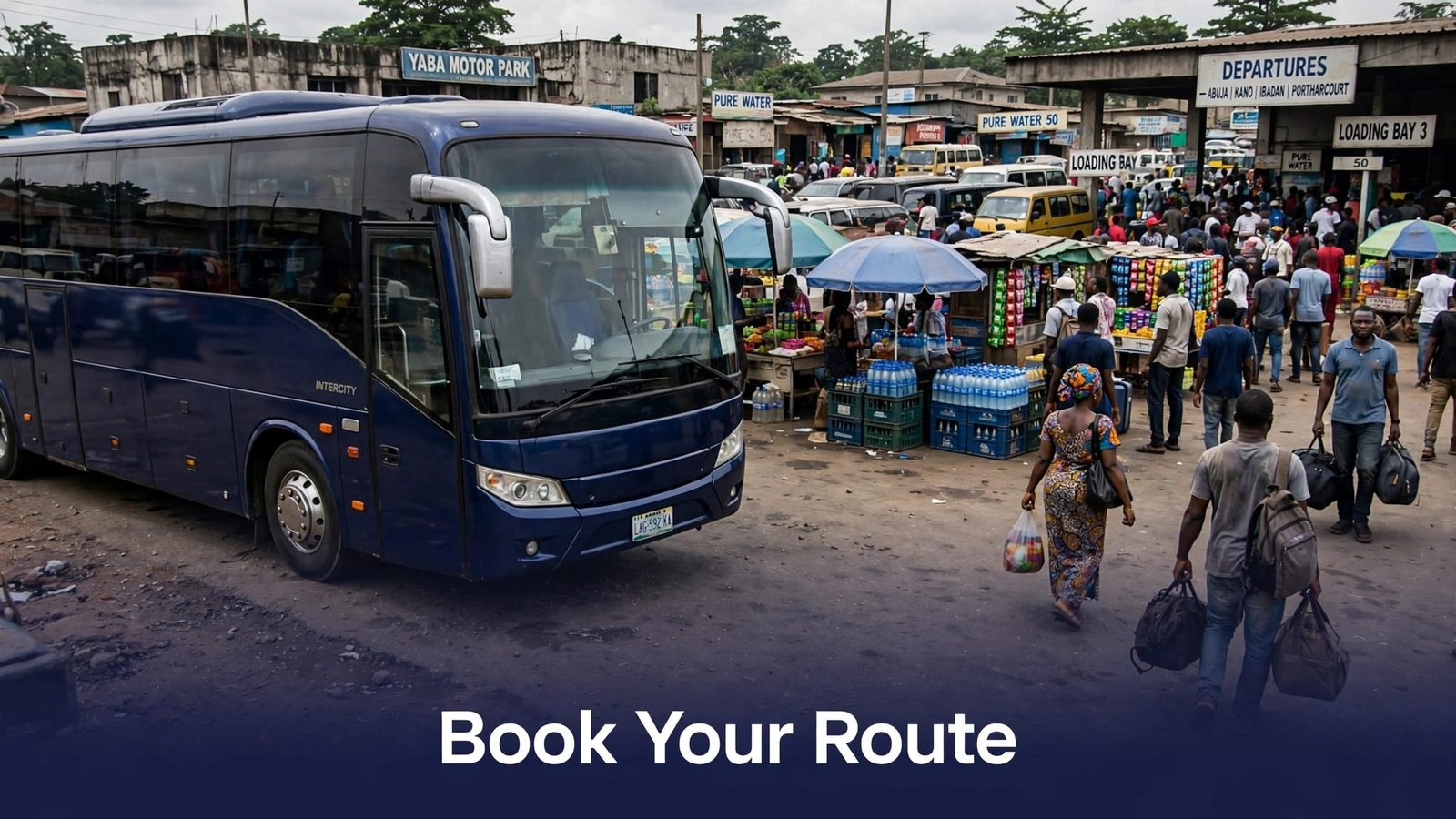
Sometimes. Most hotels, supermarkets, filling stations and chain restaurants accept Visa and Mastercard. Buka, danfo, keke, street vendors and most market stalls do not.
When a card fails, the cause is usually one of three things: your own bank’s fraud block, a 3-D Secure code sent by SMS to a number you cannot receive abroad, or a terminal that has lost connectivity. Before you fly, tell your bank your travel dates, enable international use, switch verification to your banking app where possible, and pack a second card from a different issuer.
Two cards from different banks beat one premium card. A card that depends on SMS to a home number is a card that will fail at a Lagos till.
POS charges and what to ask
The CBN guide lists merchant POS payments at ₦150 plus 0.5%, capped at ₦10,000 per transaction. Some businesses pass that charge to you and some absorb it. Ask whether the price includes the POS charge before you tap, and keep your card in sight at all times.
Never let a cashier or attendant walk away with your card. If a terminal is “not working”, ask to pay by transfer or pay cash. Do not hand over your PIN to anyone.

Photo by cottonbro studio
Bank transfers instead of cash
Transfers between Nigerian accounts are fast and cheap, and most urban businesses will accept one. The catch for visitors is the account itself: opening a Nigerian bank account generally requires a Bank Verification Number and a National Identification Number, plus local documentation, so most short-stay visitors never get that far.
If you are staying for months, ask your employer or host to walk you through account opening. If you are staying for days, plan around cash, cards and cash pickup.
Mobile wallets and the Cowry card
OPay, PalmPay, Moniepoint and Kuda are widely used by residents. Signing up as a visitor generally needs a Nigerian phone number and identity details, so treat these as options for long stays rather than arrival-day tools.
For public transport, Cowry cards cover regulated BRT buses and some train services. Reported card prices run from about ₦500 to ₦1,000, but we could not confirm a published official price, so ask at the sales point and keep the receipt. A cashless change for regulated buses was reported to start on 1 August 2026; confirm enforcement at your terminal before you rely on it. Our guides to BRT in Lagos and what to do when your Cowry card is debited but you cannot board cover the practical side.
What things cost in Lagos in 2026
These are reported estimates gathered from Lagos price guides published in November 2026 and from operator pages. They are planning ranges, not quotes. The figures move with the exchange rate, fuel prices and the season.
Eating and drinking
| Everyday item | Reported range | Note |
|---|---|---|
| Jollof rice with chicken, buka | ₦1,500 to ₦3,000 | Mainland buka lunch with a drink came in at ₦2,500 to ₦3,500 |
| Jollof rice, mid-range restaurant | ₦4,500 to ₦8,000 | An example in Lekki was quoted at ₦8,000 |
| Casual sit-down meal | ₦3,000 to ₦8,000 | Excludes alcohol in most cases |
| Suya, roadside portion | ₦1,000 to ₦2,000 | Portion size and cut drive the price |
| Bottled water, small | ₦300 to ₦500 | Buy from a shop, not a hotel minibar |
Eating out is where budgets drift. For a sense of what a full restaurant bill looks like in different parts of the city, see our notes on restaurants in Lagos and places to hang out in Ikeja.
Getting around: cash fares you will pay
| Journey | Reported fare | Status |
|---|---|---|
| BRT, Ikorodu to TBS | ₦960 | Route fare reported after the 13% adjustment |
| BRT, Oshodi to Tollgate | ₦970 | Route fare reported after the adjustment |
| BRT, Abule Egba to CMS or TBS | ₦1,080 | Route fare reported after the adjustment |
| BRT, Ojo Barracks to Mile 2 | ₦510 | Route fare reported after the adjustment |
| Airport taxi to Ikeja | ₦8,000 to ₦15,000 | Reported estimate, negotiated before departure |
| Ride-hailing to Victoria Island | ₦10,000 to ₦25,000 | Reported estimate, varies with demand |
| Airport taxi to Lekki Phase 1 | ₦30,000 to ₦50,000 | Reported estimate |
| Danfo, short trip | ₦500 to ₦1,500 | Cash, quoted by the conductor |
BRT fares are route-based, not flat. There is no single bus fare for the whole city, and the 13% adjustment reported in March 2026 changed the numbers on every route. Compare our Lagos bus fares guide and danfo fares on Ikorodu Road before you travel, and read how to get around Lagos for the full set of options. Fares also shift around holidays, as our Lagos transport fares page explains. If you plan to use the trains, check Lagos Terminus train for current ticketing.
Accommodation: what a room costs
| Type | Reported range per night | Where |
|---|---|---|
| Guesthouse or simple local hotel | ₦25,000 to ₦50,000 | Citywide |
| Mid-range chain hotel | ₦70,000 to ₦150,000 | Ikeja and Victoria Island |
| Upscale property | ₦180,000 to ₦450,000 and above | Victoria Island, Ikoyi, Lekki |
Hotel listings often display dollar rates, and the naira amount at checkout depends on the rate your card issuer applies. Confirm whether quoted rates include 7.5% VAT and any service charge, and confirm the deposit rule. Our Ikeja hotel guide and our guide to day-use hotels in Lagos show what to ask before you pay.
Scams to expect, and the checks that stop them
Counterfeit notes
The CBN advises checking a note by look, feel and tilt, and comparing it with another note of the same denomination and series. Its security features page sets out the checks.
For a ₦1,000 note, feel the raised print on the portrait, lettering and numerals. Hold it to the light and look for the watermark, and check that the security thread reads as a continuous line with small “CBN” lettering. Tilt it and the gold foil patch should shift from gold to green and reveal the Coat of Arms and “1000”. Compare the two serial numbers on the same note; duplicate serials are a warning sign.
Short-change and the “no change” trick
The common routine is a conductor or kiosk attendant who claims not to have change for ₦1,000 and keeps the difference moving. Keep ₦100 and ₦200 notes for small payments, state the amount you handed over out loud, and wait for your change before you step away.
The helpful stranger at the ATM
Anyone who offers to “help” you at an ATM, or who tells you the machine is faulty and offers to use theirs, is a risk. Use machines inside banks, hotels or busy malls, cover the keypad, and walk away if a stranger starts a conversation about your card.
Card cloning and fake POS
Keep your card in sight, refuse to let anyone photograph it, and check the amount on the terminal screen before you enter your PIN. If a shop insists on taking your card to a back room, pay cash instead.
Overpayment and transfer reversal
A buyer or “client” sends more than agreed and asks you to refund the difference in cash. The transfer is later reversed. Check your balance in your own app, not in a screenshot someone shows you.
Paying into a personal account for a business purchase
When you buy anything substantial, from a phone to a hotel stay, pay into a business account in the company’s registered name and get a receipt. Our Computer Village buying guide and Lekki Arts and Crafts Market guide show the same rule applied to two very different markets.
Advance-fee and romance requests
Any request to send money to unlock a prize, a contract, a visa or a relationship is a fraud pattern, not an opportunity. Report it to the Economic and Financial Crimes Commission. If you are crossing to Benin Republic and someone offers to “sort” your paperwork with cash, read our Seme border guide first.
Tipping, bargaining and money etiquette
Tipping is not compulsory and no one will chase you for it. At restaurants, 5% to 10% is a normal thank-you where a service charge is not already on the bill. For porters and hotel staff, ₦500 to ₦1,000 is usual.
Bargaining is expected in open markets and not in supermarkets or chain stores. Treat the first price as an opening figure, decide your own ceiling before you start, and be ready to walk away. Our Oshodi Arena market guide explains how pricing works there.
Do not tip with your card details or let anyone “hold” your phone while you pay.
Costs worth comparing before you travel
Four costs decide whether your money lasts in Lagos. Each is worth checking in your own currency before you book anything.
Card FX fees. A typical foreign transaction fee runs around 2% to 3% on top of the issuer’s exchange rate, and each ATM withdrawal adds its own charge. Compare two or three issuers, and check the fee for cash withdrawals specifically, because it is often higher than the purchase fee.
Travel insurance. Check whether cash loss is covered, and at what limit. Most policies cap it low or exclude it, so cash protection is usually your own split-and-hide routine, not the policy.
Transfer fees. Compare the total cost, meaning the fee plus the rate, not the headline fee. A zero-fee transfer at a poor rate costs more than a small fee at a good rate.
Hotel payment terms. Confirm whether the rate is fixed in naira or in dollars, whether VAT is included, and whether a foreign card is accepted at check-in. A dollar-denominated rate on a naira card can settle higher than you budgeted.
Before you land: money checklist
- Tell both banks your travel dates and enable international card use.
- Save your bank’s fraud line and your card numbers somewhere offline.
- Switch card verification to an app, not SMS to a home number.
- Carry two cards from different issuers, kept apart.
- Land with about ₦20,000 in clean notes, or arrange a cash pickup.
- Download a currency converter and check the CBN rate before you exchange.
- Save the address of the nearest licensed bureau de change to your hotel.
- Keep ₦100 and ₦200 notes for transport and small payments.
- Split cash between pocket, bag and room safe.
- Keep receipts for hotel, transport and exchange transactions.
Two more documents cost money at the border and at the airport: the yellow fever certificate and your visa, both covered in our Nigeria visa requirements guide. If you plan to buy liquor or perfume on the way out, our MMIA duty-free guide shows what those prices look like. And when you want the whole trip in one number, build it with our Lagos trip budget guide.
Frequently asked questions
What currency does Lagos use?
The Nigerian naira, written as ₦ and coded NGN. Prices in Lagos are quoted in naira, and you should budget in naira even if you think in dollars.
Can I use my Visa or Mastercard in Lagos?
At hotels, supermarkets, chain restaurants and filling stations, usually yes. At buka, markets, danfo and small shops, usually no. Carry cash as well.
How much cash should I carry in Lagos?
About ₦20,000 to ₦40,000 a day for a mid-range visitor, split between two places. Keep a separate reserve and use a card where it works.
Is it safe to exchange money at Lagos airport?
It is convenient and legal at licensed counters, but the rate is usually weaker than in the city. Change only what you need for the first day.
Are old naira notes still legal tender?
Yes. The CBN says all notes it issued remain legal tender, and the Supreme Court extended the use of the old ₦200, ₦500 and ₦1,000 designs. Worn notes may still be refused in shops.
What is the ATM withdrawal limit in Nigeria?
For accounts held with Nigerian banks, the CBN limit is ₦100,000 per customer per day and ₦500,000 per week, effective 1 January 2026. Foreign cards are limited by the machine, your issuer’s daily cap and your issuer’s fee.
Can I get naira without a Nigerian bank account?
Yes, through Western Union cash pickup with a passport or another listed ID. Bank-account and mobile-money payouts need a Nigerian account, which generally needs a BVN and NIN.
How much does a day in Lagos cost?
A budget day with public transport and buka food can sit under ₦10,000. A mid-range day with ride-hailing, a sit-down meal and a hotel runs from about ₦40,000 upward, depending on the room.
What we could not confirm
Three points in this guide are reported rather than officially published, and we have marked them that way. There is no single official parallel-market rate, so we quote dated reports instead. The Cowry card price is reported at ₦500 to ₦1,000, with no published official figure we could verify. Enforcement of the reported cashless change on regulated buses should be checked at the terminal on the day.
How we checked this guide
Rates come from the CBN’s published NFEM page for 4 and 5 November 2026. Limits and charges come from the CBN circular on revised cash-related policies and the CBN guide to charges. Licensing comes from the CBN BDC guidelines and its licensed-operator press release. Prices and fares come from Lagos price guides and transport reports published in 2026, and are shown as ranges because they vary by area and by week. Every link was checked live on 6 November 2026. LagosMove does not sell tickets, run transport or accept paid placement, and this page carries no affiliate links.