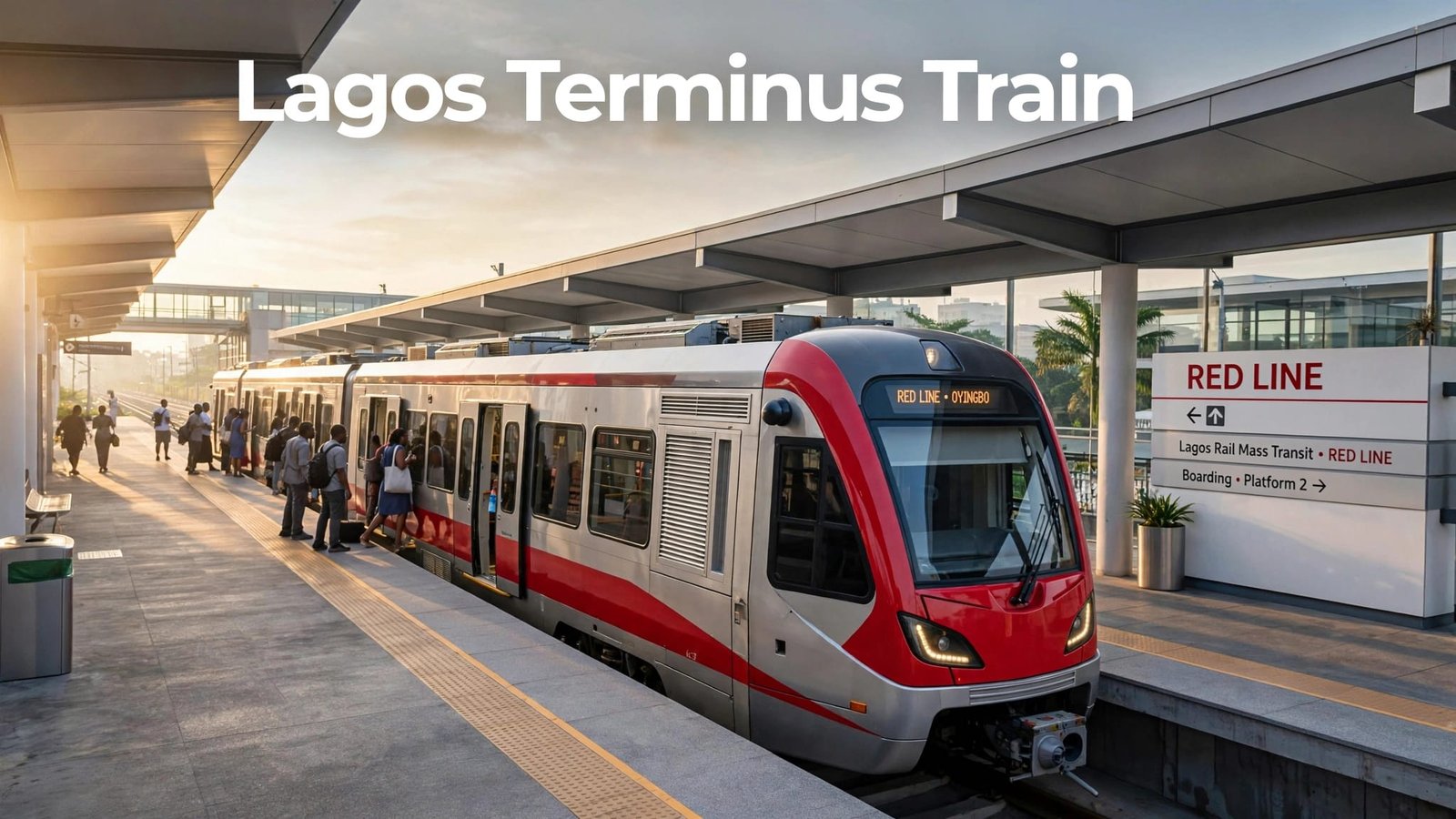
The Lagos Terminus train is the Red Line service of the Lagos Rail Mass Transit, running between Agbado and its Oyingbo terminus. This guide covers the full station list, current fare figures, the weekday timetable, and what actually happens from the gate to the platform. It draws on our two years of independent research into Nigerian transport operators, with figures attributed to LAMATA (the Lagos Metropolitan Area Transport Authority) and published Red Line service information. It was last updated in October 2026. Fares and timetables change, so treat every figure here as a reported range rather than a fixed price.
Key Takeaways
- The Red Line runs about 27 km between Agbado and Oyingbo, with eight stations including Ikeja, Oshodi and Yaba.
- Oyingbo is the Red Line terminus; the Blue Line operates on a separate corridor between Marina and Mile 2.
- LAMATA’s published timetable lists weekday service, with nine scheduled trains a day across both directions.
- The Cowry Card is the named payment method; reported full-route fares moved from ₦1,500 at launch to ₦1,000 after a LAMATA reduction.
- Rail covers only part of most journeys, so plan the road legs at both ends before you travel.
What the Lagos Terminus Train Actually Is
Lagos now runs two rail corridors under the Lagos Rail Mass Transit programme. Keep the two separate in your head, because fares, stations and rules differ.
The Red Line runs between Agbado, near the Ogun State border, and Oyingbo on the mainland. It stops at major mainland areas such as Ikeja, Oshodi and Yaba. Oyingbo is the terminus, which is where the “Terminus train” label comes from.
The Blue Line runs on a separate corridor between Marina and Mile 2, with stations including National Theatre and Iganmu. It opened for commercial service in September 2023 and has no shared track with the Red Line. A fare rule or station detail for one line does not apply to the other.
Understand one limit before you plan anything. Rail covers only the corridor between stations. If your home, office or destination sits far from a station, you still need a danfo, BRT bus, keke, or ride-hailing trip at each end. Price and time those legs before you commit to the train.
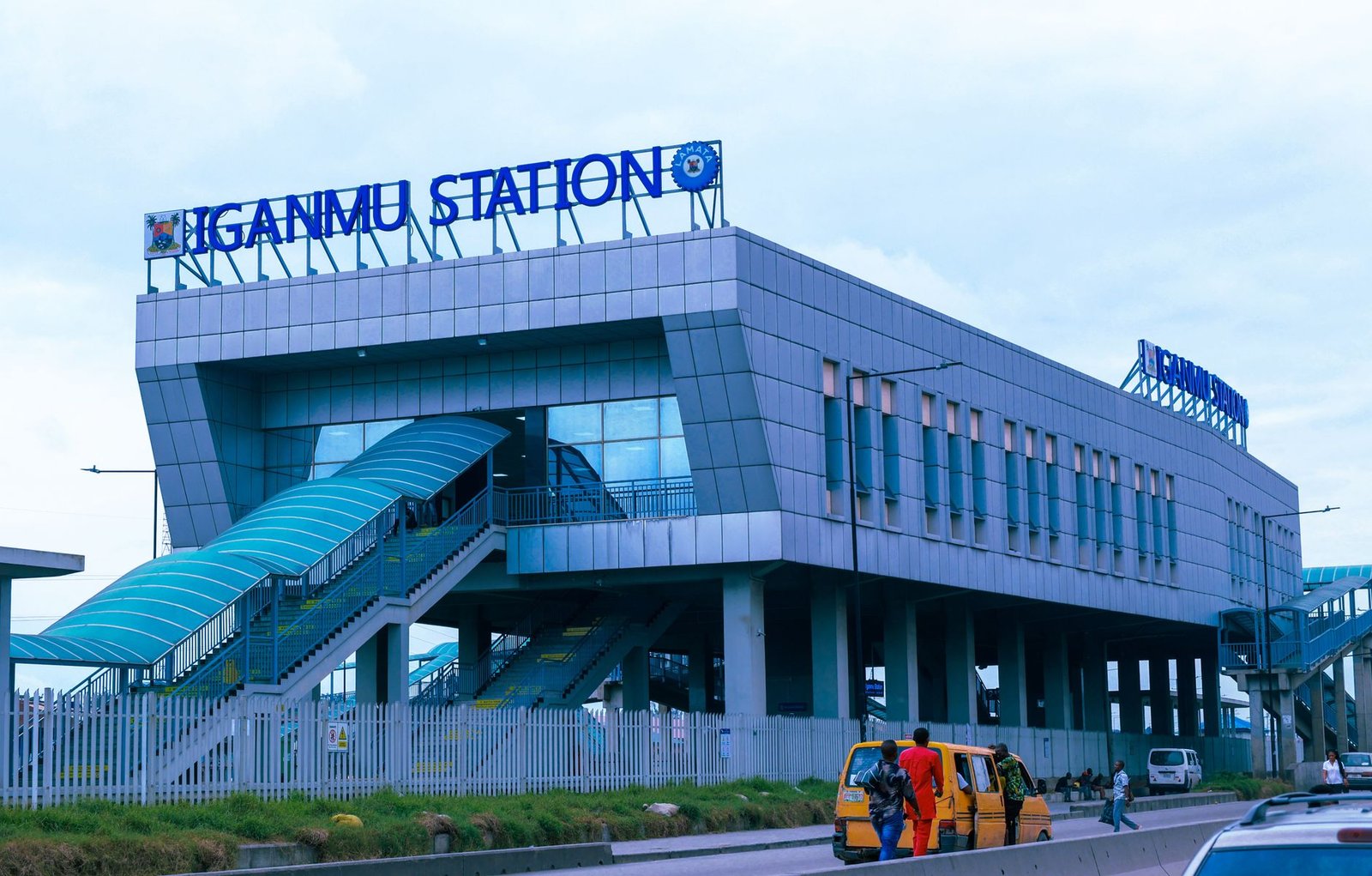
Photo by Matthew Ọbańlá
Terminus Train Stations Along the Red Line
The operating Red Line corridor lists eight stations in travel order from Agbado: Agbado, Iju, Agege, Ikeja, Oshodi, Mushin, Yaba and Oyingbo. Each station sits inside an established mainland district, so match the station to the end of your journey, not to the nearest landmark on a map.
| Station | Area it serves |
|---|---|
| Agbado | Communities near the Lagos-Ogun State border |
| Iju | Iju-Ishaga and surrounding streets |
| Agege | Agege district and its commercial core |
| Ikeja | The Ikeja area, close to the state capital district |
| Oshodi | The Oshodi transport interchange and markets |
| Mushin | Mushin and nearby residential streets |
| Yaba | Yaba, including its education and market districts |
| Oyingbo | The Red Line terminus and Oyingbo bus corridor |
Ikeja and Oshodi are the stops most commuters aim for, because both connect to dense bus and paratransit networks. Oyingbo matters for a different reason: it is the end point, and the transfer point for trips continuing toward Lagos Island or the lagoon side.
Note the planning detail that trips people up. LAMATA’s broader Train Services material also describes a proposed 37 km Red Line extension to Marina with 12 proposed stations. That alignment is planned, not operating. Build your journey around the eight listed stations only.
Oyingbo Terminus: The End of the Line Explained
Oyingbo sits on the mainland, at the end of the Red Line corridor. The name confuses first-time visitors because “Oyingbo” also describes the surrounding bus corridor and market area, so a direction to “Oyingbo” may mean the rail station, the bus stop, or the neighbourhood. Confirm which one your connection needs.
The station works like the other Red Line stops, with a defined sequence on arrival. Enter through the gates, settle payment at the approved point, and pass the security check before you reach the platform. Signs and staff direct the flow, so follow the posted instructions rather than copying other passengers who may be transferring from a different line or service.
Connections are the reason Oyingbo earns its terminus role. The Oyingbo corridor carries heavy danfo and BRT traffic, so you can complete the road leg of your journey within walking distance of the station. Treat that transfer as part of the trip: know your connecting stop before you board the train, and keep small change or a funded Cowry Card for the road leg.
Terminus Train Fares and How to Pay
Rail fares on the Red Line are set separately from the Lagos bus fare table. Reported figures give you a working range, and the posted fare at the station is the amount you actually pay.
| Corridor | Reported fare | Payment method |
|---|---|---|
| Red Line, Agbado to Oyingbo (full route) | ₦1,500 at launch; ₦1,000 after a LAMATA reduction | Cowry Card |
| Blue Line, Marina to Mile 2 (comparison) | ₦750 peak, ₦562 off-peak (reported) | Cowry Card |
The ₦1,000 figure came from a LAMATA announcement that reduced the Agbado to Oyingbo fare after full operations began. The Blue Line figures come from a dated fare reference and illustrate how rail fares can vary by distance and by peak versus off-peak periods. Shorter Red Line trips, such as Ikeja to Oyingbo, appear in fare tables at lower amounts than the full route.
Payment runs through the Cowry Card, the cashless card used across regulated Lagos transport, including BRT buses and both rail lines. Keep the mechanics simple:
- Obtain or fund the card at the approved counter or service point at the station, or through approved top-up channels such as POS agents or a linked wallet.
- Tap the card as instructed at the entry gate.
- Keep your receipt or payment record when one is issued.
Separate the card purchase cost from your ride credit. Ask how much of your first payment is available for travel. Don’t assume bank cards, mobile transfers or QR payments will work at every station gate; the Cowry Card is the method the timetable names.
Train Schedule, Boarding Steps and What to Expect On Board
LAMATA’s published Red Line timetable lists Monday to Friday service, with nine scheduled departures a day across both directions. Plan around the specific departure times rather than turning up at random.
The service windows are narrow bands, not a continuous flow. Trains heading north from Oyingbo fall between 6:00 a.m. and 7:30 p.m. Trains heading south from Agbado fall between 6:15 a.m. and 8:40 p.m. A listed departure from Oyingbo includes 6:00 a.m. and 8:10 a.m., with the remaining departures spaced across the morning and evening periods. There is no train every few minutes, and no weekend service in the published timetable.
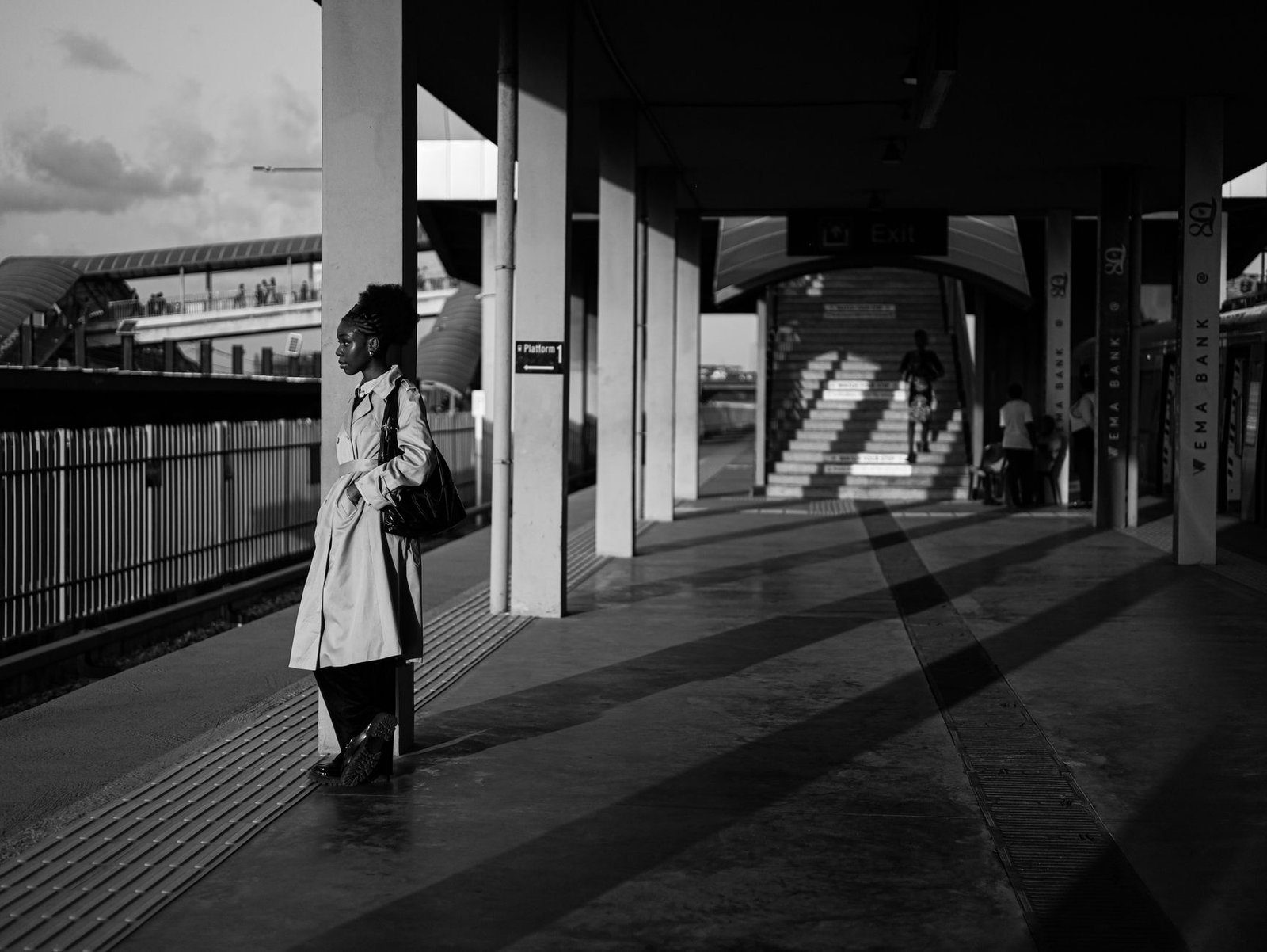
Photo by Paul Uchechukwu 🇳🇬
Boarding follows the same sequence at each station.
- Join the queue outside the station entrance.
- Tap your funded Cowry Card at the entry gate as instructed.
- Pass the security screening at the checkpoint.
- Move to the platform for your direction of travel and wait behind the marked line.
- Board when the train stops and the doors open, and keep your card ready for the exit gate.
Keep luggage light. The service is built for commuters, not for travellers with suitcases, and there is no checked baggage process. A backpack or a single handbag is manageable at peak periods; anything larger slows the gate and the aisle.
On board, expect seated and standing passengers, short station stops, and a quiet ride compared with road transport. Follow the same etiquette that applies on any regulated Lagos service: give up priority seats, keep aisles clear, and hold handrails for the full trip.
Avoid the crush where you can. The morning departures carry commuters into the mainland-to-island flow, and the evening departures carry them back out. If your schedule allows a mid-morning or early-afternoon train, take it. Arrive at the station at least 15 minutes before a listed departure, because gates and screening add time you don’t control.
Is the Terminus Train Right for Your Trip?
Use a simple test before you choose rail over road.
Rail wins when both ends of your journey sit close to a station. An office near Oyingbo with a home near Agege is a strong Red Line trip: two short walks, one train. Ride-hailing or a danfo wins when either end sits far from the corridor, because the connecting legs erase the time and money you saved.
Price the full door-to-door journey, not the train fare alone. Add the cost of the first leg, the last leg, and any wait in between. A ₦1,000 train fare that still requires two ₦800 keke rides costs more than the danfo route you dismissed at first glance. Weigh the total, then decide.
Factor in Lagos traffic reality. Rail bypasses the congestion on the Agbado to Oyingbo corridor, which is the core argument for it. But the road legs still sit in traffic, so add a buffer to every estimate. Leave earlier than the map suggests, especially in rain or near major markets.
Watch the arrival end of your trip in the evening. Bus availability thins out late, and a train that arrives after your connecting service has faded leaves you negotiating with the last vehicles on the road. If your return trip ends after dark, plan the road leg before you board, and prefer busier stops where vehicles still run.
Frequently Asked Questions
Does the Lagos Terminus train reach Ikeja?
Yes. Ikeja is one of the eight operating Red Line stations between Agbado and Oyingbo. Match the station to your actual destination, since the Ikeja district is wide and you may still need a short road connection after you alight.
Can you carry luggage on the Red Line?
Yes, within commuter limits. There is no checked baggage process, so carry what you can manage through the gate, screening and aisle alone. Full travel luggage belongs on interstate coaches, not on this service.
Is the train faster than a danfo?
On the corridor itself, usually yes, because the train bypasses road congestion entirely. The comparison collapses when both ends of your trip need long road legs. Add the connection times before you judge.
Where do you get a Cowry Card?
You can obtain or fund a Cowry Card at the approved counter or service point at Red Line and Blue Line stations, and through approved top-up channels such as POS agents or a linked wallet. Fund it before you reach the gate, not while the queue builds behind you.
Does the Red Line train run at night or on weekends?
No. The published timetable lists weekday service only, with the last departures inside the posted windows of 7:30 p.m. from Oyingbo and 8:40 p.m. from Agbado. Arrange road transport for anything later or on weekends.
How is this different from interstate coach travel from Lagos terminals?
The Red Line moves passengers within Lagos between city stations. Interstate coaches depart from dedicated parks such as those at Oshodi, Jibowu or Festac, sell fixed-seat tickets, and run long distances to other states. Different operators, different tickets, different luggage rules.
Conclusion
Recap the three decisions that make this service work for you. Know your nearest Red Line station, and the one nearest your destination. Use the timetable’s weekday windows and the reported fare range as your planning baseline, and let the posted fare at the gate settle the final number. Treat the train as one leg of a full door-to-door journey, with the road legs planned and paid for.
Our related guides on the Blue Line, BRT fares and Lagos interstate terminals cover the other legs in the same detail. The rail network is still growing, and each new station changes which journeys make sense on rail.
Which leg of your usual route will you move onto the Red Line first?
Leave a Reply