Lagos Transportation Guide: Smart Routes, Fares, and Parks
Getting around Lagos can mean changing transport types, checking different fares, dealing with busy corridors, and finding the correct bus park or terminal. Depending on your route, budget, luggage, and timing, you may use BRT, standard buses, danfo, rail, ferries, taxis, ride-hailing, private transfers, or intercity coaches.
The right choice is not always the closest stop or the cheapest first fare. This guide helps you compare the full journey, including the connection to your first stop, waiting time, luggage handling, traffic exposure, and transport after arrival.
Key Takeaways
- Choose BRT, buses, rail, ferries, taxis, or ride-hailing based on your route, luggage, budget, and time.
- Check the latest Lagos BRT route and fare guide before using a regulated bus corridor.
- Use the Lagos Blue Line rail guide when an active station-to-station route fits your journey.
- Confirm the exact bus park, terminal gate, reporting time, payment process, and luggage rules before interstate travel.
- Compare the total door-to-door cost, not only the first fare shown.
Quick Answer
Use BRT, standard buses, danfo, or rail when your journey follows an active public transport corridor and you can reach the stop or station easily. Use taxis, ride-hailing, or private transfers when you need door-to-door travel, have large bags, are travelling with children, or need fewer connections. For interstate travel, treat the trip to the private coach terminal as a separate part of your journey and confirm the exact operator, park, gate, and reporting time before you pay.
Choose the Right Lagos Transport Option for Your Trip
Your best transport option depends on the complete journey, not only the first vehicle you see. Consider your starting point, destination, luggage, number of travellers, payment method, traffic conditions, and the number of transfers required.
| Transport option | Best for | Payment or booking | Traffic impact | Luggage suitability | Main limitation |
|---|---|---|---|---|---|
| BRT | Major city corridors and regular commuting | Cowry Card or the approved method for the route | Road traffic can still affect access and arrival | Light to moderate bags | Fixed routes and stops |
| Standard buses | Longer city routes outside some BRT corridors | Confirm the current route payment process | Fully exposed to road traffic | Light bags | Routes and fares can vary |
| Danfo | Local neighborhood connections | Confirm fare before boarding | Often affected by congestion | Small bags | Less structured stops and route information |
| Shared taxi or Sienna | Shorter trips with fewer stops | Confirm the full fare before departure | Fully exposed to traffic | Moderate luggage | Availability and price can vary |
| Lagos Rail Mass Transit | Trips matching active rail stations | Cowry Card and station process | Less exposed to road traffic on the rail section | Small bags | Limited station coverage |
| Ferry | Selected waterfront routes | Confirm current ferry payment process | Avoids road congestion on water routes | Confirm luggage rules | Weather and route availability matter |
| Taxi or ride-hailing | Airport travel, direct trips, and flexible pickup | App, card, cash, or agreed fare | Still affected by road conditions | Useful for larger bags | Higher and changing fares |
| Private transfer | Airport pickups, families, meetings, and groups | Pre-arranged booking | Traffic can still cause delays | Usually suitable for more luggage | Higher cost and booking commitment |
| Intercity coach | Travel outside Lagos, including Ibadan, Abuja, or Port Harcourt | Operator booking page or terminal ticket office | Traffic affects travel to and from the park | Confirm operator baggage rules | Not for ordinary movement within Lagos |
Choose the option that reduces your total cost, transfer count, luggage stress, and risk of arriving late, not simply the one with the lowest first fare.
Compare the complete trip before deciding
A low-cost bus may require a paid ride to the first stop, another vehicle after arrival, and extra waiting time. A direct private ride costs more at the start, but it may be practical for several travellers, heavy luggage, or an appointment that cannot be missed.
- Cost of reaching the first stop, station, jetty, park, or terminal.
- Waiting time and the number of transfers required.
- Transport from the final stop to your actual destination.
- Luggage space and the effort of carrying bags between vehicles.
- Payment method, booking requirements, and possible fare changes.
Lagos Public Transportation: BRT, Buses, Rail, and Ferries
BRT and standard buses for planned city routes
BRT is a structured option on selected Lagos corridors. It uses designated stops, terminals, organized boarding areas, and route-based fares. Useful planning corridors can include Ikorodu Road, Mile 12, Ketu, Oshodi, CMS, TBS, and Mile 2, but the exact route and stop should be confirmed before travel.
LAMATA bus fare information and official service updates are more reliable than copied fare lists. A fare for Ikorodu to TBS, for example, does not automatically apply to every stop along Ikorodu Road.
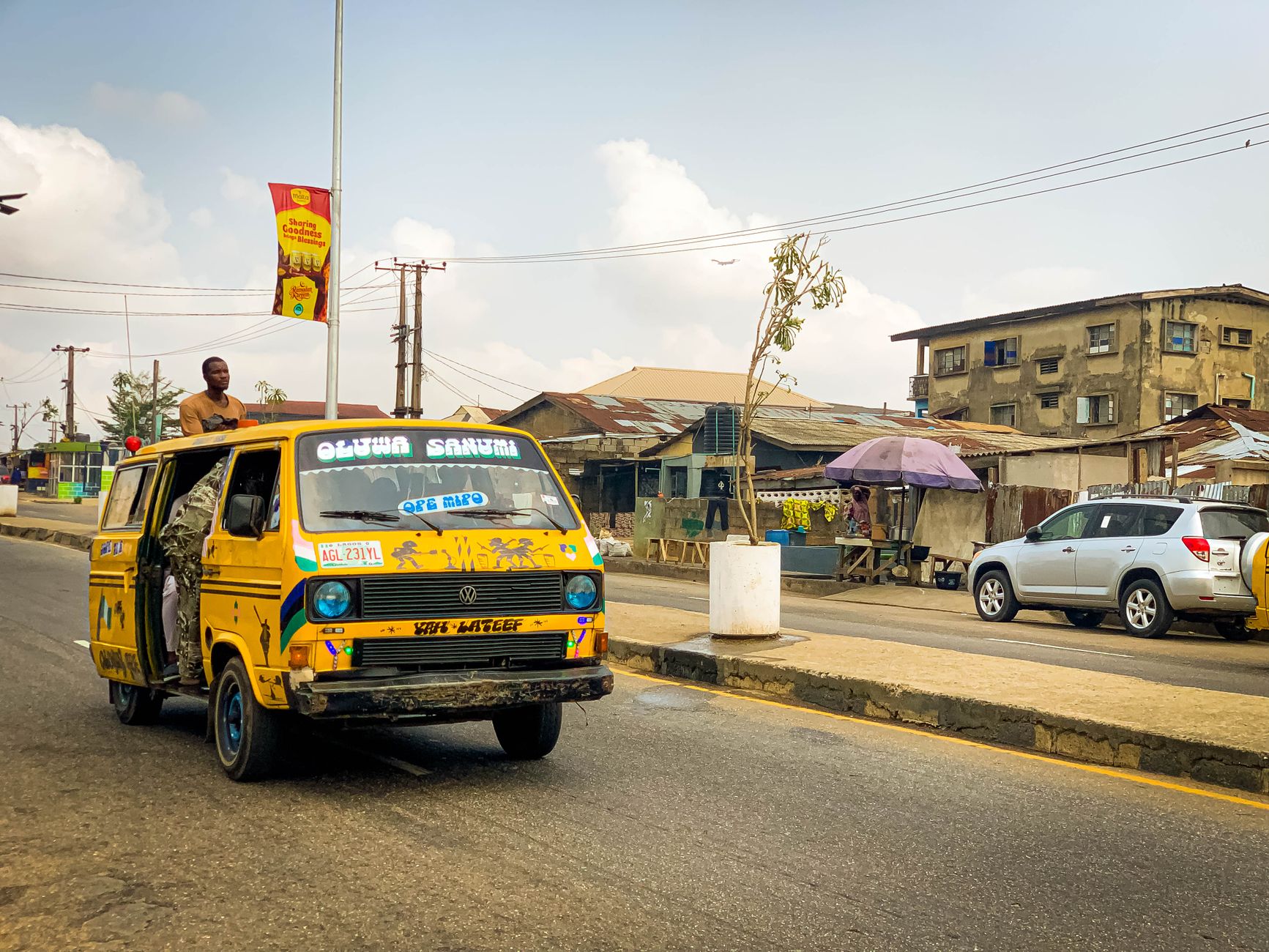
Danfo and shared vehicles for local connections
Danfo buses and shared Sienna vehicles can help with local movement between neighborhoods, markets, bus stops, rail stations, and terminals. They are most useful when a formal route does not cover the final part of your journey directly.
- Confirm the exact destination, not only the general neighborhood.
- Ask for the fare before entering the vehicle.
- Confirm the correct loading point and direction of travel.
- Ask whether the vehicle leaves immediately or waits for more passengers.
Rail and ferry connections that can reduce road travel
Lagos Rail Mass Transit can reduce road exposure when both ends of your trip connect well to active stations. The Blue Line is useful for journeys that fit its operating corridor, while the Red Line serves selected mainland stations. Confirm the current station list, operating hours, payment process, service status, and fare before relying on rail for a time-sensitive trip.
Use the Lagos Blue Line route and fare guide for planning, then verify live service details through LAMATA train services.
Ferries may be useful on selected waterfront routes and can avoid some road congestion. Confirm current LAGFERRY routes, jetties, sailing times, payment rules, and weather-related service changes before travelling. A ferry only saves time when you can reach the departure jetty easily and continue from the arrival point without a costly or difficult transfer.
Lagos Bus Parks and Interstate Travel: Find the Correct Terminal
Lagos bus parks are not interchangeable. The correct departure point depends on your operator, destination, route, travel date, and confirmed loading location. A park close to your home may not serve your destination, while a longer trip to the right terminal can prevent a missed departure and extra fares.
How to choose the right interstate terminal
Jibowu, Oshodi, Berger, Ojota, Mile 2, Festac, Ajah, Agege, Ikeja, Iyana Ipaja, and other Lagos areas may appear in operator listings. A neighborhood name alone is not a boarding instruction. Ask whether the location is a ticket office, pickup point, private terminal, or actual departure gate.
How to book an interstate coach without choosing the wrong park
- Choose your exact destination, travel date, and direction of travel.
- Compare operators currently serving that destination.
- Confirm the exact Lagos terminal, gate, landmark, or loading bay.
- Check the reporting time, not only the scheduled departure time.
- Review the seat, vehicle type, baggage allowance, and change terms.
- Pay only through the operator’s verified website, app, recognized booking channel, or staffed ticket office.
- Save the ticket, receipt, booking reference, and official support contact.
- Reconfirm the terminal and reporting time before leaving home.
For operator-specific planning, review LagosMove’s guide to ABC Motors terminals and routes, then verify your final terminal and ticket details through the operator’s own current booking channel.
Compare the full travel cost, not only the coach ticket
Add the cost of getting to the Lagos terminal, the confirmed ticket fare, luggage charges, food, waiting time, and onward transport after arrival. A cheaper ticket can cost more overall if the park is difficult to reach or the arrival terminal is far from your hotel, office, or home.
- Transport from your home to the Lagos terminal.
- Confirmed ticket fare and booking charges.
- Extra baggage or luggage fees.
- Food and water during a long wait or journey.
- Transport from the arrival park to your final destination.
- Extra time caused by traffic, weather, terminal queues, or holiday demand.
How to Get Around Lagos by Airport, Neighborhood, and Time of Day
Airport transport from Murtala Muhammed Airport
Confirm whether your flight uses MMA1 or MMA2 before arranging transport. The terminals are not interchangeable, and the right pickup point depends on your airline, arrival time, luggage, driver arrangement, and current airport procedures.
Practical options may include an authorized airport taxi, a ride-hailing service, a hotel-arranged transfer, or a verified private transfer. Public transport can work for travellers with light luggage and flexible schedules, but airport connections may be indirect. Confirm the current route before relying on it.
- Confirm the pickup location and terminal before your flight lands.
- Share your flight number with a hotel transfer or private driver.
- Confirm the driver’s name, vehicle description, and number plate before entering.
- Check the final fare, waiting terms, and luggage space.
- Allow extra time for immigration, baggage collection, rain, airport queues, and traffic.
For wider planning, see LagosMove’s guide to Lagos airport and road travel times.
Getting between Ikeja, Yaba, Surulere, the Island, and Lekki
Trips between Ikeja, Yaba, Surulere, Victoria Island, Ikoyi, and Lekki rarely have one route that works for everyone. Your nearest stop may not be close to your final destination, and the last connection may add more time than the main journey.
- Use BRT or standard buses when the main corridor matches most of your trip.
- Consider rail when active stations are convenient at both ends.
- Use a taxi or ride-hailing vehicle when luggage, meetings, or several transfers make public transport difficult.
- Combine public transport with a short local ride when the main route covers most of the distance.
Plan around traffic, rain, events, and late travel
Road journeys can take longer during weekday rush hours, school periods, public holidays, heavy rain, major events, and road disruptions. Busy areas can include Oshodi, Ikeja, Ikorodu Road, Ojota, Victoria Island, and the Lekki-Epe corridor.
Leave a buffer instead of planning to arrive at the exact departure time. Keep a backup option in mind, such as using a verified ride-hailing service for the final section of a trip when public transport no longer fits your schedule.
Cheap Transportation in Lagos: Spend Less Without Risky Transfers
Cheap transportation in Lagos depends on the full journey, not only the first fare you see. BRT and standard buses are often the main low-cost choices for city trips, while danfo, shared Sienna vehicles, rail, ferries, taxis, and ride-hailing fit different routes and schedules.
Total cost = first connection + main ride + transfers + luggage or access fees + final connection
For example, a BRT fare may look cheaper than a direct ride, but the BRT trip can still require a paid connection to the stop and another vehicle after arrival. Compare walking time, waiting time, transfers, luggage handling, and the cost of reaching your real destination.
A taxi, ride-hailing trip, private transfer, or shared Sienna can make sense when public transport requires too many connections. This is especially true for airport travel, heavy luggage, children, business meetings, or destinations far from a major corridor.
A low fare is not a saving if it leaves you far from your destination and forces you into an expensive taxi.
For rail travel beyond Lagos, compare the journey separately from local transport. For example, review the Lagos to Ibadan train ticket and booking guide, then add the cost of reaching the station and continuing from the arrival station.
Frequently Asked Questions
What is the main public transportation system in Lagos?
Lagos does not use one single public transportation system. The city uses a network of BRT and standard buses, danfo, Lagos Rail Mass Transit, taxis, ride-hailing services, ferries, and private transport operators. Your best option depends on the route, schedule, luggage, budget, and current service status.
How much does transportation cost in Lagos?
There is no single citywide transport fare. The amount depends on the route, vehicle type, distance, payment method, demand, and travel date. Use official LAMATA fare information for regulated BRT and standard bus routes, confirm local fares before boarding, and check live app quotes for ride-hailing trips.
Which Lagos bus parks serve interstate journeys?
Jibowu, Oshodi, Berger, Mile 2, Ojota, Ajah, Iyana Ipaja, Agege, Festac, and Ikeja may serve different operators and destinations. Confirm the exact company terminal, gate, reporting time, route, arrival park, and luggage rules before paying. A neighborhood name alone is not enough.
Does Lagos have passenger rail service?
Yes. Lagos Rail Mass Transit operates active passenger rail corridors, including the Blue Line and Red Line. Rail can reduce road exposure between connected stations, but you still need transport to the first station and from the final station to your destination. Confirm current stations, fares, service hours, and payment rules before travelling.
What is the easiest way to get from Lagos airport to my destination?
The practical choice depends on your arrival terminal, luggage, destination, arrival time, and airport pickup rules. Authorized airport taxis, ride-hailing services, hotel transfers, and verified private transfers are often the most direct options. Confirm your pickup point, vehicle details, luggage space, and total fare before leaving the airport.
How can you avoid paying for the wrong Lagos transport service?
Confirm exactly what you are buying before payment. Check the destination, travel date, terminal or pickup point, reporting time, total price, luggage terms, and accepted payment channel. Use recognized operator apps, websites, staffed counters, or official contacts, and avoid sending money to unverified personal accounts.
Sources and Verification
This guide uses official transport-provider information where available and should be read alongside live operator updates. Key sources include:
Plan Your Lagos Journey With Fewer Surprises
Choose the correct transport corridor, confirm the actual terminal or pickup point, compare the full door-to-door cost, and keep your ticket or fare details available. Explore LagosMove’s BRT, rail, airport-transfer, interstate bus, and neighborhood transport guides before your next trip.