How much does a Lagos trip really cost? There’s no single number, but a comfortable visit usually comes down to three choices: where you stay, how you move, and when you travel. Pair cheap public transport with the occasional private ride and your daily spend stays manageable.
One thing changed in 2026. LAMATA approved a 13% fare increase that took effect on March 2, so a BRT ride from Ikorodu to TBS now costs ₦960, and standard routes like Berger to Ajah run ₦1,710. If you’re planning around an old fare list, you’ll arrive underfunded.
That’s the problem this guide solves. We break down what you’ll pay for transport, lodging, and food, then show you how to build a daily budget that holds up in real Lagos traffic, not on a spreadsheet. We also flag where prices shift (ride-hailing surges, airport transfer estimates) so nothing catches you off guard.
Start with the daily budget, then work through each category. By the end, you’ll know exactly what your Lagos trip costs before you book anything.
Key Takeaways
- LAMATA’s revised fares took effect March 2, 2026 after a 13% increase, so BRT rides like Ikorodu to TBS now cost ₦960 and standard routes like Berger to Ajah run ₦1,710.
- Always check LAMATA’s current fare table before boarding; old social media price lists will leave you underfunded.
- Danfo, taxi, and ride-hailing fares follow separate systems, so confirm the price before you pay.
- Pair cheap public transport for routine trips with ride-hailing for rain, night travel, or luggage days.
- Airport transfers have no fixed citywide fare; treat online figures as planning estimates and confirm the total before the vehicle moves.
Your Lagos Trip Budget Guide: What Things Really Cost
Three lines eat most of your money in Lagos: where you sleep, how you move, and what you eat. Everything else is small change by comparison. Get those three right and your budget holds. Get them wrong and a “cheap” trip turns expensive fast. Here’s where the money actually goes, starting with the biggest one.
Where Your Money Actually Goes
Accommodation takes the largest share, and the price depends almost entirely on your area. Budget rooms in Yaba and Surulere start around ₦20,000 to ₦45,000 per night. Ikeja sits at ₦25,000 to ₦50,000 for budget stays and ₦60,000 to ₦120,000 mid-range. Lekki runs similar, while Victoria Island and Ikoyi start around ₦120,000 mid-range and climb past ₦300,000 for luxury.
Treat those figures as planning numbers only. Rates move with season, demand, and even the flight calendar. A room that costs one amount in February can jump 50% or more in December. Confirm the final price with the hotel directly before you pay anything.
Transport comes second, and it swings wildly depending on your choices. A BRT ride costs under ₦2,000 on most routes after the March 2026 fare revision. Ride-hailing across town runs from a few thousand naira to ₦15,000 or more in traffic. Airport car-hire trips into the city generally range from ₦10,000 to ₦20,000, with short Ikeja runs at the bottom and Lekki or Victoria Island at the top.
Food is the flexible line. Local eateries and street food keep daily meals under ₦10,000. Mid-range restaurants in Victoria Island or Lekki can triple that for one dinner. You control this line more than the other two.
Why Every Online Price Is an Estimate
Here’s the uncomfortable truth: Lagos has no single citywide fare for taxis, ride-hailing, or airport transfers. Anyone who quotes you one flat number is guessing, and you shouldn’t budget on a guess.
The same trip can cost two different prices because quotes move with four things: demand, traffic, time of day, and your exact pickup point. A ride from MMIA to Ikeja that costs one amount at 10 AM can cost far more at 5 PM on a Friday, when the whole city’s commute fights for the same cars. Rain, big events, and waves of arriving passengers push prices up by half or more.
So protect yourself before money moves:
- Open your ride-hailing app shortly before travel and check the live quote, not last night’s screenshot.
- With a taxi desk or private transfer, ask directly whether the price is fixed or metered.
- Confirm whether tolls and parking sit inside the quote.
An estimate protects your expectations. Only a confirmed quote protects your wallet.
The number that matters is the one confirmed in the app or agreed with the driver before the vehicle moves. Every other figure is a planning tool, nothing more.
Getting Around Lagos on a Budget
Transport is where Lagos budgets live or die. The good news: you have more options than you think, and mixing them is the smart move. Cheap public transport handles your routine trips. Private rides cover the days when rain, luggage, or late hours make them worth it. Here’s how to split it.
BRT, Danfo, and Shared Buses: Your Cheapest Rides
BRT buses are the backbone of budget travel. After LAMATA’s March 2026 fare revision, expect route-based prices like ₦450 from Ikorodu to Mile 12, ₦680 from Mile 2 to TBS, and ₦960 from Ikorodu to TBS. Your fare depends on your exact origin and destination, so check the current table before you budget.
One thing to sort out before you queue: the Cowry Card. This contactless card is now the expected payment on most regulated BRT routes, and cash is being phased out on key corridors like Ikorodu Road. Buy one at a BRT terminal for a small fee, fund it through approved channels like POS agents or a linked wallet, and top it up in larger amounts rather than small daily loads. The recharge queues at places like Oshodi and Mile 12 get brutal between 6:30 and 8:00 in the morning.
Danfo buses and shared taxis fill the gaps. They reach inner streets no fixed route touches, and you pay cash or transfer at the loading point, where fares are agreed on the spot. Confirm the destination and price before you climb in, and carry small naira notes since change is never guaranteed.
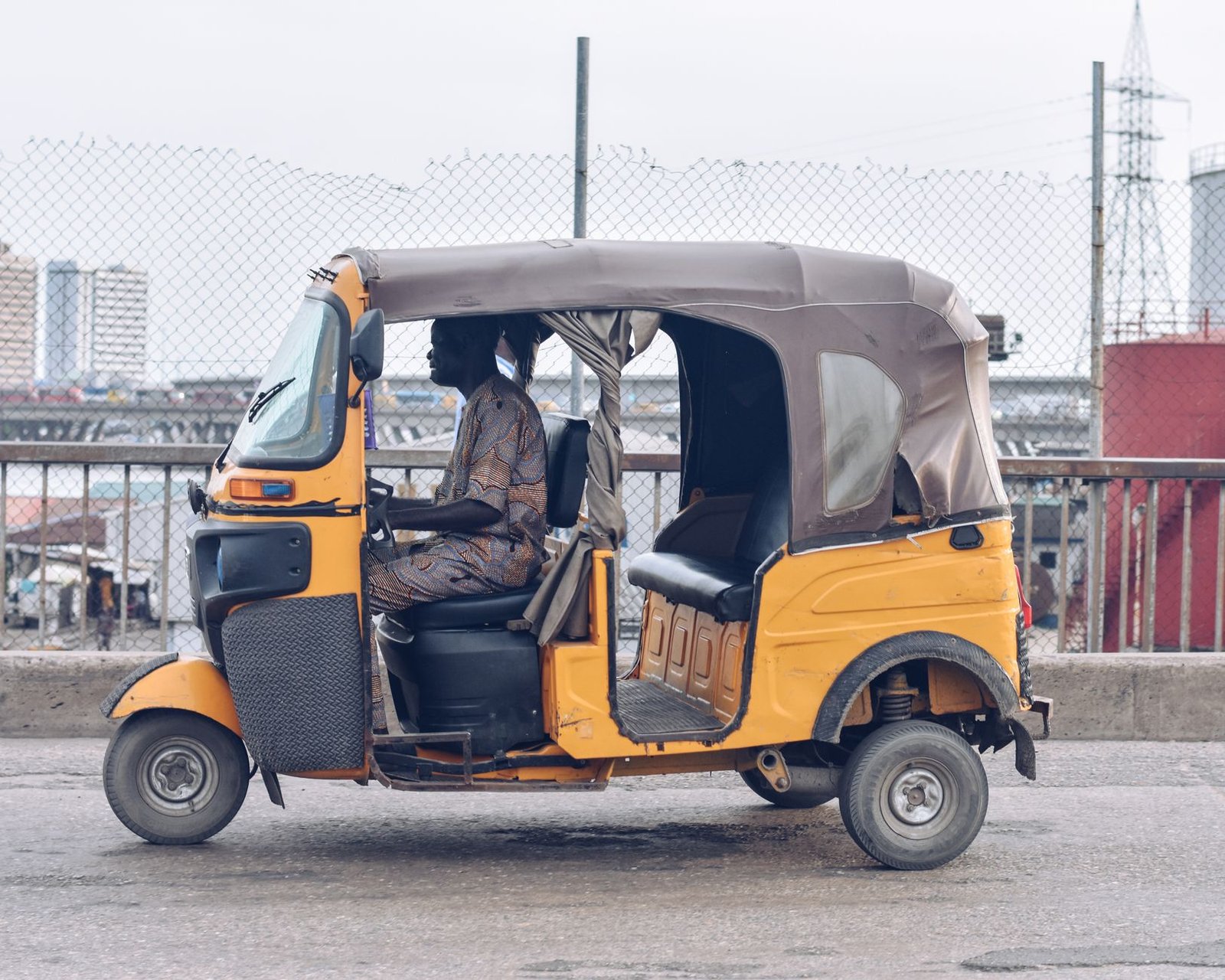
Photo by Yomi Owobo
When Ride-Hailing and Taxis Are Worth the Extra Naira
Bolt, Uber, and inDrive earn their price on four kinds of days: when you have luggage, when it’s raining, when you’re traveling late at night, or when you need door-to-door service. A bus gets you near your destination. A car gets you to the door.
Watch the surge, though. Prices climb during rush hour and heavy rain, sometimes by half or more. Check the live quote in the app before you commit, and compare two or three apps if the first quote looks inflated. For street taxis without meters, agree the fare before you enter the vehicle.
Rail and Ferry: Fast Options on the Right Routes
The Blue Line rail runs between Marina and Mile 2, with stops at National Theatre, Iganmu, and Alaba. It skips road traffic completely, so if both ends of your trip sit near those stations, it usually beats any bus during rush hour. Fares are distance-based, and you’ll need a Cowry Card or station ticket to board.
LagFerry does the same trick on water. The Ikorodu to CMS/Marina crossing takes roughly 50 minutes, a trip that can swallow two hours or more by road in peak traffic.
Both options share one limitation: they’re corridor services, not citywide ones. Confirm current timetables, fares, and station lists with official Lagos transport channels before you plan around them, since these figures change more often than a blog post can track.
Smart Ways to Cut Your Daily Spending
Lagos rewards smart mixing. Nobody rides one mode of transport all day, and nobody saves money by being stubborn about comfort. The trick is knowing which trips deserve cheap transport and which ones deserve a private car. Get that split right and your daily spend drops without your comfort suffering.
Build a Realistic Daily Transport Budget
The rule that works: pair a cheap option with a fast one. Use BRT or a danfo for your routine trips, like the daily run from your hotel to meetings or markets. Then save ride-hailing for the moments that justify it, which are rain, night travel, and luggage days. A midday Bolt on a dry Tuesday is money you didn’t need to spend.
Where you sleep matters as much as how you move. If your accommodation sits near a BRT corridor like Ikorodu Road or close to a Blue Line station, your daily transport cost drops sharply, because your most common trips fall to public transport prices. A shortlet near Ikorodu Road can keep a full day of movement under a few thousand naira. The same day with two ride-hailing trips can cost ten times more.
A low fare is not a saving if you need an expensive ride to finish the trip. Price the whole journey, both ends included.
Save on Food, Data, and Small Extras
Food is the easiest line to control. Eat where locals eat. A plate at a neighborhood buka or a roadside spot costs a fraction of a Victoria Island restaurant, and the food is often better. Save the upscale dinners for one or two nights, not every night.
Data adds up quietly. Buy a local SIM with a data plan instead of roaming on your home network; roaming charges can outprice your hotel bill. MTN, Airtel, Glo, and 9mobile all sell tourist-friendly data bundles at their shops and agent points.
Carry cash in small notes. Danfo drivers, street vendors, and small shops rarely take cards, and nobody has change for a ₦5,000 note at 7 a.m. Finally, keep buffer money. Traffic delays stretch trips, fares shift with fuel and demand, and a day that costs one amount on paper can cost more on the road. Carry about 20% more than your budget says you need.
Airport Arrival Costs and Common Budget Mistakes to Avoid
You just landed, you’re tired, and your phone battery is fading. This is exactly when a Lagos trip budget gets dented, because the first confident voice at arrivals sets your price. FAAN doesn’t publish a fixed citywide tariff for airport rides, so anyone quoting you one flat number is guessing. Here’s how to spend smart the moment you clear arrivals.
Getting From Murtala Muhammed Airport Without Overpaying
You have three practical options from the airport: official taxis from the branded desks inside the arrivals hall, ride-hailing apps like Bolt and Uber, or a pre-booked private transfer. Each prices the trip differently, so treat every online figure as a planning estimate, not a rate.
Ride-hailing gives you the most transparent quote. You see the price, driver, and plate number before you move. Third-party estimates put an MMIA to Ikeja ride around ₦6,900 on Bolt and ₦4,200 on UberX, with longer runs to Victoria Island or Lekki costing more. A negotiated airport taxi generally lands between ₦10,000 and ₦20,000 into the city.
Before money moves, do three things:
- Agree the full price, including tolls and parking, before the vehicle moves.
- Send your driver the exact terminal name, never just “Lagos airport,” because your booking decides whether you land at MMA1 or MMA2.
- Book and pay only through the operator’s official channel, never a personal bank account.
No rail link reaches MMIA, so every trip into the city happens on the road. Budget 45 to 60 minutes of buffer for the drive, more during rain or peak traffic.
Five Mistakes That Quietly Inflate Your Lagos Budget
Most overspending starts before you board anything. These five slip-ups cost travelers more than any driver’s quote.
1. Boarding without a funded Cowry Card. Cash is being phased out on key BRT corridors. If you arrive at the terminal with no card or no balance, you’ll either scramble for a top-up queue or pay an inflated alternative. Fund the card before you need it.
2. Sleeping in the wrong area. A cheap hotel far from a BRT corridor or rail line forces expensive ride-hailing on every trip. Price your accommodation and your transport as one decision.
3. Trusting old online fare lists. LAMATA revised fares in March 2026, and fuel and policy shifts keep moving prices. An old blog figure can leave you underfunded at the counter, so confirm current rates with official channels before you travel.
4. Ignoring surge windows. Friday evenings, rain, and airport arrival peaks can push the same ride up by half or more. Check the live quote close to your travel time, not the night before.
5. Skipping the travel-day confirmation. Terminals shift assignments, drivers wait at wrong buildings, and flights delay. Reconfirm your pickup point, terminal name, and driver contact before you leave home, and save those details offline.
Fix these five and your airport arrival costs exactly what you planned, which is rare and worth the effort.
Frequently Asked Questions
A few practical questions always come up after you’ve priced the big three. Here are straight answers to the ones we hear most.
Is tipping expected in Lagos restaurants and taxis?
Tipping isn’t built into most bills, but it’s appreciated. At mid-range and upscale restaurants, 5 to 10% is a fair gesture if service was good. Taxi and ride-hailing drivers don’t expect tips, though rounding up the fare is common and rarely questioned.
Should I budget differently for December travel?
Yes, and by a wide margin. December is peak season in Lagos, so hotel rates can jump 50% or more and ride-hailing demand stays high through the holidays. If your dates are flexible, February to April gives you the same city at calmer prices.
Is Lagos safe for a first-time visitor moving around alone?
Most areas are manageable with basic caution. Stick to ride-hailing after dark, avoid flashing cash or phones in crowded spots, and keep your phone out of sight at busy bus stops. Ask your hotel which streets to skip; local advice beats any app.
How much cash should I carry each day?
Plan for ₦10,000 to ₦20,000 in small notes. Buses, danfos, street food, and small vendors run on cash, and change is never guaranteed for large notes. Keep your card for hotels and bigger purchases, and split your cash between two pockets.
Do I need travel insurance for a Lagos trip?
It’s not required, but we recommend it. Hospital care at private facilities can be expensive without coverage, and a policy that includes medical care plus trip delays costs little for a short visit. Confirm your policy covers Nigeria before you fly.
Can I rely on my hotel to arrange transport every day?
You can, but it’s usually the priciest route. Hotels book drivers at a premium, which makes sense for airport pickups and early flights. For daily movement, mixing BRT, rail, and ride-hailing apps keeps your spend closer to the budgets in this guide.
Conclusion
A Lagos budget comes down to one habit: match each journey to the right ride. BRT and danfos handle your routine trips, ride-hailing covers rain, night runs, and luggage days, and you confirm every fare before the vehicle moves. Add about 20% buffer money and the city stops surprising you.
Before travel day, check LAMATA’s current fare table and confirm hotel rates and transfer prices directly with the operator. Old figures cost real money here.
Get those two things right, and your Lagos trip costs what you planned.

Leave a Reply