You land at Murtala Muhammed Airport, step outside, and Lagos hits you all at once. Yellow danfos honking past, a queue forming at a BRT stop, ride-hailing notifications pinging on your phone, and somewhere out there, a ferry crossing the lagoon. Which one do you pick?
Here’s the short answer. BRT buses and danfos are your cheapest options, Uber and Bolt are easiest for door-to-door trips, and the Blue Line rail or ferries can beat traffic on certain routes. Whatever you choose, confirm the fare and pickup point before you travel, because prices and schedules change often.
Fares on regulated services were adjusted in March 2026, so don’t trust old blog posts with outdated numbers. Check LAMATA’s current fare table before you budget.
One quick note: LagosMove is an independent guide, not a transport operator. We help you compare your options, then you book and travel on your own terms.
Let’s break down how each option actually works.
Key Takeaways
- Match the transport to the trip: BRT buses and danfos cost the least, ride-hailing works best for door-to-door trips with luggage, and the Blue Line rail or a LagFerry boat beats road traffic on the right routes.
- Get a Cowry Card before you travel: Cash is being phased out on BRT corridors and at rail stations, so fund your card early through approved channels like POS agents or a linked wallet.
- Check LAMATA’s March 2026 fare table, not an old blog post: Regulated fares rose 13% that month, so figures like Ikorodu to Mile 12 at ₦450 only hold if your route matches.
- Expect to mix two or three options per trip: Rail only serves its fixed stations and BRT sticks to corridors, so plan the connections at each end before you leave.
- Confirm everything on travel day: Fares, timetables, and airport pickup zones change often, so verify with LAMATA, the operator, or your app before boarding.
Getting Around Lagos as a Tourist: Your Main Transport Options
Lagos has six main ways to move around, and each one fits a different kind of trip. Public transport costs less but sticks to fixed corridors. Private options cost more but take you from door to door. Most real journeys here mix two or three of them.
BRT and Danfo Buses: The Budget-Friendly Choice
BRT buses run on dedicated lanes, so they skip a lot of the traffic everyone else sits in. You board at organized terminals and marked shelters, and every route has a published fare. LAMATA’s March 2026 table lists Ikorodu to Mile 12 at ₦450 and Ikorodu to TBS at ₦960, so check the current figures before you budget.
You pay with a Cowry Card on BRT buses. Cash is being phased out on major corridors like Ikorodu Road, so fund your card before you reach the terminal. It saves you a frustrating argument at the gate.
Danfos are the yellow minibuses you see everywhere. They reach inner streets that BRT never touches, which makes them useful for short local trips. The trade-offs are real: you pay cash or transfer on boarding, fares shift with traffic and fuel prices, and there are no fixed stops. Always confirm the destination and price before you climb in.
The Blue Line Rail and Ferries: Beating Lagos Traffic
The Blue Line rail runs between Marina and Mile 2, with stops at National Theatre, Iganmu, and Alaba. Passenger service started in September 2023, and its main appeal is simple: the train ignores road traffic completely.
Fares are distance-based, so a short hop costs less than the full run, and off-peak travel is cheaper. You need a Cowry Card or a station ticket to board.
Here’s the catch. Rail is station-to-station, not door-to-door. If your hotel sits far from Marina or Mile 2, budget for a bus, taxi, or ride-hailing connection at each end. Ferries work the same way: on the right lagoon crossings, they beat the roads, but you still need a plan for the first and last stretch.
Ride-Hailing, Taxis, and Private Transfers: Door-to-Door Comfort
Uber and Bolt cover Victoria Island, Ikoyi, Lekki, and the mainland well. The app shows the driver’s name, plate number, and fare before you move, so verify all three before entering the car. One warning: prices surge with demand. A Friday evening trip from VI to the mainland can cost double an off-peak run.
Regular street taxis have no fixed fare table. Agree on the price before you sit down, especially when the car has no meter.
Private transfers suit late arrivals, families, and anyone hauling two suitcases. You book ahead, the driver waits for you, and nobody negotiates at midnight in the arrivals hall. For airport pickups, confirm the pickup point and final price before you leave the terminal.
Arriving at the Airport: Getting from Murtala Muhammed into the City
Murtala Muhammed Airport has no rail link. Your trip into the city starts on the road, so the decision you make in the arrivals hall shapes the whole journey. You have four realistic options: an authorized airport taxi, a ride-hailing pickup through Uber or Bolt, a pre-booked private transfer, or a limited bus connection around Ikeja and Oshodi.
Before any of that, confirm your exact terminal. The international building, MMA1, and MMA2 sit roughly a kilometer apart, so telling your driver “Lagos airport” settles nothing. Send the terminal name plus a nearby landmark before he leaves.
Pickup zones shift with construction and airport access rules, so trust what your app shows on travel day, not a screenshot from last year. And pay only through official channels. Never transfer money into a personal bank account, and decline anyone at the curb demanding payment “for FAAN”; the airport operator has stated it collects no such fees.
How to Choose the Right Airport Pickup for Your Arrival
Let your situation pick the ride for you. Landing after 10 p.m.? Book a private transfer ahead of time, because public options thin out at night and negotiating at midnight gets expensive. Traveling light with a backpack at noon? Ride-hailing is the clearest on price, since the app shows the exact fare before you accept.
Luggage and group size matter too. Two suitcases and kids rule out buses entirely; a taxi or transfer with real boot space earns its cost.
Timing matters just as much. A 40-minute ride toward Victoria Island or Lekki can stretch past two hours in rush hour, which runs from about 6:30 a.m. to 9:30 a.m., then again from 4:30 p.m. to 8:00 p.m. Rain makes it worse.
Whatever you book, keep your booking reference saved offline, and confirm the delay policy in writing before you pay.
What Lagos Transport Really Costs in 2026
Prices moved this year. LAMATA approved a 13% fare adjustment on BRT and standard BRI buses, effective March 2, 2026, so any figure you saved from an old blog post is probably wrong. Route-based examples now include Ikorodu to TBS at ₦960, Mile 2 to TBS at ₦680, and Oshodi to Tollgate at ₦970. Longer standard routes cost more, like Berger to Ajah at ₦1,710 and Oshodi to Ajah at ₦1,320.
Rail works differently. Blue Line fares are distance-based, so a short hop between neighboring stations costs less than the full Marina to Mile 2 run. Treat any rail figure you see online as a starting point, then confirm at the station.
Danfos, street taxis, and ride-hailing sit outside the published tables entirely. A danfo fare gets set at the loading point and shifts with fuel prices, traffic, and how scarce vehicles are that day. Uber and Bolt quote you a live price that surges with demand, so a Friday evening trip can cost double a mid-morning one. Agree on taxi fares before you sit down.
The practical rule: compare the complete journey, not just the vehicle. A cheap danfo that drops you far from your destination can cost more overall once you add the taxi leg.
The Cowry Card: One Card for Buses and Trains
The Cowry Card is Lagos’s reusable transport payment card, and it works across regulated buses, the Blue Line rail, ferries, and other LAMATA services. First-time purchase usually runs between ₦500 and ₦1,500, and you can fund it through mobile banking apps, debit cards, bank transfers, or approved POS agents at terminals.
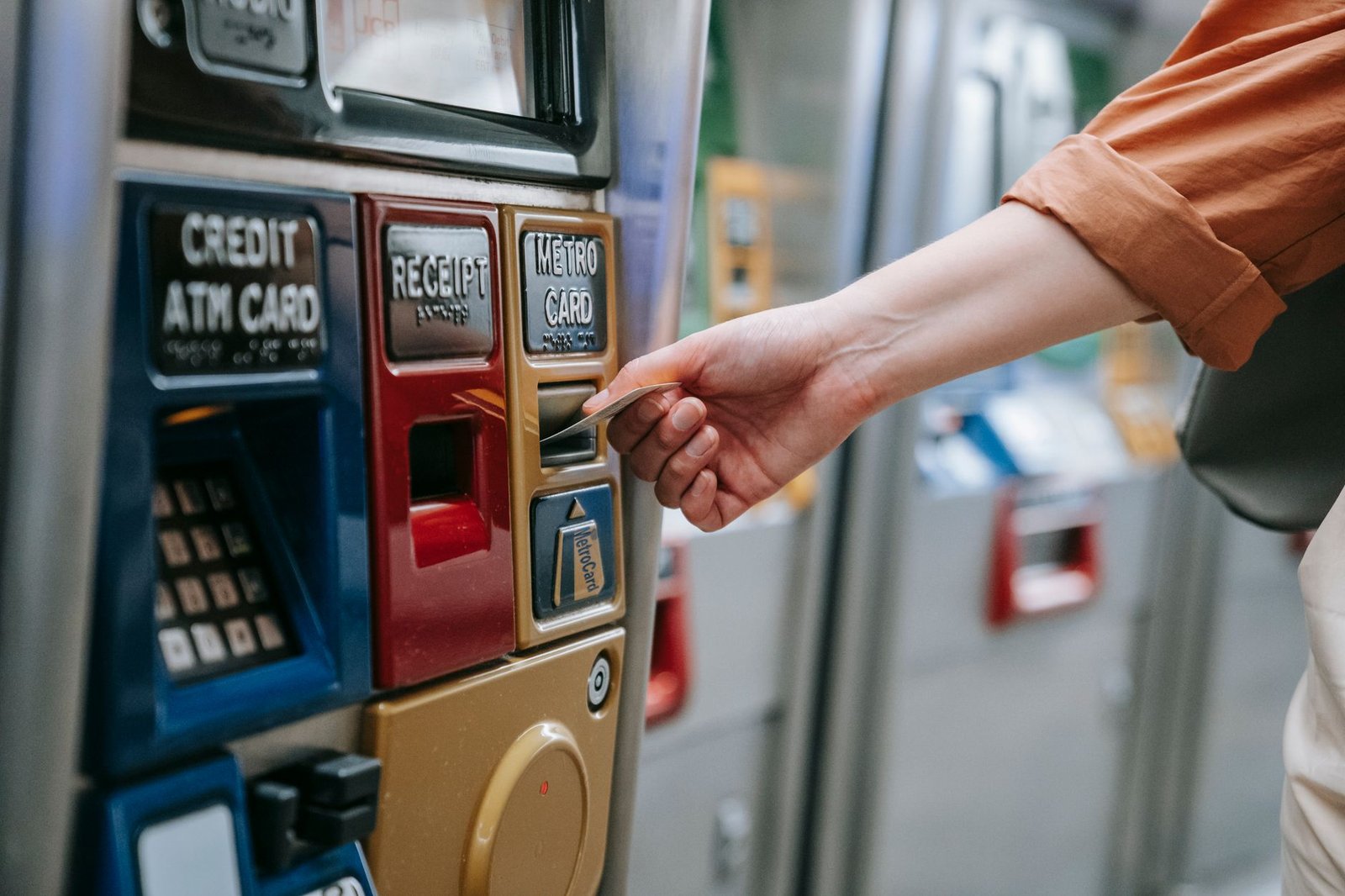
Photo by Liliana Drew
Get yours on day one. Cash is being phased out on major BRT corridors and at rail gates, so a loaded card means you tap in and walk straight through. Top up in bulk, around ₦2,000 or ₦3,000 at once, because recharge queues at big terminals turn brutal between 6:30 a.m. and 8:00 a.m.
Staying Safe and Smart While Moving Around Lagos
Lagos rewards preparation. Most transport problems don’t come from the vehicle; they come from details you skipped before boarding. Agree on fares before you climb into any informal ride, and keep your phone and cash out of sight in traffic. Save every booking reference and receipt offline too, because network coverage drops when you least want it to. And plan for reality: one journey here usually mixes two or three transport modes, so know your connections before you leave.
Common Tourist Mistakes That Cost Time and Money
A few errors show up again and again, and each one is easy to avoid once you know it exists.
- Saying “Ikeja airport” instead of the terminal name. The international building, MMA1, and MMA2 sit about a kilometer apart. Vague directions leave your driver guessing while your check-in clock runs down.
- Budgeting from an outdated fare list. LAMATA adjusted regulated fares in March 2026, so a price saved from an old blog post is already wrong. Check the current table before you plan.
- Ignoring traffic when scheduling across the Island and mainland. A trip that takes 40 minutes at noon can swallow two hours at 5 p.m., especially between Lekki and Ikeja. Build buffer time into every plan.
- Choosing a cheap first leg that needs an expensive connection. A danfo that drops you far from your destination can cost more overall once you add the taxi ride to finish the trip.
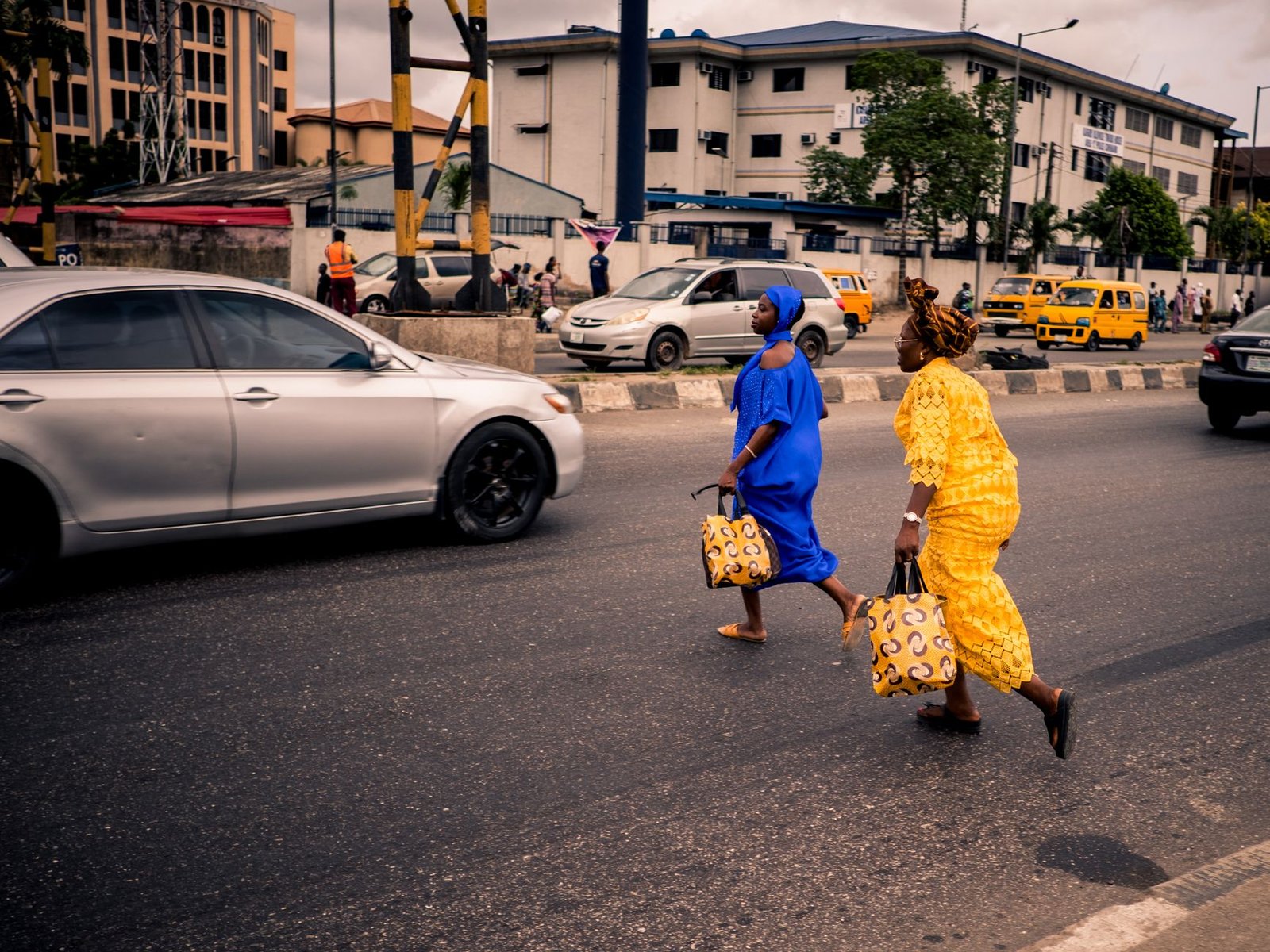
Photo by Oluka Levi
The pattern behind all four mistakes is the same: incomplete information, not bad luck. Confirm the exact terminal, check the live fare, allow for traffic, and price the full journey. Do that, and Lagos moves you instead of bleeding you.
Planning Your Route: Which Option Fits Which Trip
Match the transport to the journey, and Lagos becomes manageable. A route that takes 30 minutes at noon can eat two hours at 5 p.m., so the right choice depends on distance, luggage, and time of day more than price alone.
The Quick Decision Guide
Here’s how most trips break down in practice.
- Short local trip: Take a danfo for the cheapest fare, or book a quick Bolt if you have luggage or a fixed appointment.
- Cross-city commute on a major corridor: Use BRT on routes like Ikorodu Road to CMS, or the Blue Line between Marina and Mile 2.
- Island hotels and business meetings: Ride-hailing or a private transfer handles Victoria Island, Ikoyi, and Lekki best, with a clear fare upfront.
- Late-night movement: Always choose a private ride. Buses thin out after dark, and negotiating on the street at midnight gets expensive fast.
If your start and end points both sit near an active station, the Blue Line beats road traffic completely. If they don’t, rail just adds a walk or two connections, and a direct ride often wins even at a higher price.
Before You Leave
Check LAMATA’s current fare table and the rail operator’s timetable on travel day. Routes, fares, and service hours shift more often than most visitors expect, and an old screenshot has stranded more trips than bad luck ever has. Price the full journey too, including your final connection, so the “cheap” option doesn’t quietly become the expensive one.
Frequently Asked Questions
You’ve seen the routes, fares, and safety rules. Here are the questions travelers still ask before their first Lagos trip.
Do I need cash if I have a Cowry Card?
Yes, keep some on you. The card covers BRT buses, the Blue Line, and ferries, but danfos, street taxis, and many ride-hailing extras still run on cash or bank transfer. Small notes go a long way for short trips and tips.
Can I use Uber and Bolt anywhere in Lagos?
They work well across Victoria Island, Ikoyi, Lekki, Yaba, and much of the mainland. Coverage thins out in outer areas like Epe, Ikorodu, and parts of Badagry. If you’re headed far out, book early and confirm the driver is still coming, because long pickups get cancelled more often.
What happens if it rains?
Traffic gets worse, sometimes dramatically. A 40-minute trip can stretch past two hours when rain meets rush hour. Ride-hailing prices also surge, so check the fare before you accept. Leave earlier than feels reasonable, or wait the storm out if your schedule allows.
Are Lagos ferries safe for tourists?
The operated services, like LagFerry routes, provide life jackets and follow scheduled timetables. Arrive early for a good seat, keep valuables close, and follow the crew’s instructions. Avoid unregistered boats, no matter how convenient the landing point looks.
How early should I leave for a flight out of Lagos?
Build your departure time around traffic, not the airline’s check-in window. Trips between Lekki, Victoria Island, and Ikeja can double in length at peak hours, and rain adds more. Confirm your exact terminal first, because arriving at the wrong building burns the buffer you just created.
Do I need to speak any local language to get around?
No. English is official and widely spoken, and drivers manage fine with it. That said, a friendly “good morning” opens doors everywhere in Lagos. Learning a few Yoruba greetings earns you warmer service and better fare conversations.
Conclusion
Lagos transport looks chaotic from the airport curb, but it runs on patterns you can learn in an afternoon. Know the options, and the city moves at your pace.
Three habits protect every trip. Confirm the exact terminal and pickup point before you book. Verify fares through LAMATA or the operator, never an old blog post. Match the transport to the trip in front of you, not the cheapest vehicle on the roadside.
When you’re ready to plan deeper, our guides on BRT routes and bus stops, airport transfers, and where to stay in Lagos cover each piece in detail. Start with the part of your journey that worries you most.

Leave a Reply