Ferry safety rules on the Lagos lagoon exist because thousands cross daily and conditions on the water change without warning. You will board LAGFERRY boats or private vessels at jetties like Five Cowrie, Ikorodu, and Badore, and each trip is subject to enforcement by the LASWA, the Lagos State Waterways Authority.
The rules are not decoration. Life jackets, load limits, and weather checks have all been shaped by past accidents on the lagoon, and skipping any one of them puts you at avoidable risk.
This guide walks you through what to confirm before you pay, how to board safely, what to do when a sailing is cancelled, and which booking channels to trust. Start with your destination, then match it to the right jetty, the same way you would confirm a terminal before any trip out of Lagos.
Key Takeaways
- Wear a properly fitted life jacket and complete the passenger manifest before every LAGFERRY boarding.
- Confirm fares, departure times, and payment methods directly with the operator, never through an unverified agent.
- Avoid overcrowded boats; an available seat doesn’t excuse an obvious safety problem.
- Check the weather and service status on the morning of travel, since rough lagoon water cancels sailings without warning.
- Keep your ticket, booking reference, and emergency numbers (112 and 767) accessible offline.
Why Lagos Ferry Safety Rules Exist in the First Place
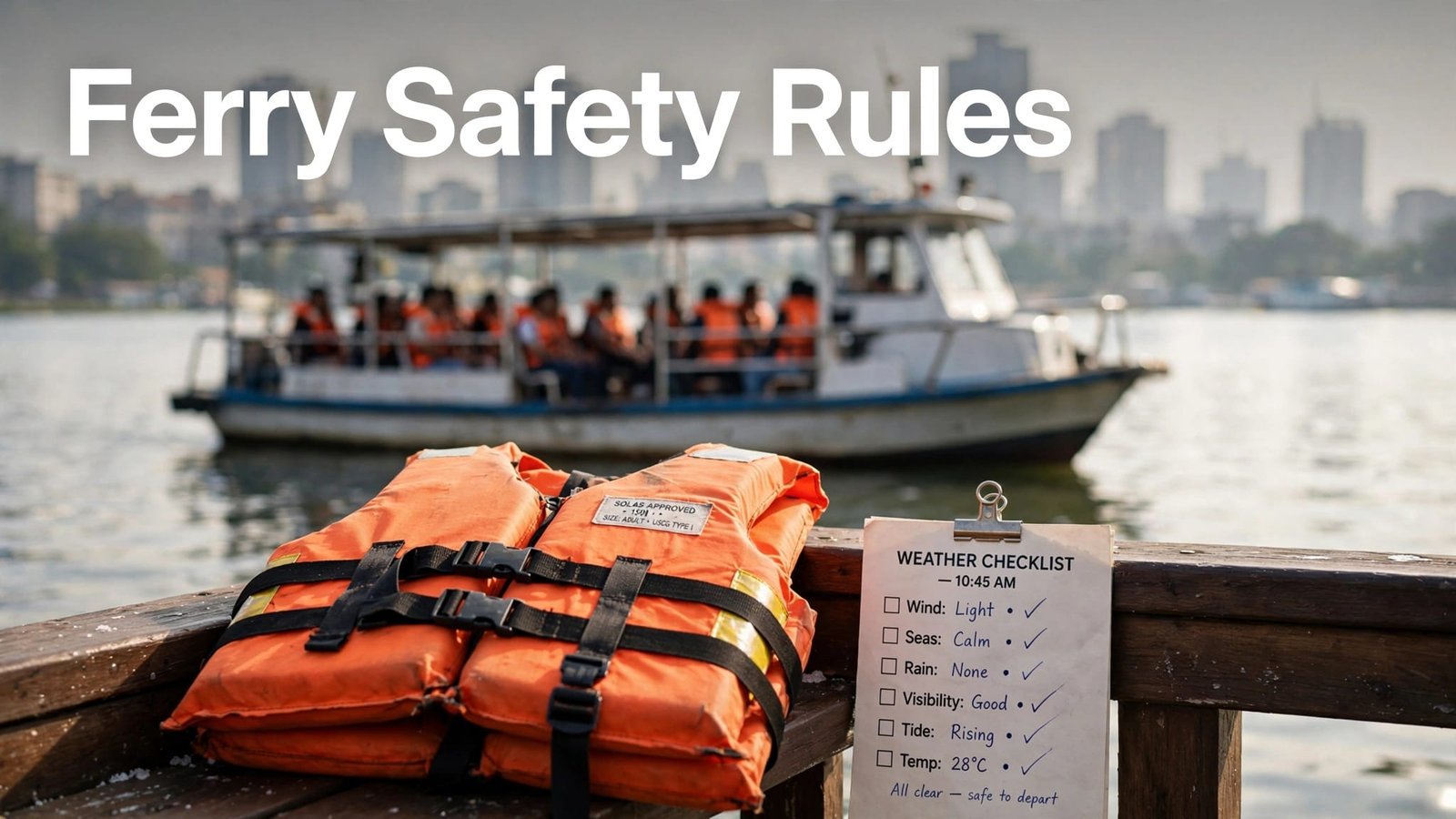
The lagoon looks calm from the jetty. It rarely stays that way. Wind, rain, and rough water can turn a routine crossing into a hard call within minutes, which is why operators cancel sailings at short notice. Treat every departure as weather-dependent, not guaranteed.
Past accidents on Lagos waterways shaped the rules you follow today. Overloading, missing life jackets, and boats sailing into storms caused the losses that pushed regulators to act. LASWA, the Lagos State Waterways Authority, sets and enforces the standards. Operators like LAGFERRY put them into practice at the terminal: passenger manifests, life jackets for every person on board, and load limits the captain cannot exceed.
Understand what each rule protects.
- Life jackets keep you afloat if a boat capsizes or collides. Wear yours from boarding to landing, properly fastened.
- Load limits keep the boat stable and low in the water. Refuse any vessel that looks packed beyond its seating.
- Weather checks stop boats from leaving into storms, poor visibility, or rough lagoon water.
The rules only work when you cooperate. Complete the passenger manifest accurately rather than letting someone skip your entry. Follow the captain’s and deckhands’ instructions during boarding and the crossing itself. Keep bags out of walkways so nothing blocks an emergency exit.
Avoid the shortcuts that undo all of this. Do not board an unverified boat because it promises to leave before the scheduled operator. Do not move to a different jetty on someone’s verbal say-so. Do not treat a cancelled sailing as an invitation to find an alternative on the water.
Know the difference between the two bodies. LASWA regulates; LAGFERRY operates. Complaints, service questions, and safety concerns go to the operator first, then to the authority if the operator fails to respond. Keep both contacts saved before your first crossing, not after a problem starts.
The Lagos Ferry Safety Rules You Must Follow Before You Board
Three checks decide whether your crossing is safe: the jacket on your back, the load on the boat, and your name on the manifest. Complete all three before the boat moves. Skip one, and you hand your safety to chance on open water.
Life Jacket Rules: How to Wear One That Actually Fits
Wearing a jacket is not enough. It must be fastened and sized correctly, or it will not hold you.
Check the fit before the boat leaves the jetty. A correct jacket sits snug against your torso, buckles or zips closed without slack, and does not ride above your ears when a crew member lifts the shoulders. If it floats loose around your chest, ask for another.
Ask the crew for help when a strap or buckle confuses you. That is their job, and it takes ten seconds. Children need child-sized jackets. An adult jacket on a child slips off in water, so request the right size rather than accepting the nearest one.
Refuse any boat that cannot produce a suitable jacket for every passenger, yourself included. An available seat is no reason to accept an obvious safety gap.
Load Limits and Why an Overcrowded Boat Is Never Your Boat
A load limit is simple: the total weight of passengers and cargo cannot exceed what the vessel is built to carry. Exceed it, and the boat sits low, handles badly, and takes water more easily.
Paying for a seat does not override the limit. Your fare buys a place on a safe boat, not permission to crowd onto an unsafe one.
Look for the red flags before you board:
- Passengers standing in aisles or sitting on gunwales beyond the seated count
- Luggage piled above safe heights or wedged into walkways
- A boat sitting visibly low against the waterline, with little freeboard
You have the right to refuse boarding. Step back, wait for the next boat, and report the vessel to LAGFERRY or LASWA staff at the terminal.
The Passenger Manifest: Why Your Details Matter More Than You Think
The manifest is the passenger list the crew uses to account for every person on board. LAGFERRY requires every passenger to complete it before boarding.
Give your full name, contact number, and the details requested. Do not let a fellow passenger skip your entry, and do not let an agent fill it in with guessed information. In an emergency, rescue teams work from that list. A missing or wrong entry means nobody comes looking for you by name.
Keep your details accurate, keep your jacket fastened, and check the load. Then board.
Weather Checks: How Rain and Rough Water Change Every Lagos Crossing
Weather decides your crossing before the captain does. Rain from May to October roughens the lagoon, delays sailings, and cancels trips outright. Fog and harmattan haze do the same damage through poor visibility between December and February. Treat every departure as weather-dependent, and check conditions the morning you travel, not the week before. A forecast checked on Tuesday is a guess by Friday. Match a 60% afternoon rain chance against a 7 a.m. sailing; timing decides whether the forecast applies to you at all.
What to Do When Your Sailing Is Delayed or Cancelled
Follow a fixed sequence when a sailing slips or stops. Acting on impulse is what puts passengers on unsafe boats.
- Contact the operator first. Call the same official number or channel you booked through before assuming you can catch the next departure. Ask whether another sailing runs, what happens to your ticket, and whether a refund or reschedule applies.
- Never switch to an unverified boat. A stranger promising an immediate departure at the jetty has skipped every check you just read about: manifest, load limit, and weather call. Refuse the offer.
- Keep a road option ready. A cancelled ferry can leave you needing a BRT bus, taxi, or ride-hail trip. Budget for it before you leave home, and carry enough cash in small notes to cover the alternative.
- Plan around daylight. LAGFERRY’s published safety guidance warns against night travel. Build your return around a confirmed daytime sailing rather than hoping boats continue after dark.
At the terminal, follow the operator’s decision if a sailing is suspended. Ask staff to confirm the next available departure and the status of your ticket in writing, then screenshot the response.
Keep weather in your plan from the start. If your sailing leaves in the morning, either sleep near the departure jetty the night before or leave early enough that rain and traffic cannot ruin the trip.
Paying, Booking, and Boarding Without Getting Scammed
Most ferry booking losses in Lagos come from one skipped step: paying before confirming who you are paying. Fix that, and you avoid nearly every common problem. Treat every offer as unverified until the operator itself confirms it. Book only through the operator’s official website, verified app, WhatsApp line, or a staffed counter at the jetty. A forwarded screenshot or a “special price” from a stranger at the jetty proves nothing.
Pause before your money moves if you notice any of these:
- Payment into a personal bank account, no matter how attractive the fare looks
- Payment instructions that change after you already received an account number
- Pressure to pay immediately because seats are “about to run out”
- A message that names only “Lagos” with no jetty or boarding point attached
- A contact number that does not match the operator’s published details
One warning sign deserves a second look through the operator’s official channel. Two or more means walk away. Confirm the fare, departure time, and payment method (cash, transfer, or Cowry card) with your specific operator, since rules differ by terminal. Keep your receipt, booking reference, and an offline copy of any digital ticket until the trip ends. Confirm fares and sailing details directly with LAGFERRY or your chosen operator before departure, and check the ferry routes and terminals guide to match the jetty to your destination.
What to Pack and How to Handle Luggage on the Water
Use a waterproof pouch for documents, electronics, and medication. Lagoon spray and sudden rain soak bags quickly, and a stored bag is unreachable during the crossing.
Keep essentials on your person, not inside luggage the crew stows away. That includes your ticket, ID, phone, and any medication you need.
Ask three questions before you pay: whether your bags are accepted, where they will be stored, and whether staff help with loading. Do not assume a fixed allowance or charge. During the crossing, keep bags clear of walkways and exits so nothing blocks movement in an emergency.
During the Crossing: Simple Habits That Keep You Safe
Boarding is only half the job. What you do between departure and landing decides how an emergency plays out. Set your habits before the boat leaves the jetty, then hold them for the whole crossing.
Stay Seated and Keep the Jacket On
Take your assigned or permitted seat and stay in it. Keep the life jacket fastened from boarding to landing, even on a crossing that feels routine. Standing for photographs or moving around while the boat is underway shifts weight and puts you off balance. Wait until the boat stops at the jetty before you reach for your bags.
Keep bags out of walkways and exits. A blocked aisle slows an evacuation.
Follow the Captain and Deckhands
Crew instructions carry authority during the crossing. If a deckhand tells you to sit, move, or hand over an item, comply first and ask questions at the terminal. They can see conditions on the water that you cannot.
Know the Emergency Numbers Before You Need Them
LAGFERRY lists 112 and 767 as emergency numbers. Save both before your first crossing, alongside the operator’s own contact line.
If you need to call, give four things clearly:
- Your location on the lagoon, with any landmark you can see
- The jetty you departed from
- The operator’s name
- The nature of the emergency: fire, taking water, collision, or man overboard
Speak slowly. Repeat the location back to the handler if they ask, and follow their instructions while help is dispatched.
One habit covers most of this. Treat the crossing as part of the safety system, not a pause between checks. The jacket, the manifest, and the crew’s authority only protect you if you keep cooperating after the boat moves.
Frequently Asked Questions
These answers cover the questions most readers still ask after applying the rules above. Each one deals with a practical detail the earlier sections touched only briefly.
Can I bring my child on a Lagos ferry?
Yes, children travel on LAGFERRY and private boats, but they must wear a properly sized child life jacket, not an adult spare. Keep them seated beside you for the whole crossing and hold their hand on the dock, since wet jetty surfaces are the biggest hazard at the terminal. Confirm the manifest entry covers the child before boarding.
How early should I arrive at the jetty?
Arrive at least 30 minutes before departure. You need time to buy or confirm your ticket, complete the passenger manifest, and get fitted with a life jacket. During the rainy season or at busy terminals like Ipakodo, arrive earlier because queues lengthen and departures shift with weather.
Do I need identification to ride the ferry?
Carry a valid ID even though most operators do not ask for it at booking. Staff may request identification when verifying manifest details or resolving a ticket problem. Keep it in a waterproof pouch with your ticket and booking reference.
Are ferries safe during the rainy season?
They are safe when operators follow the rules, but expect more cancellations and delays between May and October. Check the forecast and service status the morning you travel, and build a road alternative into your plan. Never board a boat that goes out in visibly rough water to keep a schedule.
What happens if I miss my sailing?
Contact the operator through the same official channel you booked with, before assuming anything about the next departure. Ask whether another boat runs that day and what happens to your ticket under their published terms. Keep your receipt and booking reference until the issue closes, since refund and reschedule rules differ by operator.
Which emergency numbers should I save before crossing?
Save 112 and 767, the numbers LAGFERRY publishes for emergencies, plus the operator’s own contact line. In an emergency, state your location, departure jetty, operator name, and the nature of the problem clearly. Keep these numbers written down offline in case your phone battery drops.
For planning a full water route, our Lagos ferry routes and terminals guide matches jetties to destinations, and the Lagos transport safety guide covers the road precautions that complement your crossing.
Conclusion
Ferry safety on the lagoon comes down to three habits. Wear a properly fitted life jacket, respect the boat’s load limit, and check the weather on the morning you travel. Keep those three in place and every other rule follows easily.
Book only through the operator’s official channel, and keep a road option and extra cash ready in case a sailing is cancelled. If any detail looks unclear, ask staff at the terminal rather than trusting a stranger’s promise.
Before you leave home, confirm your fare, jetty, and departure time directly with LAGFERRY or your chosen operator. One phone call protects your ticket, your money, and your crossing.


Leave a Reply