Your flight lands at Murtala Muhammed in a few weeks, and one question keeps coming back: do you actually need a visa for Nigeria? For most visitors, the answer is yes. You’ll need a visa before arrival, though rules vary by nationality, and Nigeria now offers an eVisa plus visa-on-arrival for eligible travelers.
The catch is that requirements shift. What worked last year may not work on your travel date, so confirm current entry rules with the Nigeria Immigration Service before you fly.
This guide covers the visa types, what they cost, the documents you’ll need, and what to expect on arrival, from immigration queues to the arrivals hall at MMIA. Start with the visa types below.
Key Takeaways
- Most visitors need a visa before flying to Nigeria, but the eVisa and visa-on-arrival options now cover many eligible nationalities.
- Your passport should be valid for at least six months, with a blank page for the entry stamp.
- Apply through the Nigeria Immigration Service official portal only; pay on the platform and keep your approval letter offline.
- Have your hotel address, return ticket, and proof of funds ready; immigration officers can ask for any of them.
- Rules change often, so confirm entry requirements shortly before your travel date, not just when you book.
Do You Need a Visa to Visit Lagos? Entry Rules Explained
For most visitors, yes, you need a visa before you land in Lagos. Nigeria does not run a blanket visa-free policy for tourists the way some countries do. The main exceptions are ECOWAS citizens, a handful of countries with visa waivers, and people with special Nigerian heritage claims. Everyone else applies ahead of time, usually online.
Who skips the visa? Citizens of ECOWAS member states, like Ghana, Senegal, and Côte d’Ivoire, can enter with a valid travel document and stay for short visits under regional free-movement arrangements. Your passport or ECOWAS travel certificate must be in good condition, because Nigerian immigration applies its own checks at the border even for regional visitors. A few countries outside West Africa hold bilateral visa waivers, though the list shifts, so confirm your nationality’s status before booking.
There are also special provisions worth knowing about. Former Nigerians by birth, and members of the Nigerian diaspora, may qualify for simplified entry under rules the Nigeria Immigration Service administers separately. If that describes you, ask about the Nigerians in the Diaspora provisions before paying for a standard tourist visa. You might pay less or skip a step entirely.
If none of that applies to you, your path runs through a visa application. The next question is which type.
Visa Types for Travelers: Tourist, Business, and Transit Options
Nigeria issues a handful of visa categories, and picking the right one matters more than picking the cheapest one. The three you’ll actually encounter are tourist, business, and transit.
- Tourist visa: For sightseeing, visiting family, and short holidays. Usually single-entry, though multiple-entry versions exist for repeat visitors.
- Business visa: For meetings, conferences, and negotiations. It does not permit paid employment in Nigeria. Multiple-entry versions suit regular travelers.
- Transit visa: For passengers connecting through a Nigerian airport to a third country, typically valid for a very short stay.
- Diplomatic and official visas: For government travelers on official business, arranged through the sending state.
Single-entry versus multiple-entry comes down to your itinerary. If you plan to pop from Lagos to Accra and back, a single-entry visa dies the moment you exit Nigeria. Buy multiple-entry if your route re-enters the country, even once. It costs more upfront and saves you a second full application.
When in doubt, match the visa to your stated purpose. Immigration officers ask, and a tourist visa with a briefcase full of contracts raises questions you don’t want at the arrivals desk.
The Nigeria eVisa and Visa on Arrival: How Each One Works
Nigeria has moved most applications online. You start at the Nigeria Immigration Service visa portal, fill in your details, upload your passport photo and supporting documents, and pay the fee on the platform. Once approved, you receive an approval letter by email. Print it, save a copy offline on your phone, and carry both. Airline staff at check-in and immigration officers at Murtala Muhammed will ask for it.
The eVisa suits travelers who plan ahead, because processing takes days, not hours. The visa on arrival option exists for eligible nationalities and business travelers, but treat it as a backup, not a plan. You still apply for approval before flying; the “on arrival” part just means the visa stamp happens at the airport instead of an embassy.
A ticket that only says “visa on arrival available” is not approval. Get the official letter in writing before your travel date.
One warning. Unofficial agents hover around this process, promising faster approvals or guaranteed stamps for extra fees paid to personal accounts. Pay only through the official portal, and never forward money to a personal bank details page someone sends you on WhatsApp. If a stranger promises what the portal doesn’t, walk away.
Nigeria Visa Requirements: Documents and Application Steps
Getting the visa right starts with paperwork, not the portal. Nigeria Immigration Service reviews every application against a short list of documents, and missing even one slows everything down. Gather them before you start the online form, because the portal expects uploads, not promises.
Documents You Need Before You Apply
Think of this as your application folder. Everything here should be scanned or photographed before you touch the form, since the portal asks you to upload most of it.
- Valid passport, good for at least six months beyond your travel dates, with a blank page for the entry stamp. A damaged passport gets rejected at the border.
- Recent passport photo, taken against a plain background within the last few months.
- Return ticket or onward booking, showing when you plan to leave Nigeria.
- Proof of funds, usually a recent bank statement, so officials can see you can support yourself.
- Accommodation details, meaning a hotel booking or the full address of where you’re staying. Immigration officers on arrival can ask where you are staying, so have the name and street ready, not just a neighborhood.
- Invitation letter, if you’re visiting for business or staying with a host. Your host’s details should match what you enter on the form.
- Completed application form, filled in with your name spelled exactly as it appears on your passport.
One letter out of place, like a name with a middle initial missing, can trigger a query that delays approval. Match everything, then upload.
How Much a Nigerian Visa Costs and How Long Approval Takes
Here’s the honest answer: it depends on your passport. Nigeria sets visa fees by nationality, based on reciprocity, meaning what your country charges Nigerians is often what Nigeria charges you. So the fee for a German passport differs from an American or Indian one. Check your country’s rate on the Nigeria Immigration Service portal before you budget, and treat any figure a friend quoted you last year as a starting point, not a price.
Processing time varies too. Some applications clear in a few business days; others take longer, especially during peak travel periods or when officials request extra documents. The safe play is to apply at least two to three weeks before you fly. That buffer absorbs a document query without forcing you to reschedule a flight.
A word on timing and money together. Don’t book a nonrefundable ticket before your visa is approved, because date changes trigger fare differences and change fees. Get the approval letter first, then pay for the flight. It’s a slower order of operations, and it’s the one that protects your wallet.
Getting From Lagos Airport to the City: Your Main Options
Murtala Muhammed Airport has no rail link, so every trip into the city starts on the road. That’s not a problem once you know your choices. Four workable routes cover almost every situation, and one of them will fit your luggage, your landing time, and your budget. The trick is matching the option to your arrival, because a ride that feels easy at 2 p.m. plays very differently at 11 p.m. after a long flight.
The Four Road Options, Compared
Think of these as tools, not rivals. Taxis, ride-hailing apps, hotel transfers, and public buses all get you door to door or close to it, but each suits a different traveler.
Here’s how they stack up side by side:
| Option | Best for | How it’s arranged | Watch out for |
|---|---|---|---|
| Official airport taxi | First-time visitors, late-night arrivals | Approved desk at the terminal | Fares are indicative, so agree the price before moving |
| Uber or Bolt | Light luggage, familiar routes | App booking, price shown upfront | Pickup zones shift; check the app on arrival |
| Hotel-arranged pickup | Guests with a confirmed booking | Directly with the hotel, in writing | Confirm which terminal it covers and the delay policy |
| Public bus (Mafoluku, Oshodi) | Locals who know Lagos | On the street, pay on boarding | Often needs a connecting ride; not ideal with bags |
Buses only make sense if you travel light and already know the route. Everyone else should lean toward the first three. Ask any provider for the approved pickup point, driver contact, luggage space, and what happens if your flight slips, and get the terms in writing.
Picking the Right Ride for Your Arrival Time
Timing changes everything. FAAN advises arriving four hours before international departures, and a cross-town ride can swallow most of that buffer on its own when traffic is heavy. Landing after 9 p.m. is another story entirely: fewer buses, fewer ride-hailing drivers circling, and a longer wait if your first choice falls through.
A few habits make any arrival smoother:
- Confirm your terminal (international, MMA1, or MMA2) before you book anything, since telling your driver the wrong building is the most common mix-up.
- Check the fare in your app right before you accept, not hours earlier, because demand and traffic can move the price.
- Save your hotel’s phone number offline before you fly, in case data drops the moment you land.
Match the ride to the moment and the last leg stops being the stressful part of the trip.
Common Visa Mistakes That Delay or Spoil a Lagos Trip
Most visa problems in Nigeria come from small, avoidable slips, not from the rules themselves. A name spelled wrong, a passport that expires too soon, a payment sent to the wrong account. Each one can turn a two-week approval into a rejected application or a tense conversation at the arrivals desk in Murtala Muhammed. Here are the mistakes that show up again and again, and how to dodge each one.
Applying With a Passport That Expires Too Soon
Nigerian immigration wants your passport valid for at least six months beyond your travel dates, with a blank page for the entry stamp. A passport expiring in three months looks fine to you and gets rejected at the border. Damaged passports fail too; a water-stained cover or a torn page is enough for an airline to refuse boarding before you even leave home.
Check the expiry date today, not the week you fly. If renewal is due, handle it before you start the visa application, because the visa gets stamped into that passport. A new passport after approval means carrying both documents and explaining the mismatch at check-in.
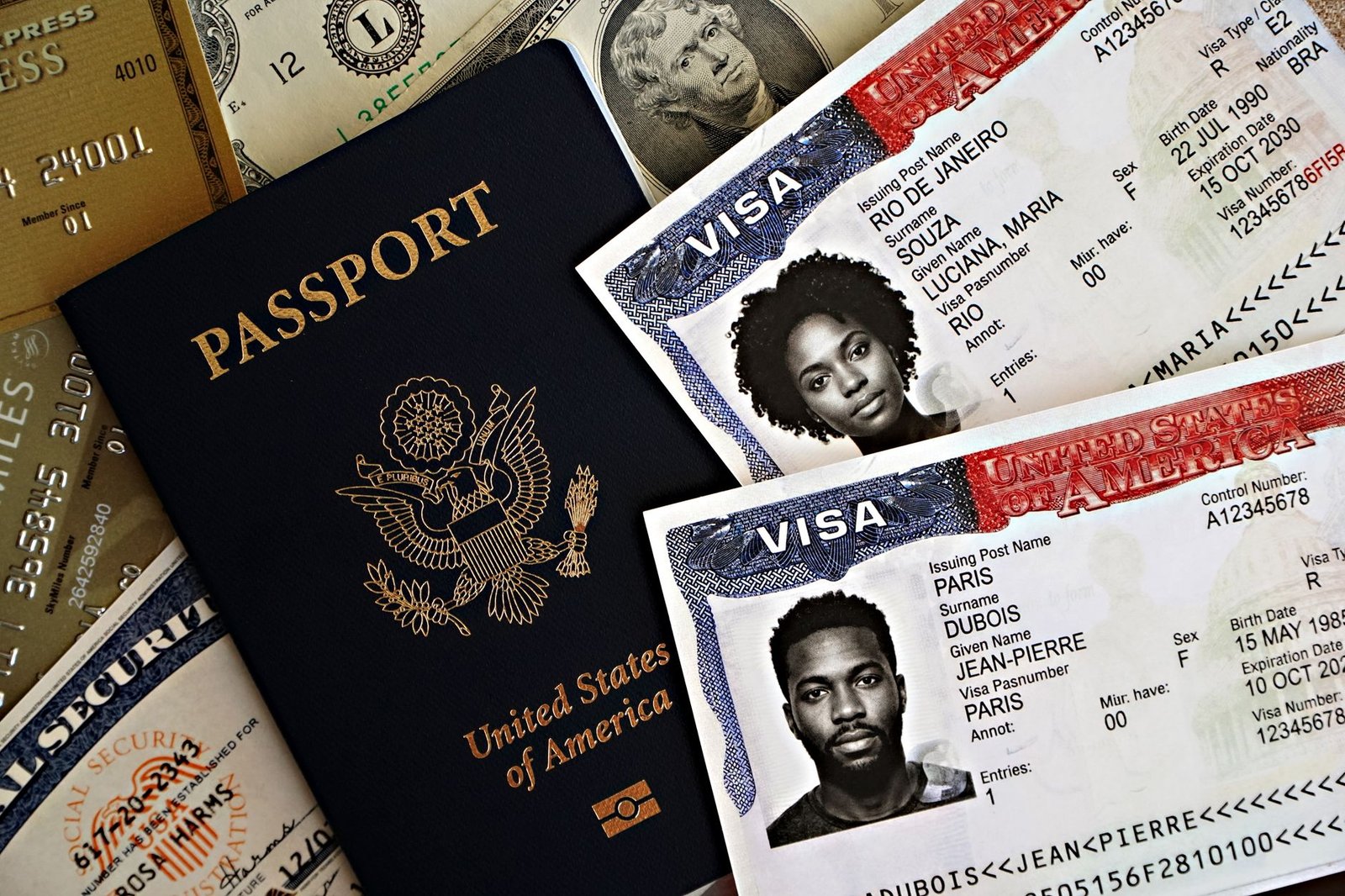
Photo by DΛVΞ GΛRCIΛ
Booking Flights Before the Visa Is Approved
This one costs travelers real money. A nonrefundable ticket bought before approval turns a document query into a fare change fee plus a fare difference. Remember the order that protects you: apply first, get the approval letter, then pay for the flight. It feels slower. It isn’t, once you count the cost of rescheduling.
Using Unofficial Agents or Personal Bank Accounts
Unofficial agents promise faster approvals, guaranteed stamps, or “portal down” workarounds, and they collect payment through personal bank accounts or WhatsApp numbers. A forwarded screenshot is not a booking confirmation, and a personal account gives you no recourse when the promise evaporates. Pay only through the official Nigeria Immigration Service portal, keep your receipt, and walk away from anyone who pressures you to pay immediately because a rate is “about to expire.”
Arriving With No Hotel Address
Immigration officers at MMIA can ask where you’re staying. “Somewhere on the Island” doesn’t answer that question. Have the hotel name and full street address ready, along with a return ticket and proof of funds. If you’re staying with a host, make sure the invitation letter matches the address you entered on your application form. Keep these in your hand luggage, never in a checked bag.
Not Carrying Printed Copies of Your Approval Letter
Your eVisa approval arrives by email, and phones fail at exactly the wrong moment. Data drops, batteries die, inboxes won’t load. Print the approval letter, save a copy offline on your phone, and carry both. Airline staff at check-in and immigration officers on arrival will ask for it, and a paper copy settles the question in seconds.
Most airport losses don’t come from clever fraudsters. They come from skipped verification steps.
Run through this list before your travel date and you remove the five most common reasons a Lagos trip stalls at the airport door.
Frequently Asked Questions
You’ve read the main guide, but a few loose ends usually remain. These are the questions travelers ask most after sorting out their visa and airport plan. Each answer stands on its own.
Can I extend my visa once I’m in Nigeria?
Yes, in most cases. The Nigeria Immigration Service handles extensions through its offices and online portal, and you should apply before your current stay expires, not after. Overstaying attracts fines at departure, so start the extension process a week or more before your allowed period ends.
Do children need their own visas for Nigeria?
Yes. Every traveler, including infants, needs a valid visa and a passport with the required validity. Apply for each child separately through the official portal, and carry birth certificates in case airline staff or immigration officers ask for proof of relationship.
Do I need a yellow fever vaccination card to enter Nigeria?
Yes, this is one document officials routinely request. Nigeria requires proof of yellow fever vaccination from most arriving travelers, and airlines may check it before boarding. Get the vaccination at least ten days before travel so the certificate is valid, and keep it with your passport, not buried in your checked bag.
How much cash should I carry into Lagos?
Carry enough naira or foreign currency for your first day or two, but don’t count on cards everywhere. Card payments work in hotels and larger shops, while cash dominates at markets, taxis, and smaller vendors. Declare amounts above the legal limit at customs, and keep receipts if you plan to exchange money back on departure.
Can I leave Nigeria and come back on the same visa?
Only if your visa is multiple-entry. A single-entry visa dies the moment you exit, even for a quick hop to Accra or Cotonou. If your itinerary includes any re-entry, sort out the multiple-entry version before you travel, because applying a second time from abroad costs more time than the upgrade ever would.
What happens if my eVisa approval hasn’t arrived before my flight?
Contact the Nigeria Immigration Service support channels first, using the reference number from your payment receipt. Don’t book a nonrefundable flight until the approval letter lands in your inbox. If you’re cutting it close, email the airline and explain; some carriers will verify approval status directly, but never assume they will without asking.
Conclusion
You have the full picture now. The routine is simple: confirm your visa requirement by nationality, apply through the official Nigeria Immigration Service portal, carry printed copies of your approval letter and hotel details, confirm your terminal at Murtala Muhammed, and arrange verified transport before travel day.
Do those five things and the paperwork stops being the hard part of your trip. Most travelers who get turned away or delayed at MMIA skipped one step, not all of them.
For the next stage of planning, our guides on airport terminals, airport transfers, and where to stay in Lagos help you finish the itinerary.



Leave a Reply