Immigration officers at Murtala Muhammed International Airport ask about your visit purpose, stay length, accommodation, and funds. Answer those four areas clearly, and clearance takes minutes.
Hesitate, contradict your paperwork, or name a neighborhood instead of a street, and the desk holds you longer. The Lagos airport immigration questions repeat on nearly every arrival, so preparation beats improvisation. Rules do shift, so confirm current entry requirements with the Nigeria Immigration Service before you fly.
This guide covers the questions officers ask, the answers that work, and the documents to hold ready at the desk.
Key Takeaways
- Officers at MMIA ask four core things: purpose, duration, accommodation address, and funding.
- Keep your passport, visa approval, yellow fever card, return ticket, and invitation letter in hand luggage.
- Answer in one short sentence, and keep every answer consistent with your documents.
- Match your stated purpose to your visa category without exception.
- Confirm your connecting terminal before travel; domestic flights use MMA1, MMA2, or the General Aviation Terminal.
What Happens at Lagos Airport Immigration on Arrival
Immigration sits at the front of the arrival sequence. Officers check your passport and visa approval first, then you collect bags at the carousel, then you clear customs before stepping into the arrivals hall.
Queues stretch longest during the morning and evening arrival banks, when several international flights land within the same hour. Build patience into that window. Officers ask questions briefly and directly because each desk handles a long line. Expect one or two questions per traveler in most cases, with follow-ups only when an answer sounds vague or contradicts a document.
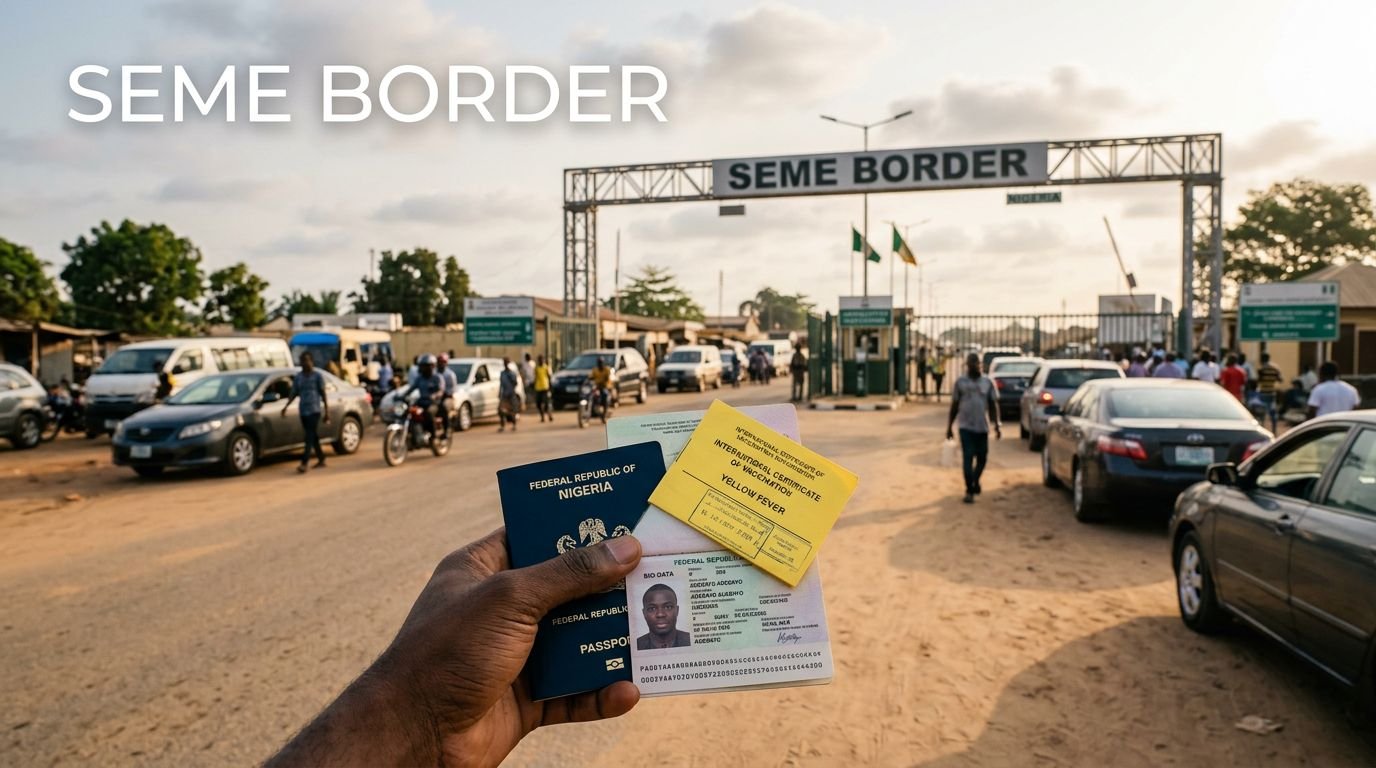
Keep your passport, visa printout, and yellow fever card in your hand luggage, never a checked bag. You will show them more than once before you exit the hall.

Photo by Daniel Schludi on Unsplash
Common Lagos Airport Immigration Questions and How to Answer Them
The questions repeat across nationalities and airlines. Learn the seven below, and the desk stops being unpredictable. Officers usually ask two or three of them, not all seven.
“What is the purpose of your visit?” comes first at most desks. Name one purpose: tourism, business, a family visit, or a conference. Keep the word you chose consistent everywhere, from the landing card to the answer at the desk.
“How long will you stay?” requires a number that matches your return ticket. “Two weeks” works when the ticket says two weeks. “Where are you staying?” requires a street address, not an area. “Ikeja” alone is not an answer; “14 Ahmadu Bello Way, Victoria Island” is.
“Who is paying for this trip?” points to yourself, your company, or your host, and the answer must match your invitation letter or bank records. “Do you have a return or onward ticket?” checks your exit plan, so quote the booking rather than the intention.
“How much money are you carrying?” needs an honest figure close to what you declare at customs. “Is this your first visit to Nigeria?” requires a yes, a no, or a date, not a story. Follow-ups appear when answers sound vague, so precision prevents them.
Straight Answers That Work: Sample Responses You Can Adapt
Adapt these replies to your own trip, then rehearse each one aloud before departure.
For a tourist: “I’m here for a two-week holiday, touring Lagos and Abuja.”
For a business visitor: “I’m attending a three-day conference at Eko Hotels, and my host company is covering the trip.”
For someone staying with family: “I’m visiting my sister for three weeks. She lives at 5 Adeola Odeku Street, Victoria Island, and this is the address on my form.”
Two harder cases need longer answers. A first-time visitor staying with family can say: “This is my first visit. My cousin invited me for his wedding in December. He lives in Lekki, and I return on the 28th.” A first-time business visitor can say: “I’m meeting a supplier in Ikeja for one week. This is my invitation letter, my return ticket, and the hotel booking for the days I’m not at their office.”
Keep each reply to one or two sentences. Short, honest, and consistent beats a detailed explanation.
Why Your Answers Must Match Your Documents
An answer that contradicts a document creates a follow-up question. An answer that matches one closes the topic.
If your visa says tourism, describe tourism, even when you plan to explore a business idea. Work on a visitor visa is a separate problem the desk is trained to catch. If a host invited you, know their full name, their street address, and their phone number by heart. If your return ticket says 14 days, quote 14 days, not “a few weeks.”
Officers compare your answers against the stamps, bookings, and letters in front of them. Consistency across all three is what ends the interview quickly.
Documents to Keep Within Reach at the Desk
Arrival clearance runs faster when everything sits in one folder in your hand luggage. Never pack these items into a checked bag; the carousel comes after the desk, and an officer cannot process you without them.
What to Hold Ready in Hand Luggage
- Your passport, valid well beyond your arrival date.
- The visa approval printout or visa page; print the approval letter rather than relying on a phone screenshot.
- The yellow fever vaccination card.
- A printed return or onward ticket.
- Your hotel booking or a signed invitation letter with the host’s full address.
- Proof of funds, such as a recent bank statement or an accessible payment card.
Put the folder in one place, and return every document to the same place after each check. A frantic search at the counter delays you and everyone behind you.
Immigration Questions by Traveler Type
Expect different checks depending on who you are on paper.
| Traveler type | What officers check | Questions that differ |
|---|---|---|
| Nigerian citizen returning | Passport and residency documents for dual nationals | Focus on declared items; less weight on funds and exit plans |
| ECOWAS visitor | ECOWAS travel documents | Purpose and address; visa questions do not apply |
| Other foreign visitor | Visa or eVisa approval, return ticket, funds | Full set, including money, onward plans, and accommodation |
| Minor with one parent | Consent letter from the absent parent | Questions about who the child lives with and returns to |
The table explains why generic advice misleads. A returning Nigerian faces a shorter interview than a first-time visitor, so match your preparation to your own category, not to a friend’s story.
Mistakes That Turn a Two-Minute Check Into an Hour
Most desk delays trace back to five habits, not to officers looking for trouble.
A vague accommodation answer ranks first. “Lekki” or “a friend’s place” forces the officer to probe, because they cannot record an address they don’t have. Stay intentions that contradict the ticket rank second: an open-ended “I’ll see how long I stay” next to a fixed return date invites questions. Nervous rambling ranks third. Travelers who talk past the question often add details that conflict with their own papers.
The fourth mistake is a name on the ticket that doesn’t match the passport, such as a dropped middle name. Correct it with the airline before you fly, not at the desk. The fifth is arriving without a printed approval letter for an eVisa, which stalls processing while the officer works from a screen you may not be able to show.
Fix each one before departure day. A folder, a rehearsed address, and matching names across documents remove nearly every reason for a long stop at the desk.
After Immigration: Getting Out of the Arrivals Hall Smoothly
Clearance ends at customs, and customs usually ends with a wave-through when your declaration is honest and complete. Step into the arrivals hall, confirm your terminal, and meet verified transport only.
Ride-hailing apps display the plate number, vehicle color, and driver name; match all three before you enter. If you’re connecting to a domestic flight, note that domestic services use MMA1, the older facility, MMA2, a standalone complex on Airport Road, or the General Aviation Terminal. MMA2 publishes its own terminal and passenger information covering check-in, parking, and lounge access. Confirm the terminal on your booking the day before you fly, since assignments change with relocations and construction.
Frequently Asked Questions
Do I need a visa if I’m Nigerian by birth but hold a foreign passport?
Entry follows the passport you present, not your parentage. A foreign passport means the visa or eVisa rules for that nationality apply. Nigeria offers an eVisa and a visa-on-arrival channel for eligible nationalities, including former citizens and people of Nigerian descent, and approval comes before departure, not at the desk.
Will my phone work at the desk, or do I need paper copies?
Paper works when networks don’t. Officers process a printed approval letter in seconds, while a phone can fail on a dead battery, no data, or a locked screen. Print the visa approval, ticket, and invitation letter, and keep digital copies as backup.
How long does immigration clearance usually take at MMIA?
A prepared traveler clears passport control in a few minutes. Queues stretch during the morning and evening arrival banks, when several flights land together, so the line itself can add 30 to 60 minutes. Plan onward pickups around that range.
Can I refuse to answer a question?
You can ask for clarity when a question is unclear, and you can request a supervisor if a situation escalates. Refusing a routine question about purpose or accommodation turns a short interview into a long one. Answer the question asked, and nothing more.
What happens if I stay past my visa’s end date?
Overstays attract penalties at departure, including fines and possible restrictions on future entry, and the record surfaces the next time you apply. If your plans change, apply for an extension through the Nigeria Immigration Service before your current visa expires.
Wrapping Up the Immigration Desk Routine
Carry the right documents in hand luggage, answer in one short sentence, and keep every answer consistent with your paperwork. Those three habits cover the four core questions and the follow-ups that follow vague ones.
Immigration at MMIA is routine when prepared. The desk asks the same questions in the same order, and a traveler with a folder and a rehearsed address walks through in minutes. Arrive with your answers as ready as your bags.

Leave a Reply