You’ve just landed at Murtala Muhammed with two suitcases and a driver somewhere outside waiting. Or you’re heading in for an early flight, watching the Oshodi traffic pile up. Either way, this is where Lagos trips go wrong, or don’t.
Here’s the short answer: staying safe at Lagos airport comes down to four habits. Confirm your exact terminal, verify your ride before you enter, pay only through official channels, and keep your valuables close.
One thing catches most visitors off guard. MMIA isn’t one building. It’s the international terminal, MMA1, MMA2, and the General Aviation Terminal, and airlines shift between them. Send a driver “Lagos airport” and you’ve already created your first problem.
The good news: most safety issues here come from skipped verification steps, not dramatic crime. A ten-second plate check prevents more trouble than anything else you’ll do today.
This guide walks you through the whole routine, from arrivals hall to your front door.
Key Takeaways
- Confirm your exact terminal (international, MMA1, or MMA2) with your airline before you book anything.
- Match the driver’s name, face, vehicle color, and plate number before you open any car door.
- Pay only through the operator’s official channel; never send money to a personal bank account, no matter how cheap the fare looks.
- Ignore anyone at arrivals offering rides or demanding payment “for FAAN”; the airport authority doesn’t collect money that way.
- Agree on the full fare, including tolls and parking, before the car moves, and keep your receipt until you arrive.
Essential Lagos Airport Safety Tips Every Traveler Should Know
Good safety habits at Murtala Muhammed are less about luck and more about order. Run the same steps every time and nobody at the arrivals hall sets your price for you. Here are the two checks that matter most before any money moves.
Confirm Your Terminal Before Anyone Picks You Up
Your ticket says “Lagos airport” the way an address that stops at “Nigeria” helps nobody. MMIA is four buildings pretending to be one: the international terminal, MMA1, MMA2, and the General Aviation Terminal. Airlines shift between them, and construction or relocations can change assignments with little warning.
Do these three things before you arrange any pickup:
- Open your booking confirmation and find the exact facility your airline listed.
- Verify it through the airline’s website, app, or customer service line.
- Send the terminal name, plus a nearby landmark, to your driver before he leaves the house.
If something goes wrong on travel day, stop at the FAAN passenger help desk inside the terminal instead of wandering the frontage. FAAN runs staffed assistance points around the clock, and staff can point you to the right building and the current access routes. One confirmation message before you leave home beats an argument at the curb later.
Avoiding Common Scams at Arrivals
Most ride losses at Lagos airport don’t come from clever fraudsters. They come from one skipped step: confirming who you’re paying before your money moves.
Watch for these red flags at arrivals:
- A stranger walks up offering a cheap fare. Treat it as noise and decline.
- Someone demands payment “for FAAN.” The airport operator has stated it does not collect money on drivers’ behalf, so that claim is false on its face.
- A driver quotes an inflated figure the moment he hears your accent. Fares aren’t fixed citywide, so a number handed to a tired visitor is a starting point, not a price.
- Payment instructions change after you’ve already received an account number, or the money goes to a personal bank account instead of a company name.
Any one of these is enough to walk away. Use the official taxi desk inside the terminal, or open your ride-hailing app and follow the pickup instructions shown there. Keep your valuables in hand luggage until the trip ends, and hold your receipt until you’re safely home.
How to Stay Safe Choosing Your Ride From the Airport
Once you clear arrivals, the decision you make in the next few minutes shapes the whole trip. MMIA has no rail link, so every ride into the city starts on the road, and each option prices differently and carries its own risks. Ride-hailing apps like Uber and Bolt suit most arrivals because the app shows the fare upfront and verifies the driver for you. An authorized taxi from the official desk inside the terminal works fine when you’d rather skip the app. A pre-booked private transfer earns its cost on midnight landings, kids in tow, or two heavy suitcases. Public bus connections around Mafoluku and Oshodi exist, but they only make sense if you know Lagos, travel light, and have already confirmed the route.
One more thing before you pick: pickup zones sit under airport access rules and shift with construction and traffic controls. Trust what the app or provider shows on travel day, not what you remembered from last year.
Verifying Your Driver and Vehicle Before You Enter
Make this a ten-second ritual, every ride, no exceptions. Stand by the car and check four things against your app or booking record: the driver’s name, his photo, the vehicle model and color, and the plate number. If any one doesn’t match, don’t open the door. Cancel and rebook.
Two habits protect the rest of the journey. First, share your driver’s details and expected arrival time with someone you trust, then message them again when you reach your door. It takes ten seconds and covers you if the road turns bad. Second, save the provider’s contact number until you’re safely home, so a delay or fare dispute has a real number attached to it. Keep your phone, wallet, ID, and any medication in your hand luggage, not the boot, because if the connection fails on the airport road, you’ll want both reachable.
The plate number is your anchor. If a stranger points to a car and claims your driver sent him, the plate is what settles it.
Is It Safe to Arrive at Lagos Airport at Night?
Honestly, late arrivals carry more risk, but not because of anything dramatic. The airport thins out, public transport runs reduced services, and the people offering rides at the curb get pushier when fewer options remain. A tired traveler at 11 p.m. is exactly the person an inflated quote was written for.
The fix is simple: book a private transfer before you fly. Confirm the driver’s contact, the meeting point, and the pickup zone with the provider before your flight departs, then save those details somewhere offline in case your phone battery dies. Waiting until you land to figure out a ride adds cost and risk you don’t need. If your hotel offers airport pickup, compare it against a transfer booking and confirm the terms directly with the hotel before you travel.
Keeping Yourself and Your Luggage Safe Inside the Terminal
You’ve cleared security, you have your boarding pass, and the hard part feels done. It isn’t. The hours between check-in and boarding are where tired travelers lose phones, cash, and sometimes their seats. A few habits keep that from happening to you.
Stay near official points. FAAN runs staffed assistance points around the clock, and those desks are your best answer to directions, disputes, or a gate change you didn’t expect. Gates shift with little notice at Murtala Muhammed, so keep one ear on the announcements instead of drifting off to a distant corner of the hall.
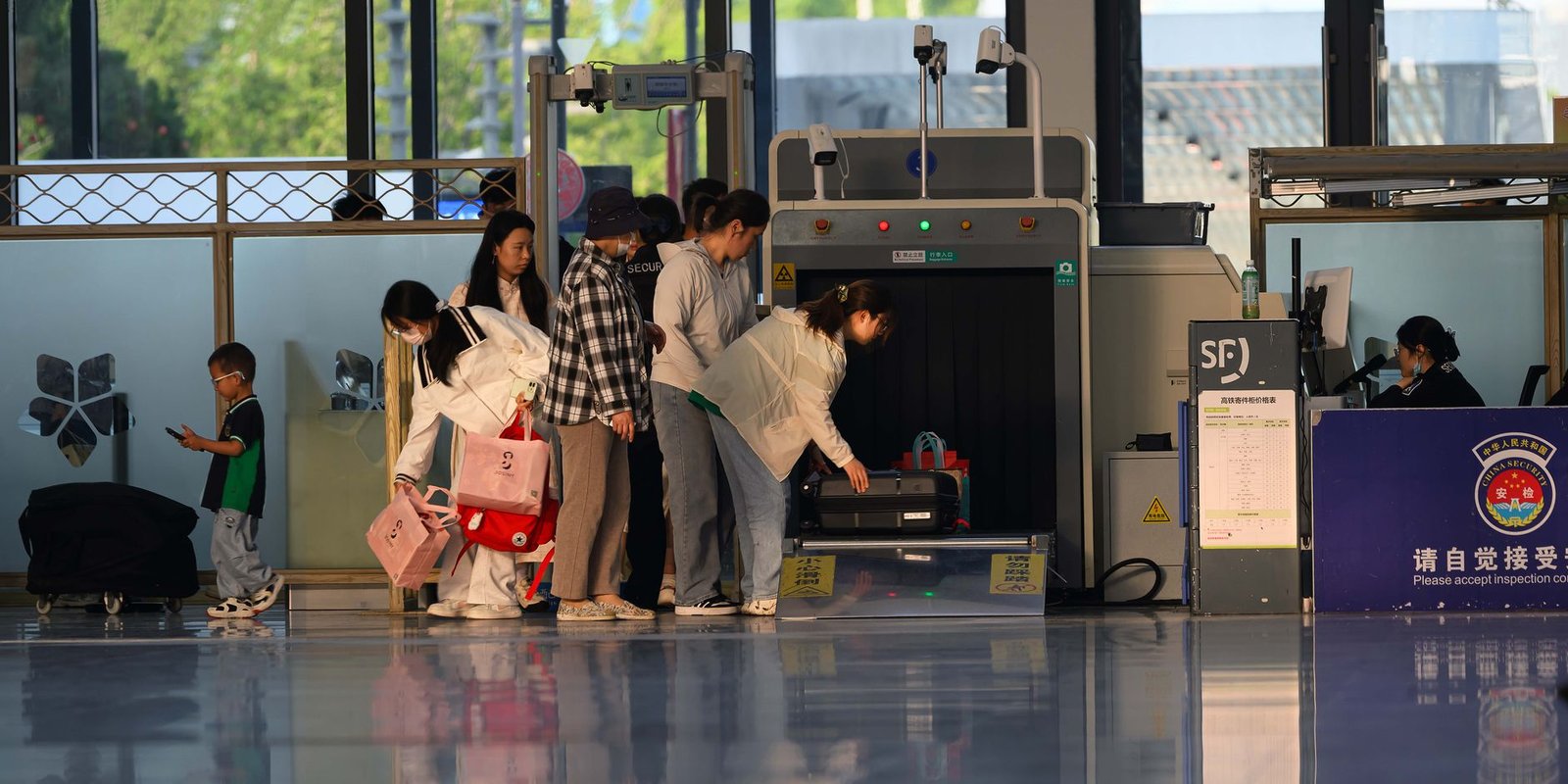
Photo by 海风 张
Skip the frontage roads. Anyone offering to “help” outside the building, with your bags, your booking, or your fare, is not someone FAAN sent. Walk back inside and use a counter. That single rule removes most of the trouble waiting at the curb.
Documents, Money, and Valuables: What to Keep Close
Everything you cannot afford to lose travels in the bag that never leaves your body. That means your passport or ID, your ticket, medication, and electronics. A checked suitcase is a black hole until the carousel; treat it accordingly.
Split your money the same way you’d split your keys and your spare key. Keep one card and a small amount of cash in your main wallet, and a backup card somewhere separate, maybe an inside pocket. If a pickpocket gets one, you still have the other.
Your booking reference and payment receipt matter until the journey ends, not until check-in. Save both on your phone, and take one extra step: write the terminal name, your driver’s contact, and the reference down somewhere offline. Airport Wi-Fi is unreliable and batteries die at the worst moments. A screenshot costs nothing and saves an argument later.
Keep your phone charged. Carry a power bank if you’re allowed one on your flight, and top up whenever you pass a working socket. A dead phone means no booking reference, no driver contact, and no way to call for help.
One last habit: keep your receipt until you’re safely through your door. If a fare dispute shows up after the trip, that slip of paper is your proof.
Timing Your Trip: Beating Lagos Traffic and Airport Queues Safely
Here’s the thing about safety that most guides skip: good timing is a safety habit. A traveler who left home late makes rushed decisions at the curb. He accepts the first fare shouted at him. He skips the plate check because the clock is winning. Nearly every bad outcome at Murtala Muhammed starts with someone against the clock.
So build your buffer before you need it. Arrive at least 90 minutes before a domestic flight and about four hours before international departures, which matches FAAN’s passenger guidance. That buffer does more than cover queues at check-in and security. It keeps you calm enough to verify your ride properly, agree the fare before the car moves, and walk away from anyone pushing a deal you didn’t ask for.
Common Departure Mistakes That Cost Time and Money
The same errors show up at MMIA, MMA1, and MMA2 week after week. Each one is a skipped check, not bad luck.
Wrong terminal first. Your ticket says “Lagos” and that names the city, not the building. Some carriers use MMA2, others use the international terminal, and a driver dropped at the wrong gate can eat your entire buffer in one trip. Confirm the exact facility with your airline before you leave home.
Second, leaving without a traffic buffer. A drive that takes 40 minutes at noon can swallow two hours at rush hour, especially along the Oshodi, Ojota, Berger, and Mile 2 corridors. Trips between Lekki, Victoria Island, and Ikeja can double at peak times, and rain from May to October or a public holiday makes it worse.
Third, vague pickup instructions. Telling a driver “the airport” invites confusion. Send the full terminal name, a nearby landmark, and your flight time instead.
Last, the payment error. Money sent to a personal bank account instead of the airline’s or operator’s official channel is nearly impossible to recover. If the account name doesn’t match the company, stop and book through a verified channel. One confirmation message the night before beats every one of these problems.
Frequently Asked Questions
You’ve read the full guide, but a few questions always surface right before travel day. Here are quick answers to the ones we hear most. Airport rules change often, so confirm live details with FAAN, your airline, or your transport provider before you move.
Can I Walk Between the International and Domestic Terminals?
Don’t try it. The complexes sit about a kilometer apart with active road traffic between them, and there’s no safe pedestrian route. Take a short taxi or app ride between buildings, and budget 20 to 30 extra minutes for the connection during peak hours.
What Should I Do if My Driver Doesn’t Show Up?
Wait inside the terminal near a staffed desk, not on the frontage. Call the provider through the number you saved before your flight, not a number someone hands you at the curb. If the driver is unreachable within your agreed waiting window, cancel through the app or booking channel and use the official taxi desk instead of negotiating with a stranger.
Are Airport Taxi Fares in Lagos Fixed?
No. FAAN has said the fares shown to passengers at MMIA are indicative rates, not official fixed prices, so treat any figure as a starting quote. Agree the full amount before the car moves, confirm it covers tolls, parking, and waiting time, and keep your receipt until you arrive.
What Happens if I Already Paid a Personal Bank Account?
Act fast. Contact your bank immediately to request a recall or dispute, then report the incident and gather every record you have: screenshots, account numbers, and the messages you exchanged. Recovery is difficult, which is exactly why the check matters before the money moves. If your confirmation never arrived, don’t pay again; reach the operator through its published support line first.
Can My Family Member Come Inside to Meet Me?
Yes, in most cases a greeter can wait in the arrivals hall, and that’s often the safest pickup of all. Confirm your terminal first, agree on an exact meeting point inside the building, and ignore anyone between you and that point offering to “help” with your bags.
Is It Safe to Store Bags While I Sort Out Transport?
Avoid it. Unofficial “luggage assistance” at the curb is a common setup for loss or extortion. Keep everything with you until you’re inside your verified ride, and use official trolleys inside the terminal if your bags are heavy.
Conclusion
Safety at Murtala Muhammed is a sequence, not a single decision. Confirm your exact terminal with your airline, send the terminal name to your driver (never just “Lagos airport”), and check the plate number, vehicle, and driver details against your booking before you step in. Agree on the full price before the trip starts, keep your phone, wallet, and documents within reach, and hold onto your receipt until you arrive.
None of this takes more than a few minutes, and together it covers the situations that actually go wrong at the curb. A friendly offer from someone you didn’t book, a sudden fee “for FAAN,” a ride that isn’t in your app: each one is easy to decline when you’ve done the checks in order.
Lagos airport is manageable when you run that checklist the same way every time. Every confident figure shouted at arrivals means nothing next to a confirmed quote and a verified driver.



Leave a Reply