Your flight lands at Murtala Muhammed, you follow the crowd to arrivals, and a driver asks which terminal you came through. That question trips more travelers than anything else at this airport, because “Lagos airport” isn’t one building. It’s several facilities scattered around Ikeja, and they sit about a kilometer apart.
Here’s the short answer: the international terminal, known as MMIA, handles all international arrivals and departures. It sits roughly one kilometer from the domestic facilities, MMA1 and MMA2, and your airline booking, not your guess, confirms where you’re headed. A ticket that says only “Lagos” tells you the city, not the building.
LagosMove is an independent information platform, not an operator or booking agent, so what follows is plain fact, not sales talk. This guide shows you how to confirm your terminal, what to expect inside the building, how to arrange a pickup, and the checks to finish before you leave home.
Key Takeaways
- The international terminal (MMIA) handles all international arrivals and departures, and it sits about a kilometer from the domestic facilities, MMA1 and MMA2.
- Confirm your terminal from your booking, then verify it through the airline’s website or customer service a day before you fly, since assignments shift with relocations and construction.
- Send the exact terminal name and a nearby landmark to your driver, not just “Lagos airport.”
- Treat the drive to the terminal as its own journey and leave buffer time for traffic, rain, and queues.
- Save your booking reference and airline contact offline, and reconfirm everything on travel day.
What Is the Lagos Airport International Terminal?
The international terminal at Lagos airport is the building where every international flight into and out of the city arrives and departs. It’s part of Murtala Muhammed International Airport (MMIA) in Ikeja, and it’s operated by FAAN, the Federal Airports Authority of Nigeria. If you’re flying in from London, Atlanta, Dubai, or anywhere outside Nigeria, this is the door you walk through.
Think of MMIA as one campus with several separate buildings. Your booking decides which one you enter.
The Four Facilities at a Glance
Murtala Muhammed isn’t one structure. Here’s how the passenger facilities split up:
| Facility | What it handles |
|---|---|
| International terminal (MMIA, code LOS) | All international arrivals and departures |
| MMA1 | The older domestic terminal |
| MMA2 | A standalone domestic facility used by several airlines |
| General Aviation Terminal | Domestic flights and general aviation |
Notice the pattern: one building handles international traffic, and three handle domestic flights. Don’t assume every domestic flight leaves from MMA2. Airlines shift between facilities, and FAAN has noted rehabilitation work at some terminals, with check-in sometimes moved to temporary halls.
Why the Distance Matters
The international and domestic complexes sit roughly one kilometer apart, according to FAAN. On paper, that’s a short walk. In Ikeja traffic, with luggage and a check-in deadline, it’s not. One wrong terminal can cost you an hour, a rebooking fee, or the flight itself.
Here’s the honest warning: a ticket that says only “Lagos” settles nothing. Check the terminal listed on your booking confirmation, then verify it on the airline’s website or through customer service. Do that a day before you fly, not an hour before.
How to Confirm Your Flight Uses the International Terminal
Your booking decides your terminal, not your guess. Airlines assign flights to the international terminal, MMA1, MMA2, or the General Aviation Terminal, and that assignment can shift with construction or relocations. FAAN, which operates the airport, has already moved check-in to temporary halls during some terminal rehabilitation work. So before you book a ride or send a driver to “Lagos airport,” run the three-source check below. It takes minutes, and it saves you from the single most expensive mistake travelers make at this airport.

Photo by Atlantic Ambience
The Three-Source Terminal Check
Work through these in order until the terminal name is confirmed:
- Your booking confirmation. Most airline tickets and apps list the departure or arrival facility. If the field only says “Lagos,” that tells you the city, not the building. Dig deeper.
- The airline’s website. Open the flight status or manage-booking page and check the terminal listed there.
- Customer service. Still unclear? Call or message the airline directly and ask for the exact terminal name.
Do this check a day before you fly, not an hour before. Assignments change, and reconfirming on travel day costs you nothing.
Your Pre-Travel Checklist
Before you leave home, have these saved and ready:
- Your flight time and booking reference
- The exact terminal name (MMIA, MMA1, or MMA2)
- Airline instructions, including any terminal changes
- A saved copy of your booking that works offline
- The airline’s customer-service number
Send the terminal name and a nearby landmark to your driver. Then reconfirm on travel day, because arrangements do shift.
Where to Get Help on Arrival
If anything goes sideways, head for the FAAN passenger help desk inside your terminal. Assistance points operate around the clock in each terminal, so you always have a staffed fallback. Locate it when you arrive, even if you don’t need it yet.
Inside the Lagos Airport International Terminal: Facilities and Layout
Once you know the international terminal is your building, the next question is what you’ll find inside it. The layout follows a simple pattern: departures on one side, arrivals on the other. Knowing which side you’re on saves you steps, time, and confusion.
Check-In and Departures
If you’re flying out, check-in sits on the departures side. Airline counters, security screening, and immigration processing all happen there. Keep your passport, ticket, and booking reference within easy reach, because you’ll show them more than once before boarding.
One thing to know: FAAN has noted rehabilitation work at the airport, and during those periods check-in can move to temporary departure halls. Don’t rely on memory or last year’s layout. Confirm your exact check-in location with your airline on travel day, then look for current signage inside the building.
Arrivals, Baggage Claim, and Pickup Zones
Land from abroad and you’ll process through arrivals on the opposite side: immigration, baggage claim, then customs. Outside both sides, you’ll find designated pickup and drop-off zones. Wait for your driver at the approved area rather than wandering the frontage, since access points can change with construction.
FAAN Help Desks Are Always Staffed
The Federal Airports Authority of Nigeria runs passenger help desks inside each terminal, with assistance points available around the clock. Find the desk when you arrive, even if you don’t need it yet. When a delay, gate change, or pickup confusion hits, you’ll already know where to walk instead of searching during a stressful moment.
Getting To and From the International Terminal
You’ve confirmed your flight uses the international terminal. Now comes the part that actually eats time: the ride. There’s no rail station inside Murtala Muhammed, so every trip out of the building starts on the road. Your three practical choices are an authorized taxi, a ride-hailing app, or a pre-booked private transfer. The right one depends on your bags, your arrival hour, and your budget, not just the price on a screen.
Choosing Between Taxi, Ride-Hailing, and Private Transfer
Each option fits a different traveler. Match the ride to the situation before you commit.
- Official airport taxis wait at branded counters inside the arrivals hall. You get a direct, point-to-point ride with no app required. Agree on the full price before the vehicle moves, and keep your receipt.
- Ride-hailing apps like Uber and Bolt show the plate number, vehicle color, and driver name before you enter. Pickup points follow airport access rules, so open your app on travel day and follow the zone shown on your screen.
- Pre-booked private transfers suit late arrivals, families, or anyone landing with several suitcases. Confirm the driver’s name, meeting point, and what happens if your flight is delayed.
One warning worth repeating: if anyone at the curb demands payment “for FAAN,” decline and walk on. The airport operator has stated it does not collect money on drivers’ behalf. Verify before you enter any vehicle, and keep valuables in your hand luggage.
Moving Between the International and Domestic Terminals
Don’t try to walk it. The international and domestic complexes sit about one kilometer apart, with road traffic between them, and that distance feels far longer when you’re dragging bags. Treat the transfer as its own journey and budget 45 to 60 minutes for it, more if rain or weekday traffic hits. If you have a tight connection, confirm it with your airline before you commit to the itinerary.
When you arrange the ride, send your driver the exact terminal name plus a nearby landmark. Never just “Ikeja airport.” Two buildings a kilometer apart both answer to that description, and a driver waiting at the wrong one costs you the hour you were trying to save.
Your Pre-Travel Checklist for the International Terminal
Flying out through the Lagos airport international terminal is easy when everything is ready before you leave home. It gets messy when you discover a missing document or a wrong detail at check-in. Run this list the day before you fly, then again on travel day.
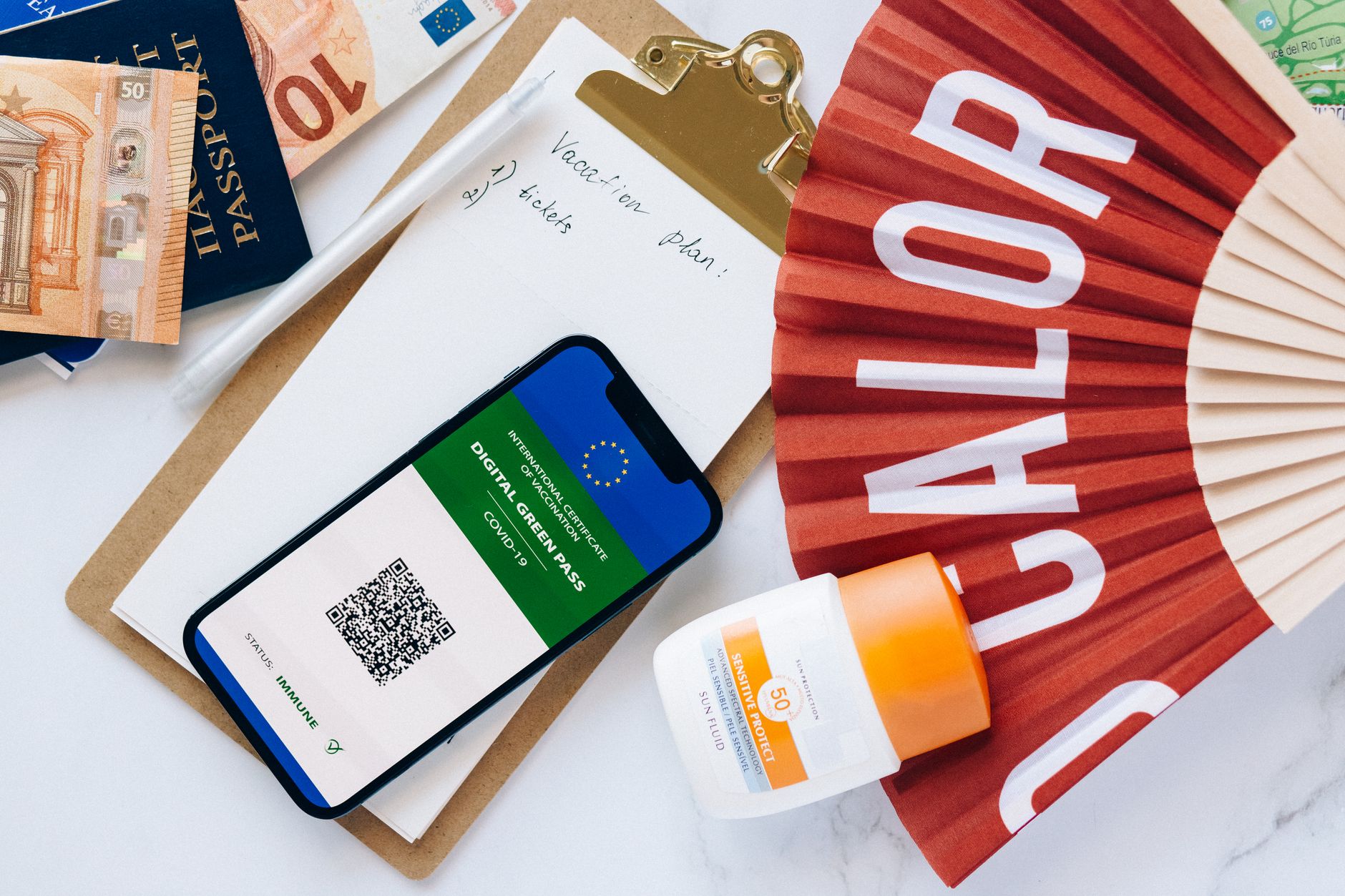
Photo by Nataliya Vaitkevich
Documents and Flight Details to Confirm
Paper first, because everything else depends on it. Before you pay for anything, make sure these check out:
- Passport validity, plus visa, transit, and health requirements for your destination
- The exact terminal name and check-in location for your flight
- Flight date, departure time, and any connection details
- Baggage allowance, excess-bag charges, and seat-selection costs
- Whether online check-in is available and when it opens
If your confirmation says only “Lagos,” call the airline and ask for the building. A one-kilometer error between terminals can cost you the flight.
Money, Booking Records, and Offline Access
Save your ticket, receipt, and booking reference somewhere that works without data. Phone batteries die at the worst moments, so keep the airline’s customer-service number written down too. Put your phone, wallet, and ID in hand luggage, not in a bag you’ll check. You’ll reach for all three at check-in, security, and immigration.
Also confirm where your transfer or driver will meet you, and agree on the full fare before departure. Online quotes are estimates; the operator’s confirmed price is the real one.
Timing Your Departure from Home
Your airline decides when you should check in. Lagos traffic decides when you should leave home. Those are two separate clocks, and confusing them is how people miss flights.
Crossing between the Island and Ikeja can take twice as long during weekday rush periods, Friday evenings, heavy rain, or holidays. Build a buffer on top of your airline’s reporting time, and add more if you’re passing through Oshodi, Ojota, Berger, or Mile 2.
One practical trick for early flights: book a night in Ikeja and wake up minutes from the terminal. It costs less than a rebooked ticket.
Frequently Asked Questions
A few questions always come up after the terminal, pickup, and timing details. Here are the answers travelers ask most, kept short and usable.
How early should I arrive at the Lagos airport international terminal?
Plan to reach the terminal three hours before an international departure. Lagos traffic is the wildcard, so count backward from that target, not from boarding. If rain or a weekday rush hour falls on your drive, add an extra hour.
Can I stay overnight at the international terminal?
Don’t plan on it. The terminal is built for passenger flow, not for sleeping, and seating fills up when flights stack. If you land late or fly out early, book a hotel in Ikeja instead and wake up minutes from the building.
What documents do I show at the international terminal?
Have your passport, ticket, and booking reference ready before the entrance. You’ll show them at the door, at check-in, at immigration, and often again at the gate. Keep them in hand luggage, never in a bag you check.
What happens if my flight lands very late and my driver has gone?
Confirm a delay policy with your transfer provider before you fly, in writing. Ride-hailing drivers stay in the airport queue area most hours, so reopening your app is a workable backup. The FAAN help desk inside the terminal is staffed around the clock if neither option pans out.
Do I need small cash at the international terminal?
Carry some naira in small notes for trolleys, tips, and small purchases, since card and app payments don’t always work at every point. Change money only at authorized points inside the terminal. Count what you receive before you pocket it.
Is the international terminal the same as MMIA?
Yes. MMIA is the code for Murtala Muhammed International Airport, and the international terminal is the building within that complex that handles all international flights. MMA1 and MMA2 are the domestic facilities, and they sit about a kilometer away.
Conclusion
The Lagos airport international terminal stops being a puzzle once you run the checks. Confirm the terminal name from your booking, verify it with your airline a day before you fly, save your documents offline, send your driver the exact terminal name plus a landmark, and build buffer time for Ikeja traffic. Do those five things and Murtala Muhammed loses its surprises.
One rule matters more than the rest: confirm the exact terminal with your airline before you leave home. A ticket that says only “Lagos” tells you the city, not the building, and one kilometer in traffic is the gap between a calm boarding and a rebooked ticket.
For the ride itself, our Lagos airport transportation guide covers taxis, ride-hailing, and pickups in detail. If your journey continues by road, the Lagos bus terminals guide helps you compare departure parks. Plan the terminal first, and the rest of the trip falls into place.



Leave a Reply