
Beach Guide · Prices · Safety · 2026
Lagos Beaches Guide: Prices, Access, Safety, and More

Lagos has more beaches than most people can name, but the right one for you isn’t decided by scenery alone. Entrance fees, transport time, crowd levels, facilities, rain, and water conditions all shape how your day actually goes.
There’s no single “best” beach in Lagos. Landmark suits some trips, Elegushi suits others, and quiet spots like Jara work differently because they require pre-booking. What matters is matching the beach to your budget, location, and plans.
One thing before you go: fees and access rules change often, so confirm current details with the beach or resort before leaving home. This Lagos beaches guide walks you through prices, access, safety, and what to expect at each major beach, so you can pick with confidence.
- Entrance fees vary widely: gate prices at major Lagos beaches range roughly from ₦1,000 to ₦8,000, with premium lounges and cabanas costing far more.
- Confirm fees before you go: prices change on weekends, holidays, and special events, and inner resorts often charge separately.
- Landmark, Elegushi, and Tarkwa Bay suit different trips: match the beach to your budget, location, and plans.
- Watch the water: strong currents are common, so swim where it’s designated and never alone.
- Plan transport carefully: traffic, boat schedules, and parking all add time and cost.
If you want the short version, here it is. Tarkwa Bay suits travelers who want a boat-access island beach with calmer water and a laid-back day trip. Landmark Beach suits visitors who want a developed, paid venue with loungers, food, and facilities on Victoria Island. Other popular options like Oniru, Elegushi, Eleko, Inagbe, Atican, and Ilashe all work well too, but you should confirm current fees, access rules, and facilities directly with each beach before you go.
Lagos Beaches Guide: Compare the Best Beaches
The right choice comes down to four things: your budget, your starting point in Lagos, who you’re going with, and what you actually want to do there. A couple looking for a quiet afternoon will pick differently from a group of friends chasing music and nightlife. Use the breakdown below as a starting point, then check the detailed sections later in this guide for prices, access, and safety at each beach.
| Beach | Access | Best For |
|---|---|---|
| Tarkwa Bay | Boat only from Lagos jetties | Swimming, picnics, calm water |
| Landmark | Road, Victoria Island | Facilities, food, family-friendly comfort |
| Oniru | Road, VI/Oniru axis | Busy public beach, vendors, easy access |
| Elegushi | Road, Lekki axis | Music, social scene, nightlife energy |
| Eleko | Road, Lekki-Epe corridor | Quieter, less club-like day trips |
| Inagbe | Boat/resort transfer | Resort-style stays and packages |
| Atican | Road, Lekki-Epe side | Day use, lodging, events |
| Ilashe | Boat transfer | Private villas and group getaways |
One caveat applies across this whole Lagos beaches guide: fees and access rules change often, so treat any price you read as a starting point and confirm it with the beach itself before paying.
Beach Types Explained: Public, Private, Club, or Resort
Before you pick a beach, you need to know what kind of beach you’re paying for. Lagos uses the word “beach” loosely, and it covers at least four different setups. A public beach is open to anyone at the gate, usually with basic facilities and low fees. A private beach is gated and managed by an owner who charges entry and enforces rules. A beach club sits on top of that private model and adds loungers, food service, music, and event pricing. A beach resort goes further still, often requiring a booking, a boat transfer, or an overnight stay before you can touch the sand.
The difference matters because it changes your cost, your crowd level, and even how you get there. A ₦1,000 gate fee can turn into a ₦15,000 day once you add parking, chairs, food, and a table minimum. This Lagos beaches guide separates what’s widely reported about each location from what you should confirm directly before you leave home.
Here’s a quick way to think about it. Public beaches are like a danfo: cheap, open to all, and unpredictable. Private beaches are more like a chartered ride: you pay more, but someone is managing the experience. Beach clubs add the hospitality layer, so you’re paying for a seat and service, not just sand access. Resorts bundle everything, sometimes including the boat ride.
Why does this matter for your wallet? At a public or basic private beach, the gate fee is most of your cost. At a club, entry may be only the start, since lounge tables and cabanas often carry minimum spend, especially on weekends and event days. At a resort, access can depend entirely on a booking or stay. Knowing which category a beach falls into tells you what questions to ask before paying.
Lagos Beach Comparison Table
The table below pulls together commonly reported details for the major beaches. Price ranges reflect figures circulating in recent guides and listings, not verified current rates, so treat them as planning estimates.
| Beach | Best For | Access | Price Status (Reported) | What to Confirm |
|---|---|---|---|---|
| Tarkwa Bay | Swimming, picnics, calm water | Boat from Lagos jetties | Entry reported around ₦200–₦500; boat fare separate | Boat departure point, current fare, water conditions |
| Landmark | Facilities, food, developed club setting | Road, Victoria Island | Entry reported around ₦3,000–₦5,000; event days cost more | Day-of-event pricing, house rules, lifeguard coverage |
| Oniru | Easy access, vendors, managed zones | Road, VI/Oniru axis | Entry reported around ₦1,000–₦2,000 | Parking fee, separate lounge charges, swim zones |
| Elegushi | Music, social scene, nightlife energy | Road, Lekki axis | Entry reported around ₦1,000–₦2,000 | Gate fee, event surcharge, minimum spend |
| Eleko | Quieter, budget day trips | Road, Lekki-Epe corridor | Entry reported around ₦500 | Current fee, vendor availability, road condition |
| Inagbe | Resort stays and packages | Boat or resort transfer | Transfer and lodging priced separately | Day-use policy, boat pricing, booking requirements |
| Atican | Family outings, pools, water sports | Road, Ajah/Lekki axis | Entry reported around ₦1,000–₦5,000 by day | Facility operation, child pricing, parking |
| Ilashe | Private villas, group getaways | Boat transfer | Boat fare and beach-house terms vary | Day-visitor policy, operator, property access rules |
What Each Beach Is Actually Like
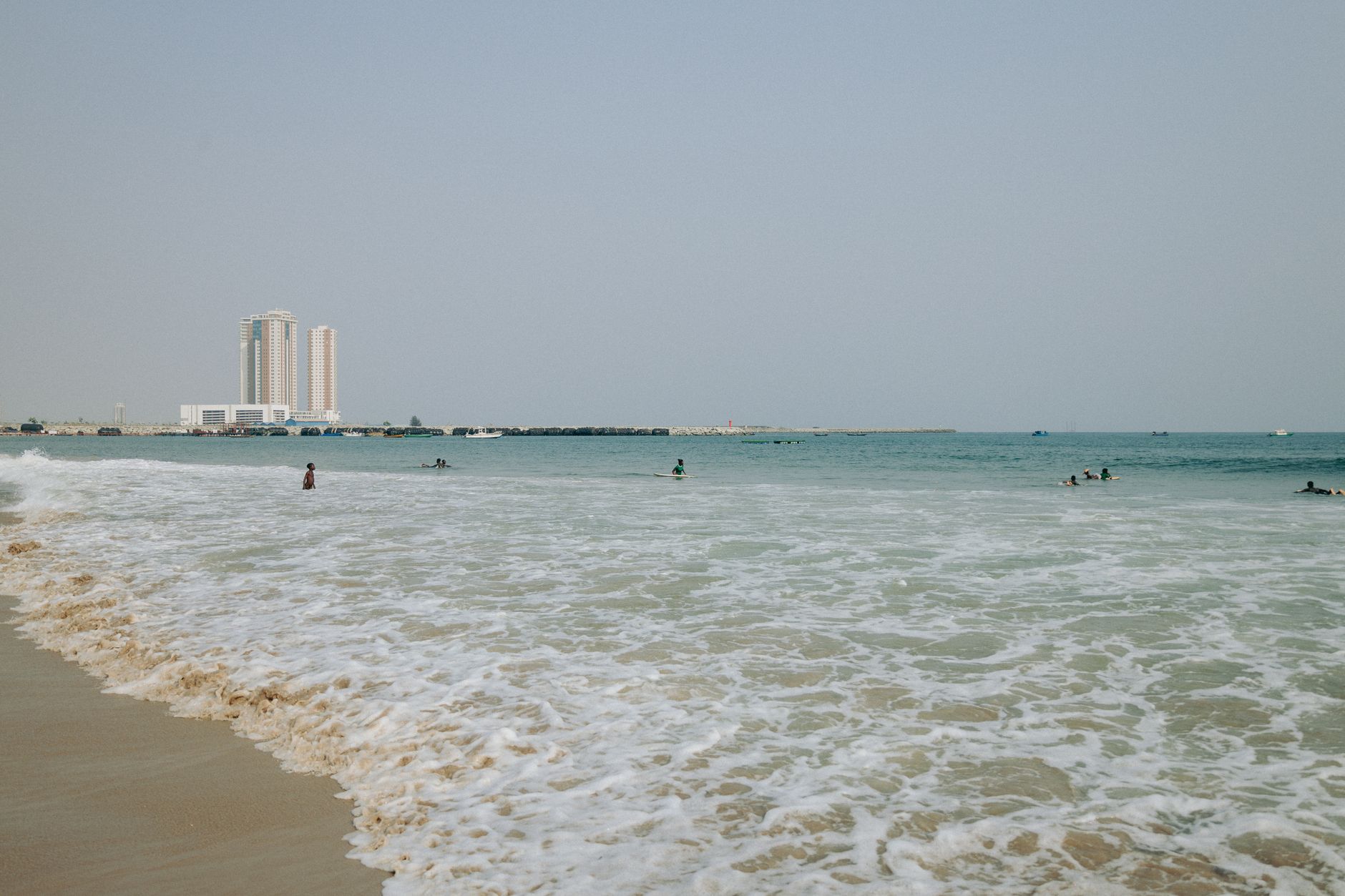
Landmark Beach sits on Victoria Island and is the most developed beachfront in the city, with loungers, restaurants, and event infrastructure. Reviewers on Tripadvisor’s Landmark Beach page note that the water there is calmer than at most Lagos beaches, partly because of the Eko Atlantic shoreline. Expect the highest prices of the group, and check whether an event is scheduled, because concerts change both access and cost.
Elegushi and Oniru are the Lekki-VI axis favorites. Elegushi leans social, with music, food vendors, and a crowd that builds toward evening. Oniru is gated and managed, with designated swimming areas reported on better days. Both are easy to reach by road, which is exactly why both get crowded on weekends.
Tarkwa Bay is the island option. You reach it by boat from jetties around Lagos, and that boat ride is half the experience. The beach has a picnic, family-trip feel, with chair and canopy rentals commonly reported. A detailed Tarkwa Bay beach guide describes soft sand and swimmable water, though it warns that cleanliness shifts after storms and surf can pick up. Build your whole day around the boat schedule; miss the last return and your plans change fast.
Eleko is the budget pick on the Lekki-Epe corridor. It’s quieter and less club-like, which suits a group that wants space without music blasting from three directions. Facilities are basic, and vendors come and go, so bring what you need.
Atican, Inagbe, and Ilashe round out the list. Atican, near Ajah, is frequently described as family-friendly, with pools and water sports reported on site. Inagbe is a proper resort reached by boat, where your entry depends on a package or booking. Ilashe is the private-villa stretch, popular with groups who rent a beach house and split the cost.
How to Choose Between Them
Match the beach to your trip, not to a ranking. Ask yourself four questions. Who’s coming? A family with kids wants shade, food, and managed swim zones, which points toward Landmark, Atican, or Oniru. A group of friends chasing energy wants Elegushi. What’s your budget? Eleko and Tarkwa Bay cost far less than a club day. Where are you starting from? If you’re in Ikeja, factor in serious traffic before choosing any Lekki-axis beach. And what do you want to do? Swimmers should weigh water conditions more heavily than partygoers should.
The gate fee is never the full cost. Chairs, food, parking, and the boat ride can double or triple your day, so price the whole trip before you commit.
One more thing before you set out: fees, event calendars, and access rules change often at every beach on this list, so confirm current details directly with the venue on the day you plan to go. Travel writers like the Washington Post’s Lagos beach coverage capture the scene well, but the only source that matters for today’s gate price is the beach itself.
Lagos Beach Prices and Access Costs You Should Budget For
The gate fee is only the headline number. A Lagos beach day has at least five cost layers: entry, transport, seating, food and drinks, and parking. If you plan around the gate price alone, you will be caught off guard at the second counter. This section breaks down what each layer typically involves, and how to build a budget that survives the whole day, not just the front gate.
What You Actually Pay For at the Gate
Access pricing in Lagos spans an enormous range. At the low end, basic public or semi-public entry has been reported at a few hundred to a couple thousand naira. At the high end, premium venues and private sections can cost tens of thousands per person once cabanas, minimum spend, or event access come into play. Some 2026 reporting has even described private Lagos beachfront access running well beyond ₦150,000 for top-tier setups.
So treat the widely quoted range of roughly ₦2,000 to ₦60,000 as a signal of how wide the market is, not as a price list. Two people can pay the same beach’s name and still have completely different bills, because one walked through the public gate and the other booked a lounge section. The number that matters is the one attached to the exact product you want, on the exact day you want it. Recent coverage such as Nairametrics’ 2026 review of Lagos beach access costs shows how much figures shift between sources, which is exactly why you should confirm with the operator before you budget in stone.
A few patterns hold across most beaches, though, and they help you predict where the money goes:
- Weekends and holidays cost more. Several venues publish weekday and weekend rates separately, and event days can change the gate entirely.
- Inner sections charge again. Beaches like Elegushi and Oniru are often described as one beach but priced like several, with clubs or lounges inside charging their own entry above the main gate.
- Boat access is a separate bill. At Tarkwa Bay and Ilashe, the boat fare can rival or exceed the beach entry itself, and it varies by boat type and departure jetty.
The Hidden Costs That Double Your Bill
Here is where budgets actually break. Beyond the gate, expect charges for things people assume are included:
- Parking, which has been reported at a few hundred naira per car at some beaches but varies by venue.
- Chair, canopy, or tent rental, with figures ranging from around ₦1,000 for a simple plastic chair to ₦10,000 for a proper setup depending on the seller.
- Food and drinks, or a corkage fee if you bring your own. Some venues allow outside food freely; others negotiate corkage per item.
- The return trip, which people forget until the last boat or the fuel light comes on.
None of these are scams. They are just separate transactions at separate counters, and each one adds up faster than the gate fee did.
A Simple Beach Day Budget Framework
Use this as a planning skeleton, not a quote. Fill in confirmed numbers from the venue before you leave.
| Cost Item | Planning Question |
|---|---|
| Entry fee | Weekday, weekend, or event rate? Main gate or lounge section? |
| Transport | Road or boat? Round trip? Fuel or ride-hailing cost? |
| Parking | Per car or per visit? Included with entry? |
| Seating | Chair, canopy, cabana, or minimum spend? |
| Food and drinks | Buy on site, or corkage for what you bring? |
| Buffer | Extra 20 to 30% for surprises |
The cheapest version of a beach day is decided before you arrive. A group that agrees on a budget, brings its own food where allowed, and skips the cabana can spend a fraction of what the same beach charges its club visitors.
Price the full day, confirm each figure with the venue directly, and the gate fee becomes what it should be: the smallest line on your list.
How to Get to Lagos Beaches Without Losing Time in Traffic
Your beach day starts at your front door, not at the gate. Lagos traffic decides how much sand you actually enjoy, and it can quietly turn a two-hour plan into a five-hour ordeal. The good news: with the right timing and route choices, you can protect most of your day.
Start Early and Beat the Traffic Windows
Lagos traffic follows a rhythm you can predict. The morning peak builds from around 6 a.m. and eases by mid-morning. The evening peak starts earlier than most people expect, often by 4 p.m., and it hits hardest on the corridors that lead to the beaches.
Your best move is simple. Leave before 7 a.m. on a Saturday or Sunday. A trip from Ikeja to the Lekki-Epe corridor can take under two hours early in the morning, then stretch well past three hours if you leave at 10 a.m. on a weekend. The same distance, different clock.
Watch the calendar too. Public holidays like Christmas, Easter, Sallah, and New Year bring heavy demand across major corridors, and event days can close streets you planned to use. On the weekend of the Victoria Island Carnival in September 2026, for example, roads like Ozumba Mbadiwe Avenue and Ahmadu Bello Way were affected, and those are exactly the corridors you might use to reach the Eti-Osa coast.
Check Rain and Road Repairs Before You Leave
Rain changes everything in Lagos. A heavy downpour can double travel time on already slow roads, and flooding around Ajah or Oshodi can force diversions entirely. Check the weather the night before, and if heavy rain is forecast for the morning, consider shifting to a later start or a nearer beach.
Road works matter just as much. In September 2026, repairs on the Kara Bridge along the Lagos-Ibadan Expressway produced gridlock stretching more than 20 kilometers, while the Oke-Afa Bridge closure disrupted Isolo and Ejigbo traffic for three weeks. If you’re starting from Ikeja or the mainland, that’s the difference between a calm drive and a miserable one.
So before you set out, do three quick checks:
- Check live traffic on your route using Google Maps or a Lagos traffic source like Traffic Radio 96.1FM.
- Search for closures on your exact corridor, especially bridges and event routes.
- Pick a backup route, so a single closure doesn’t strand your plans.
Compare Your Transport Options
The best way to the beach depends on where you start, how many people are coming, and how much luggage you carry. Here’s how the main options stack up:
| Transport Option | Best For | Travel-Time Consideration | What to Confirm |
|---|---|---|---|
| Ride-hailing (Bolt, Uber) | Door-to-door ease, small groups | Surge pricing and pickup delays on weekends | Vehicle size, pickup point, driver contact |
| Private car | Families and groups with gear | Parking fees and weekend congestion | Parking cost at the venue |
| Taxi | Direct trips without app dependence | Fare negotiation before you board | Agreed fare and route |
| Danfo or BRT | Budget trips on covered corridors | Transfers add time and stress | Exact drop-off point and connecting ride |
| Boat (LAGFERRY or private) | Tarkwa Bay, Ilashe, Inagbe | Fixed departure schedules, last-boat cutoff | Departure jetty, return time, fare |
One caution here: don’t assume a particular bus route or operator serves a specific beach gate unless the operator or venue confirms it. Most road-access beaches will still need a short connecting ride from a main road.
Plan the Return Trip Before You Leave
Here’s the mistake almost everyone makes: they plan the journey out and wing the trip back. The return is often worse. Beach traffic peaks late in the afternoon as everyone leaves at once, and a driver who promised to wait may have other plans.
Decide your return time in advance. If you’re using a boat, confirm the last departure when you buy your ticket. If you’re riding or driving, aim to leave before the evening peak builds, around 4 p.m. on weekend afternoons. Have a backup plan for the return leg, whether that’s a trusted driver’s number or a ride-hailing app with signal and battery to spare.
A beach day is two journeys, not one. Budget time for both, or the traffic will eat the fun.
Get the outbound right, plan the return, and the road becomes a small price for a good day by the water.
Beach Safety in Lagos: What to Check Before You Swim
No beach in Lagos is guaranteed safe on any given day, and that’s the honest starting point. Conditions at the same beach can change from calm to rough within hours, depending on tides, wind, rainfall, and how crowded it gets. What separates a good beach day from a bad one is usually not luck. It’s the checks you do before you get into the water.
This section of our Lagos beaches guide covers three different kinds of safety. Water safety is about currents, waves, and tides. Personal security is about your belongings and the people around you. Travel safety covers how you arrive and leave. Each one needs its own plan.
Check the Water Conditions Before You Enter
Lagos beaches face the open Atlantic, which means currents and surf are part of the package. Waves of one meter or more can make swimming risky for most people, and the sea-state pages for the Lagos coast, such as Tide-Forecast.com’s Lagos Bar sea conditions, publish wave heights you can check before you leave home. Roughly speaking, under half a meter is manageable for a casual swimmer, one meter demands caution, and anything above that is best left to surfers.
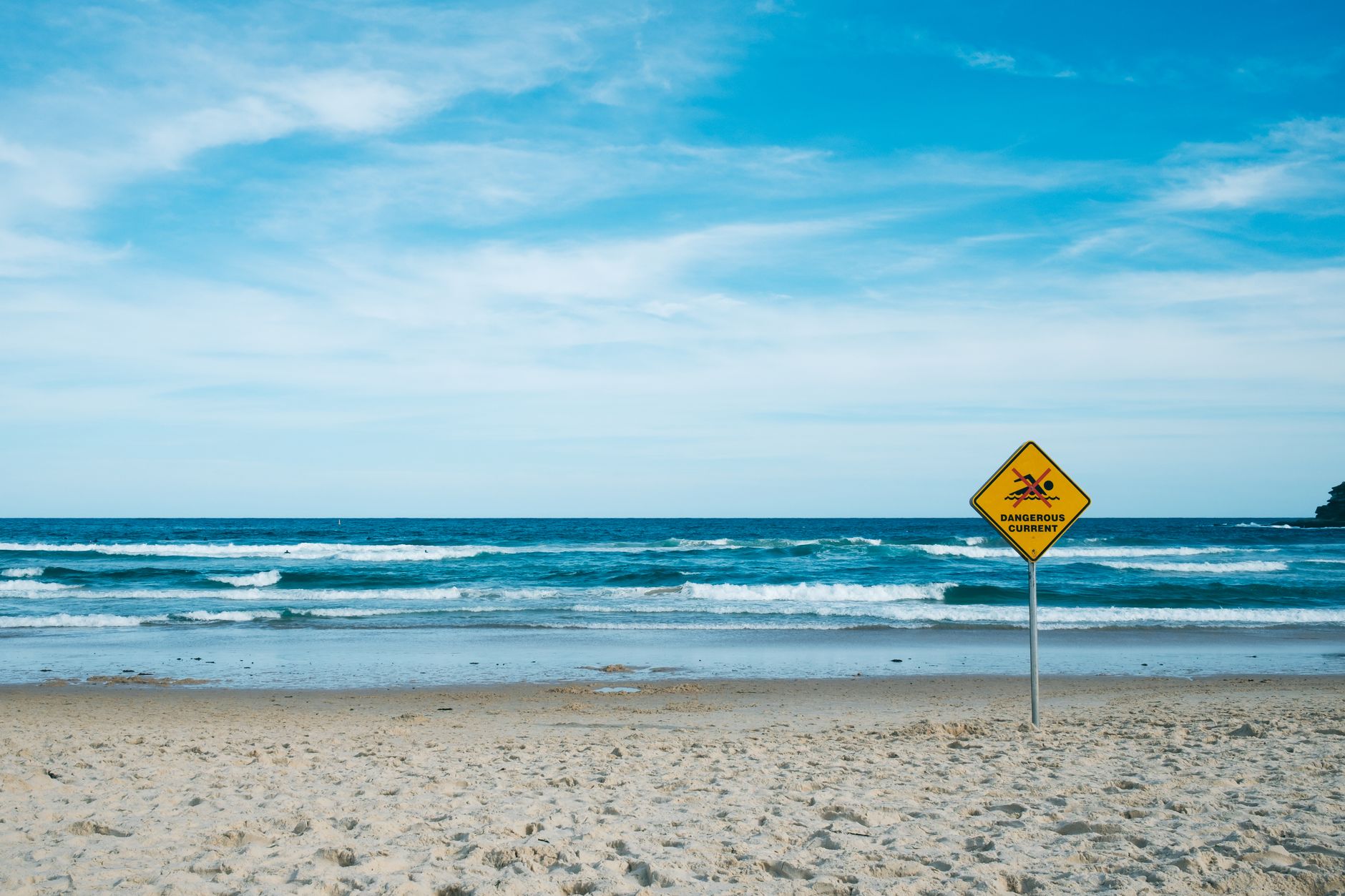
Rip currents deserve special attention. These are narrow channels of water pulling away from shore, and NOAA’s rip current survival guide notes they often form near low tide and around waves two to three feet high or greater. If you’re caught in one, don’t swim straight back to shore against the pull. Swim parallel to the beach until you’re free, then angle in. If you see someone else caught, throw something that floats and call for help rather than going in after them.
Tides matter more than most visitors expect. Check a Lagos tide chart before your trip, and ask venue staff whether the swimming zone is safer at high or low tide on that particular beach. Rain adds one more layer. Heavy rainfall raises water levels and stirs up surf, and NIHSA’s flood forecast dashboard has flagged combined high tide and heavy rain events for Lagos before. After a major storm, expect debris and murky water for a day or two.
Know the Beach Rules and Follow Them
Every managed beach sets its own rules, and they exist for reasons that aren’t always obvious from the sand. Do these three things when you arrive:
- Ask staff where swimming is allowed. Designated zones are usually chosen for a reason, such as fewer holes or calmer water.
- Look for posted signs and flags. A simple flag system (green for safe, yellow for caution, red for no swimming) is used at some venues, but don’t rely on it being posted. Ask if you can’t find it.
- Respect closures after storms. A beach that looks fine may have damaged walkways, unstable sandbanks, or strong runoff currents the day after heavy rain.
Kids need closer watching than anywhere else in Lagos. Water that is knee-deep at one moment can be waist-deep on the next wave, so keep children within arm’s reach and never leave them unsupervised, even in shallow water.
Protect Your Belongings and Your Group
Beach security is a different problem from water safety, and most visitors underprepare for it. Crowded public beaches attract pickpockets the same way any busy Lagos market does. Keep phones, cash, and identification in a bag that stays with one person at all times, not spread across towels. A zippered bag under a beach chair works better than a loose backpack behind it.
Go with people you know and stay within sight of your group, especially as the crowd builds in the evening. The UK Met Office weather page for Lagos also advises staying out of direct sun between 11 a.m. and 3 p.m., which is worth planning around if you’re bringing children or older relatives.
Plan Your Exit and Emergency Options
Before you settle in, decide how you’d leave quickly if conditions changed. Confirm the last boat departure if you’re at Tarkwa Bay or another boat-access beach, and agree on a meeting point with your group in case anyone gets separated. Save the venue’s phone number and your transport contact before your phone battery drops.
For emergencies, Lagos operates a state emergency line, 112, and it’s worth saving it alongside the venue’s own number. The practical rule from water-safety guidance everywhere applies here too: get help fast, use flotation, and don’t attempt a solo rescue.
One last check that pays off every single time: call or message the beach on the day you plan to visit and ask about current water conditions and any advisories. The OpenTravelGuide’s Lagos beach safety notes reflect general patterns, but the person standing at that gate today knows what the water did this morning. For help getting there calm and on time, see our guide to the best times to travel around Lagos.
Choose a Lagos Beach by Budget, Group, and Day-Trip Style
You’ve seen the beaches, the prices, and the traffic math. Now comes the actual decision. The truth is, the “best” beach for you depends less on rankings and more on who’s coming, what you’ll spend, and how much of the day you’re willing to lose on the road. Here’s how to match the beach to your trip instead of forcing your trip onto the wrong beach.
Couples: Choose calm over hype
Skip the loud gates. Elegushi is wrong for a quiet date; the crowd and the music build fast. Look at Landmark on a weekday for its food, seating, and managed setup, or Eleko if you want space and lower spend. A weekday visit matters more than the venue itself.
Families: Prioritize facilities and supervision
With kids, your decision drivers are shade, food access, and water safety, in that order. Atican near Ajah suits family days well, with reported weekday rates around ₦1,000 per adult and child pricing (confirm both before you go). Landmark and Oniru also work when you want managed swim zones.
Groups of friends: Budget for the whole bill
Elegushi is the obvious pick for energy and music, but plan around the layered pricing. Internal sections and lounges often charge separately. For a party without club pricing, Eleko or a shared Ilashe beach house split across six to ten people often gives more fun per naira.
Visitors with limited time: Pick the nearest good option
Starting from the Island or Lekki, Oniru or Landmark is a short ride. Starting from Ikeja or the mainland, add serious buffer time or choose the closest decent option. A so-so beach you reach in 30 minutes beats a great one that eats your afternoon.
Budget Travelers: Let Transport Decide
At the low end, gate fees at beaches like Eleko and Tarkwa Bay run far below club venues, but transport can flip the math. Tarkwa Bay is cheap at the gate and expensive in logistics once you add boat fares both ways. On a tight budget, road-access beaches reachable by public transport make more sense; our guide to Lagos BRT routes and bus stops helps you plan the city leg before you commit. If you want an overnight angle instead, Expedia lists hotels near Tarkwa Bay Beach worth comparing against day-trip costs.
Your Simple Decision Path
Run through these five questions in order, and the answer usually picks itself:
- Who’s coming? Kids point to Atican, Landmark, or Oniru. Friends point to Elegushi or Eleko.
- What’s your real budget? Total day cost, not just the gate fee.
- Where are you starting from? Your origin often decides the beach more than your preference does.
- How do you get back? Confirm last boats, ride availability, and evening traffic before you settle in.
- What’s the date? Weekends, holidays, and event days change both price and crowd.
The beach you choose second-best but reach easily is almost always a better day than the famous one that costs you four hours in traffic.
Answer those five, call the venue to confirm today’s fees and water conditions, and go. That’s the whole system.
Frequently Asked Questions
You’ve read the beach breakdowns, the price layers, and the traffic plan. A few practical questions usually come up right before the trip, so here they are with straight answers.
When is the best time of year to visit a Lagos beach?
The dry season, roughly November to March, gives you the most predictable beach days. Rain is less frequent, roads flood less, and surf tends to be calmer. That said, the dry season also brings harmattan dust and higher crowds around Christmas and New Year. If you visit between April and October, pick your day carefully and check the forecast the morning you go.
Can you actually swim at Lagos beaches?
Yes, but only in designated zones and with your eyes open. Lagos beaches face the open Atlantic, so currents and surf change fast. Landmark and Tarkwa Bay are commonly described as having calmer water on good days, while open stretches like Elegushi demand more caution. Ask staff which zone is safe that day, never swim alone, and skip the water entirely after heavy rain or when waves top a meter.
How much should you budget for a beach day?
Plan around the full day, not the gate fee. A budget trip to Eleko or Tarkwa Bay can come together for a few thousand naira per person once you share transport costs. A club-style day at Landmark or Elegushi, with lounge seating and food, can run far higher. Add a 20 to 30% buffer, because parking, chair rentals, and corkage show up at separate counters.
How do you get to Tarkwa Bay?
You take a boat from jetties around Victoria Island and Lagos Island. Guides like Waka Abuja’s Lagos beach roundup list departure points such as Marina, Mekwe Jetty, and Tarzan Jetty, with round-trip fares often quoted between ₦1,500 and ₦3,000. Those figures shift, so confirm the fare, the jetty, and the last return boat before you commit. If you’re starting from the Lagos Island side, the Lagos Blue Line rail guide shows how to reach the Marina area without sitting in road traffic.
Are outside food and drinks allowed?
It depends entirely on the venue. Some beaches welcome coolers with no charge, while club-style venues charge corkage or ban outside items altogether. Ask two questions when you call ahead: whether outside food is allowed, and whether a cooler fee or per-item corkage applies. Getting this wrong at the gate is one of the most common budget surprises.
What do you do in an emergency at the beach?
Save the numbers before you go. Lagos emergency services operate toll-free lines, and LASEMA’s official contact page lists 767 and 112 for police, ambulance, and rescue response. If someone is caught in a current, throw something that floats and call for help instead of swimming after them. Also keep the beach’s own phone number saved, since venue staff can usually respond faster than anyone else on the sand.
Do you need to book before visiting?
Most public and private beaches don’t require a booking, you just pay at the gate. Resorts and boat-access spots are the exception. Inagbe typically expects a package or stay, Ilashe works through beach-house operators, and some quieter spots like Jara require pre-booking outright. When in doubt, message the venue a day ahead; that single message usually settles fees, access, and opening hours in one go.
Time Your Beach Trip Around Lagos Traffic
The beach you reach easily beats the famous one stuck in traffic. Check the best departure windows before you pack the cooler.
See Lagos Road Trip TimesConclusion
The right Lagos beach depends on what your day actually requires: access, total cost, facilities, your group, the weather, and how you’ll get back. Tarkwa Bay and Landmark show how different two beach days can be. One is a boat trip to calm water and a picnic setup. The other is a paid, developed venue with food and loungers on Victoria Island. Neither wins universally; the better pick is the one that fits your budget, starting point, and plans.
Before you leave, confirm current prices, booking rules, entrance points, boat arrangements, and water conditions directly with the venue. Fees and rules change often, and a quick call saves you from surprises at the gate or jetty.
For route and timing help before your trip, browse LagosMove’s transport planning resources. A good beach day starts with a well-planned journey.