Choosing truck parking in Lagos takes more than finding an open space. You need a yard that can handle your truck, a route that fits current movement rules, and clear terms for your stay.
Use these five checks before you book or enter a truck park. They can help you avoid preventable risks, delays, and disputes, but no listing or yard name can guarantee safety. Confirm the details with the operator before you commit.
1. Check Access Control and Yard Security
Start with the entrance. Ask who can enter the yard, how guards verify drivers and vehicles, and whether visitors are recorded. When you arrive, look for a controlled gate and a security presence that stays active after dark. Don’t rely on a claim like “24-hour security” without asking what it means in practice.
Check how the park handles your truck and cargo while you’re away. Ask whether drivers keep their keys, whether staff move vehicles, and who you contact if you notice a problem. If you’re carrying valuable or sensitive goods, ask whether the yard has a separate storage or monitoring process. A well-lit, staffed entrance is useful, but it doesn’t tell you how the rest of the property is managed.
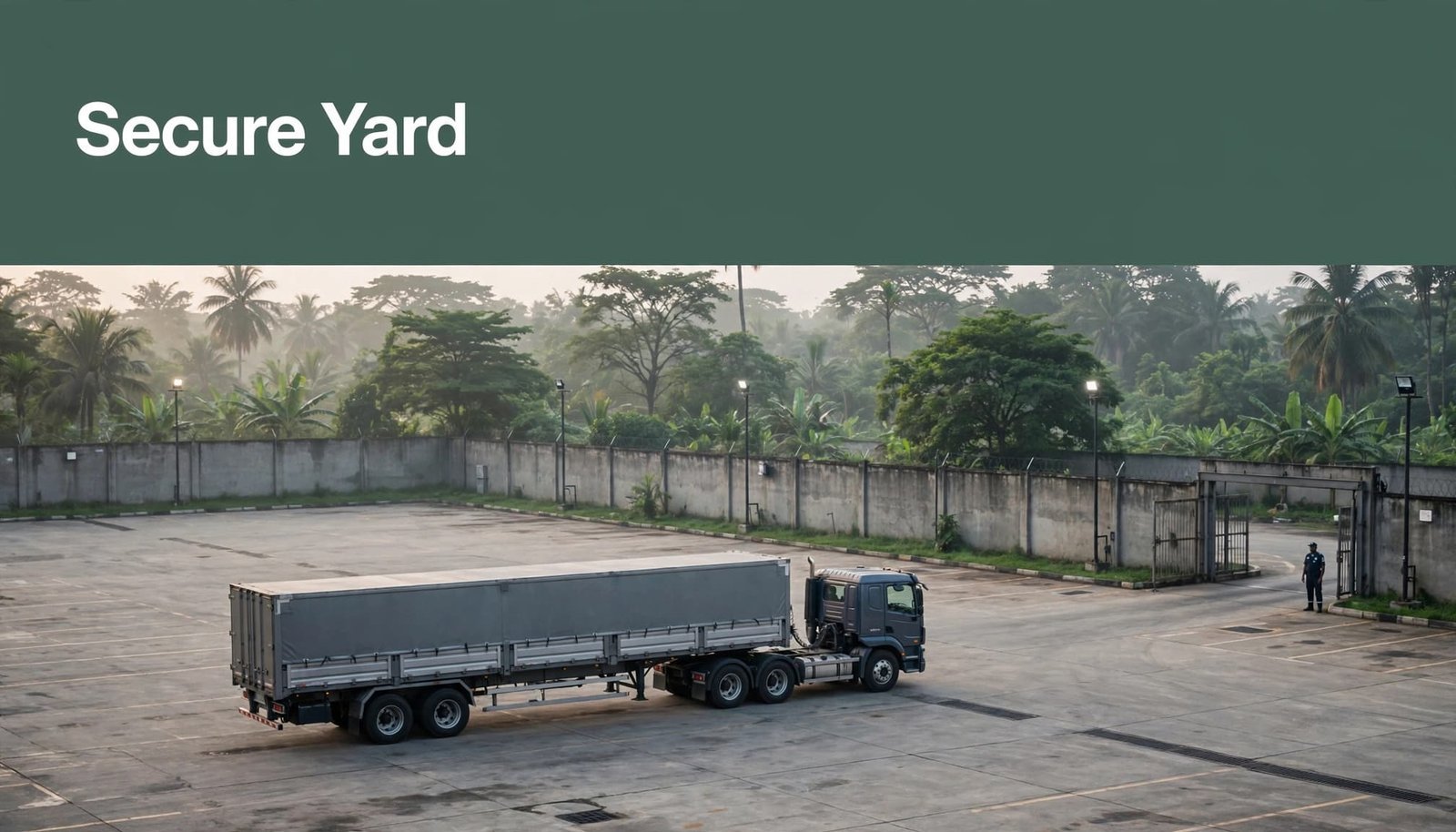
A few Lagos listings include Rain Oil Truck Garage on Egbe Road, MRS Truck Garage on Siemens Road, and Total Depot Trailer Park on Bonny Street. Treat these as starting points for your search, not as verified endorsements. A directory entry doesn’t confirm security arrangements, available space, or whether a particular truck can park there. Call ahead and inspect the yard before relying on it.
2. Inspect Space, Turning Room, and Drainage
A parking space must fit the full vehicle, including the trailer. Check the width of the bay, the turning area, and the path to the exit. If the truck has to reverse through a tight space or wait behind vehicles that can’t move, a minor problem can block the yard.
Look at the ground and drainage, especially during the rainy season. Standing water, deep potholes, and soft ground can make it hard to park or leave safely. Check that there’s enough clearance around the truck and that nearby vehicles won’t block access to the cab, cargo, or emergency equipment. If you’re parking a tanker, container truck, or long vehicle, ask the operator whether that exact vehicle type is accepted.
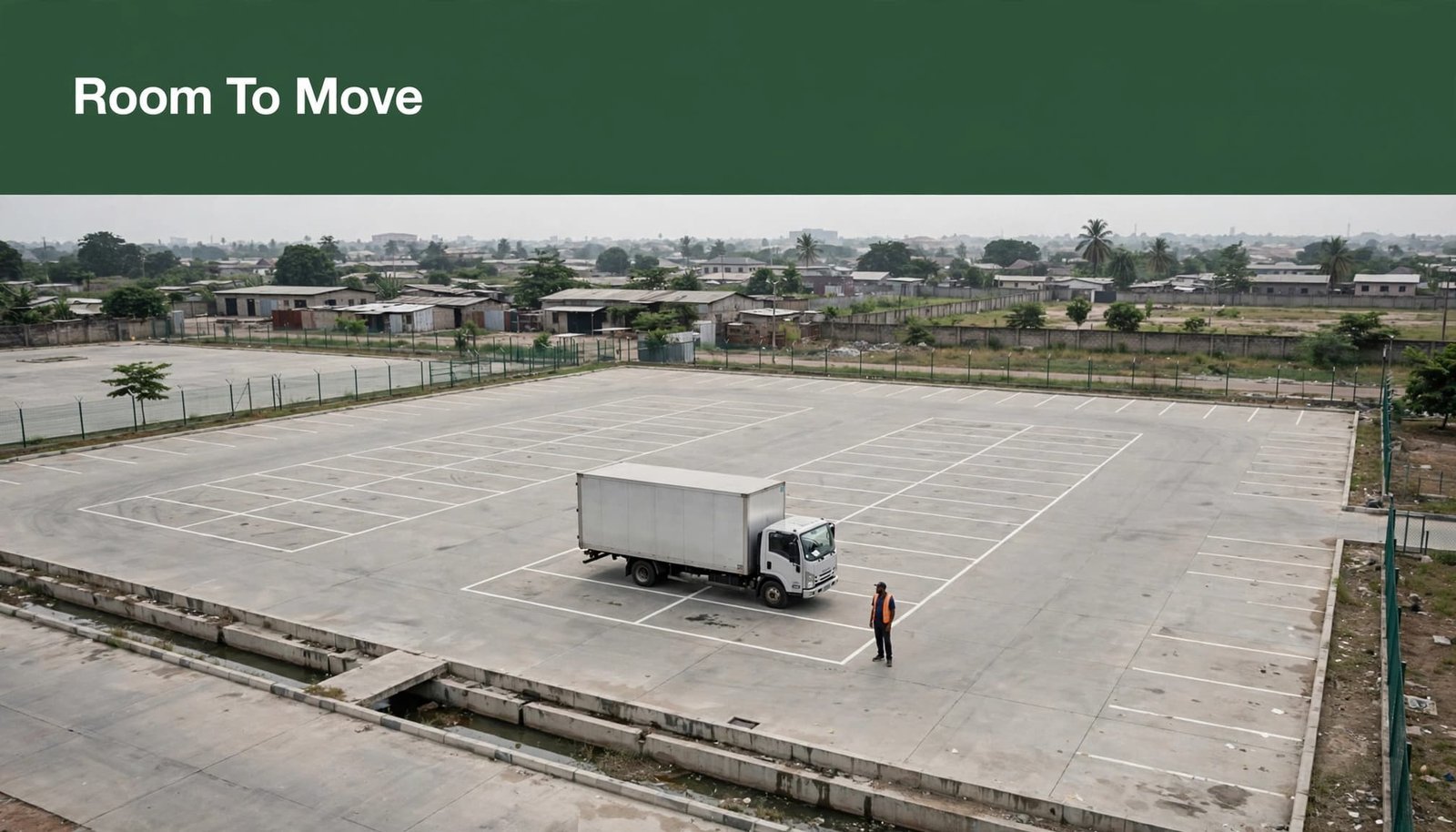
Don’t settle for a photo or a verbal promise if you can visit first. Walk the route from the gate to the parking bay, then check how the truck would leave when the yard is busy. A clear exit matters as much as a clear parking space.
3. Confirm the Location, Route Rules, and Call-Up Requirements
Choose a yard that makes sense for your destination and loading point. A park close to a port, depot, or delivery area may save time, but only if your truck can reach it legally and the facility accepts your vehicle. Confirm the exact address and access road with the operator. In Lagos, a short distance on a map can still mean a very different trip once you account for traffic and truck restrictions.
Check the current rules before you set off. The Lagos State Road Traffic Law includes restrictions on when trailers may enter or travel within the metropolis, with exceptions and room for regulations that may change the requirements. LASTMA also lists issues such as commercial vehicles using the wrong routes and illegal parking on public highways in its traffic regulations. Neither a parking booking nor a yard’s advice should replace checking the latest instructions for your route.
If your trip involves the Lekki-Epe port corridor, ask whether you need a truck call-up, an assigned holding park, or an Authority to Load document. The process may involve registration, a booked slot, document checks, and waiting at a designated holding park for permission to move. Rules and operating arrangements can change, so confirm the current steps with the relevant operator or authority. You can also review the Lagos truck call-up system for context, but verify current requirements before departure.
4. Verify Operating Hours, Booking, and Arrival Procedures
Ask what time the yard accepts trucks and whether it operates overnight, on weekends, or on public holidays. Don’t assume that a business-hours listing means the parking area is available around the clock. Confirm the latest arrival time, who will meet you at the gate, and what to do if traffic delays your arrival.
Get the booking details in writing. Confirm the vehicle type, expected arrival date, length of stay, assigned space, and any documents you need to show. If the park is tied to a port or depot process, clarify whether your booking only reserves parking or also covers access arrangements. A call-up or holding-yard booking may not mean your truck can enter a terminal immediately.
Keep the operator’s phone number and booking confirmation where you can reach them. Share your planned route and estimated arrival time with your dispatcher or another trusted contact. If the person who confirmed your space is unavailable when you arrive, you’ll need a clear way to reach someone who can resolve the issue.
5. Check the Parking Terms and Keep a Record
Before you pay, ask for the full cost and what it covers. Confirm whether the charge is hourly, daily, or based on another period, and ask about fees for late departure, an extra night, or a change in arrival time. Get a receipt or written confirmation for every payment. Don’t hand cash to an unverified person at the roadside or rely on a promise that someone will send the receipt later.
Read or ask about the rules for cargo access, vehicle movement, and responsibility for damage or loss. Find out whether you can return to the truck during the stay and whether the yard has restrictions on visitors. Take photos of the truck’s condition and the parking bay when you arrive, and save your booking, payment record, and the name of the person who handled the booking.
If you’re choosing a yard through a haulage operator, check that the parking arrangement matches the vehicle and route you booked. You can compare haulage companies in Lagos and ask each provider where the truck will wait, who controls access, and how the driver will be notified when it’s time to move. Keep those answers in writing.
Conclusion
Before you park, confirm the yard’s access controls, inspect the space, check the route and any call-up rules, and get the booking and payment terms in writing. Then save your records and the operator’s contact details. Those steps won’t remove every risk, but they give you a clearer basis for choosing a truck park and handling problems if they come up.



Leave a Reply