Bus travel with elderly parents from Lagos succeeds or fails at the booking stage, long before anyone reaches the park. The operator, the seat, and the terminal decide most of the trip in advance.
Picture the routine: your mother is going from Lagos to Enugu, or your father to Abuja. Someone has to reach the correct loading bay, keep blood pressure medication within reach, and make sure the coach stops at a proper rest point. We at LagosMove help you compare transport operators, so this guide concentrates on the steps that follow. They cover the bus you choose, the bag you pack, the road itself, and the arrival day.
Key Takeaways
- Book an organized operator with a staffed terminal, GPS tracking, and driver monitoring, then choose a daytime departure.
- Pick a front or middle row seat, away from the rear wheels, for a smoother ride.
- Pack a reachable hand bag: medication, water, light food, a warm layer, ID, and the booking reference.
- Fix the seat belt, plan the rest stops, and share trip details with a family member.
- Reach the correct terminal 60 to 90 minutes early, with Lagos traffic built into the plan.
Choosing the Right Bus and Seat for Your Parent
Start with the operator, then the seat. Organized companies run from staffed terminals, use GPS tracking and driver monitoring, and sell tickets through official platforms rather than roadside touts. A LAMATA assessment counts roughly 150 interstate companies moving passengers in and out of Lagos every day, so quality varies widely. Treat terminal organization, vehicle tracking, and driver monitoring as the filter before price.
Several operators meet that standard on major routes. Use this table to narrow the field, then weigh price and departure time against your own travel date.
| Operator | Comfort angle worth knowing |
|---|---|
| ABC Transport | Executive and deluxe coach classes on major routes |
| GUO Transport | Large fleet with several seating tiers |
| God Is Good Motors (GIGM) | Wide national network with online ticketing |
| Peace Mass Transit | Dense Eastern-route coverage with frequent departures |
| Chisco Transport | Executive coaches on Lagos to Eastern corridors |
Choose a front or middle row seat, away from the rear wheels. The rear of a coach absorbs the worst of every bump, and an older passenger feels it in the back and the joints. Request the aisle side if your parent walks with difficulty, since it shortens the step in. Book the specific seat during payment rather than hoping it stays open.
Why Daytime Departures Work Better for Elderly Passengers
Pick a morning or early afternoon departure. Three reasons apply. Driver fatigue builds through the night. Highway visibility drops after dark. Air conditioning on a sleeping coach turns cold by 2 a.m. The Federal Road Safety Corps advises daylight travel where possible for exactly these reasons.
Daylight also makes rest stops predictable. Food stalls, pharmacies, and staffed parks operate in daylight hours. Night fares sometimes run lower; weigh the saving against a tired driver and an unwell parent at midnight.
What to Pack in a Hand Bag Your Parent Can Reach
Pack for delays, not for the timetable. Use a small bag that fits under the seat, and keep these items in it:
- Medication for the full trip, plus extra doses in case of delays
- A light meal eaten before departure, since heavy or oily food upsets the stomach on a long ride
- Water for sips through the journey, not a large bottle drained at once
- A light layer for cold air conditioning
- Crackers, tissues, a power bank, ID, and the booking reference
Keep cash and cards on their body or in the hand bag. Hold luggage leaves your control at every stop, and a bag in an overhead rack disappears from view for hours.
Comfort and Safety Steps for the Journey Itself
Comfort during bus travel with elderly parents from Lagos comes down to habits, not luck. Prevent motion sickness early, plan the stops, and keep the crew informed from the first minute.
Handle motion sickness before it starts. Seat your parent where the road ahead stays visible, keep them off phone screens, and let a pharmacist recommend motion sickness tablets instead of guessing doses. Sips of water through the trip help more than a large drink taken at once. If your parent feels unwell, tell the crew early and request a designated stopping place rather than an abrupt roadside halt.
Rest Stops, Seat Belts, and Staying Safe On Board
Fasten the seat belt at departure and keep it fastened between stops. Seat belts save lives on interstate highways, and FRSC safety campaigns push that point for good reason. A belt that looks frayed or jammed belongs in a different seat; raise it with the crew before the bus moves.
Supervise every rest stop. Walk with your parent, and never leave an older passenger alone on the bus or let them rush across a busy park. Ask how long the stop lasts, and identify the vehicle by operator name and registration number before anyone steps down. Wash hands with soap and water before eating wherever a tap is available.
Emergency Planning Before You Leave the Park
Share four details with a family member before departure: the operator, the departure terminal, the departure time, and the booking reference. Update them if the bus changes or runs late. Save the operator’s support line and Nigeria’s emergency number, 112, on the phone your parent carries.
Keep that phone charged, and carry a power bank plus a small amount of emergency cash separate from the main wallet.
Watch for the warning signs of an unsafe operator: overcrowding, exits blocked by luggage, damaged seat belts, or a driver who speeds out of the loading bay. Raise the problem with terminal staff or FRSC officers on the spot. Saving ₦2,000 on a fare is not worth the risk it buys.
Planning the Lagos Terminal Trip and Arrival Day
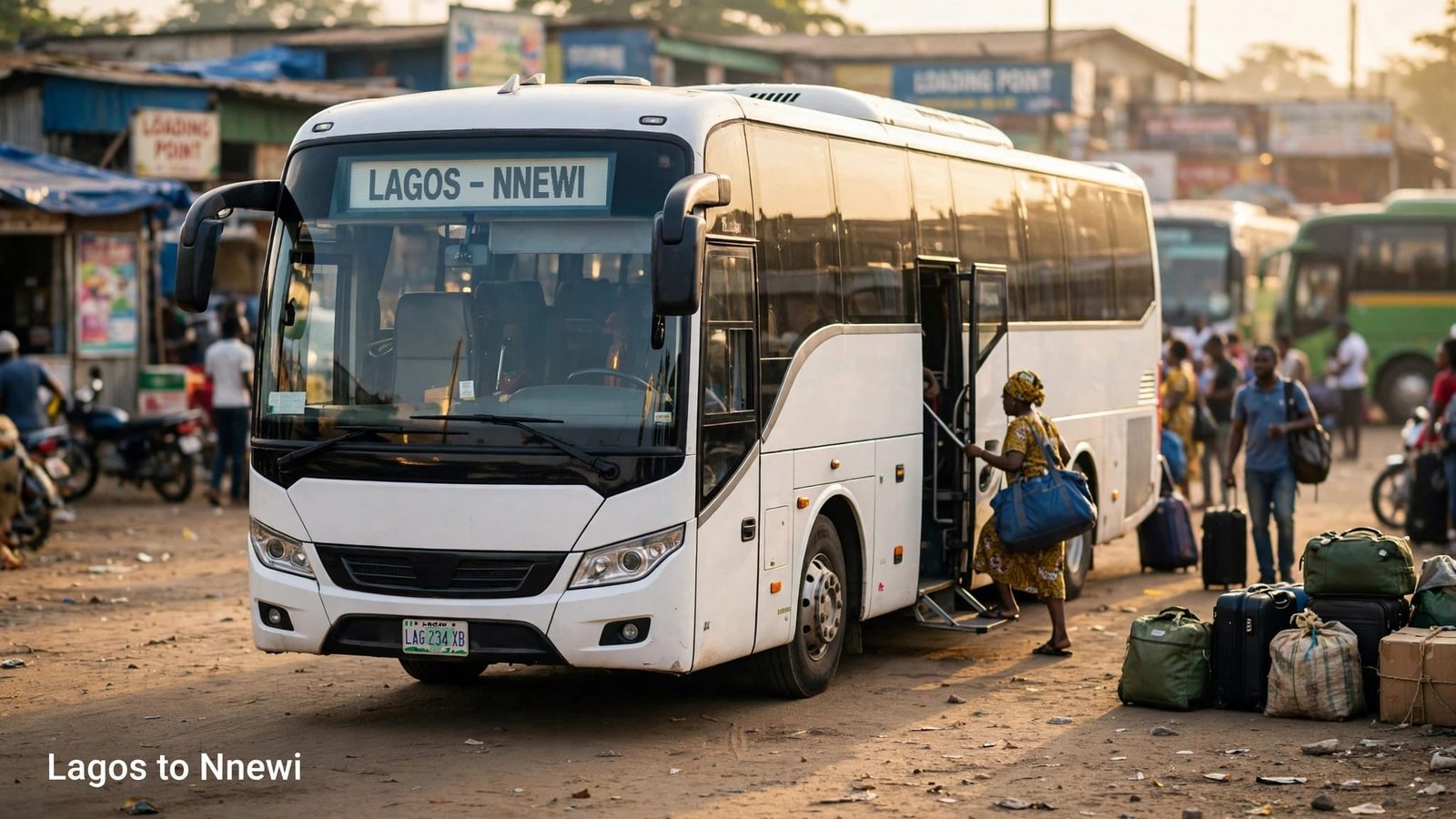
Plan the terminal trip as its own journey. Arrive 60 to 90 minutes before departure, then add a Lagos traffic buffer on top. A ride from Lekki, Ajah, or Victoria Island to Jibowu or Ojota can stretch badly during peak hours, rain, or weekend congestion. Those 60 to 90 minutes cover finding the entrance, ticket checks, luggage handling, and locating the correct loading bay.
Call the terminal the night before and write down the loading bay plus a staff contact. Operators such as ABC Transport and GUO Transport publish their Lagos locations on official pages, which makes that call short. Remember that a ticket reading “Lagos” only names the city; the same company may load from Ajah, Oshodi, Mile 2, or Festac depending on the route.
Budget the whole journey, not only the ticket. Fares to the terminal, food, luggage charges, and the ride from the arrival park all add to the final cost. Arrange onward transport at the destination before departure day, and agree on the pickup point in advance. Settle the arrival terminal at booking time as well, since some cities run several parks for the same operator, and a wrong arrival park means an unplanned taxi ride in an unfamiliar city.
Frequently Asked Questions
Which Lagos terminal do interstate buses leave from?
The terminal depends on the operator and the route, not on your neighbourhood. Loading points sit around Jibowu, Ojota, Ajah, Oshodi, Mile 2, Festac, Maza-Maza, and Iyana-Ipaja. Get the exact gate, landmark, and reporting time before travel day, since no single park serves every destination.
How much should you budget beyond the bus ticket?
Count the full journey: local transport to the terminal, food at rest stops, luggage charges, and the onward ride at the destination. Interstate fares change with demand and date, so build a margin above the ticket price. A useful rule is to plan the total, then add a contingency for delays.
Can an elderly parent travel alone by bus from Lagos?
It works on organized operators with daytime departures and staffed terminals. Book an aisle seat, brief the crew about the passenger, and hand the trip details to a relative at both ends. A companion remains the safer choice for a first trip or a parent with limited mobility.
What should you do if your parent falls ill mid-journey?
Tell the crew at once rather than waiting to see if it passes. Request a designated stop, use oral rehydration solution according to its instructions for stomach upset, and call 112 for anything serious such as breathing difficulty or repeated vomiting. Do not guess medicine doses on the road.
Are night buses worth it because they cost less?
Occasionally the fare runs lower, but the trade-offs land hardest on older passengers. Night trips combine driver fatigue, poor highway visibility, and cold coaches at hours when help is scarce. A daytime departure costs a little more in some cases and removes all three risks at once.
Do interstate coaches in Lagos have seat belts?
Newer executive coaches carry belts on many rows, though older vehicles on some routes do not. Walk the row when you board and move your parent to a seat with a working belt where one exists. Use the belt on every trip, not only on expressway stretches.
Conclusion
Bus travel with elderly parents from Lagos rewards the small decisions made before boarding. The operator, the seat, the terminal, and the hand bag shape the trip more than anything that happens on the road.
Keep three pillars in view: a reputable operator with a daytime departure, a terminal address written down the night before, and a reachable bag holding medication, water, and documents. Compare operators side by side before you pay, then settle every trip detail through the company’s official channels. Get those pieces right, and your parent arrives rested, and you arrive calm.

Leave a Reply