Ask before checkout, get the extended total in writing, and negotiate directly with the hotel. That three-step routine keeps walk-in pricing off your bill. Your flight moved, your meetings ran long, or you decided one more night in Lagos is worth it. The problem is simple: front-desk walk-in rates often sit far above the rate you booked, and the gap widens in December, Easter, and weeks when late international flights fill the airport hotels. This guide shows how to extend a hotel stay in Lagos without paying walk-in rates, using timing, negotiation, and verified payment channels.
Key Takeaways
- Ask for the extension the evening before checkout; late-morning requests hand the hotel pricing power.
- Anchor the negotiation on the confirmed rate you already paid, not the walk-in board.
- A rate counts only when the hotel confirms the full total, including taxes and fees, in writing.
- Pay through the hotel’s official website, published phone line, or a verified platform; never a personal bank account.
- If the desk won’t budge, price a nearby mid-range hotel, a shortlet, and a fresh platform booking against your transport costs.
Why Walk-In Rates Cost You More in Lagos
Lagos hotel pricing follows demand, and demand is uneven. December and Easter push prices up across the city as travel demand peaks, and rates in that window can climb 50% or more. Event weekends do the same damage. Matches and concerts near the National Stadium and Teslim Balogun Stadium fill rooms fast, and the price follows.
Room type moves the number too. A standard room costs less than a suite, and weekday rates often differ from weekend ones. Business-heavy areas like Ikeja and Yaba soften on weekends, while leisure districts flip that pattern. Add one more force: in weeks when several international flights land at odd hours, hotels that serve late-arrival guests fill faster and charge more.
Treat any figure you see online as a planning number, not a quote. Third-party listings and old blog posts age fast. The rate that matters is the one the hotel confirms for your exact dates, which is why the method below starts at the desk, not on a comparison site.
How to Extend a Hotel Stay Without Paying Walk-In Rates
The extension is a negotiation, and the sequence decides who holds the leverage. Run it in order: time the ask, anchor on your existing rate, then lock the terms in writing before your money moves.
Ask Before Checkout, Not After
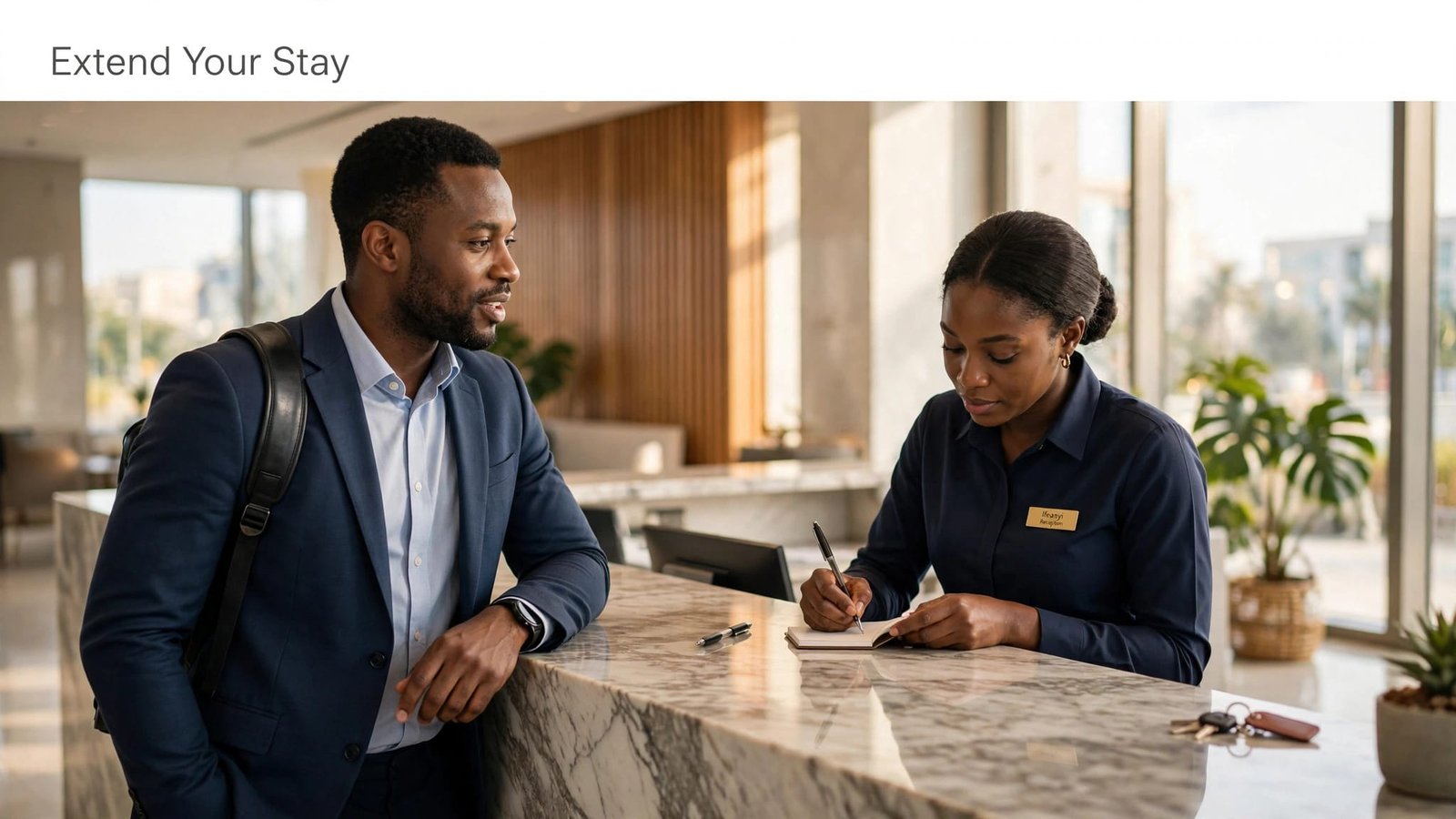
Approach the front desk the evening before your checkout day. Call or message the hotel that evening if you’re out. At that hour, staff have time, rooms are still free, and the night manager can usually approve a rate without escalation.
A late-morning request on checkout day flips the leverage. Housekeeping is timed around your departure, the hotel may have already released the room, and a same-day ask reads as a captive guest who will pay anything. Expect the full walk-in rate or worse.
Early requests also protect you when the hotel is nearly full. Ask the night before, and the hotel can hold the same room or assign you an available one. Ask at noon, and the last room may have sold to someone who confirmed in writing.
Negotiate Using Your Existing Rate as the Anchor
Open with the rate you already paid, confirmed and dated. That figure is your anchor; the walk-in board is the hotel’s. Ask for the same rate, or accept a small bump if occupancy is tight. Mention anything that strengthens your case: a repeat stay, an membership tier, or a commitment to more nights at once.
Use plain phrasing that gives the desk something to approve:
- “I’m booked through tomorrow at ₦X per night. Can you match that rate for two more nights?”
- “I’ll take three additional nights if you can hold my current rate. Can you confirm that in writing today?”
- “If the same rate isn’t possible, what’s your best rate for a standard room on those dates?”
Keep the request specific. A vague “can you do something on the price” invites a vague discount or none. A dated figure, a named room type, and a clear number of nights give the desk a decision to make in one step.
Get the New Rate and Terms in Writing
The rate is only real when the hotel confirms it. Before payment, ask for the full total in writing through WhatsApp or email, covering the extended dates. The message should state the nightly rate, the number of nights, taxes and breakfast, the cancellation terms, and the accepted payment method.
Save the confirmation offline before you pay. Screenshot the message and store the hotel’s phone number in your contacts. Network coverage drops at the worst moments, and a screenshot on your phone beats a message you can no longer open.
If the quoted figure changes without explanation between the desk and the message, stop and ask. A total that moves is the clearest early signal that the rest of the terms will move too.
Cheaper Alternatives When the Hotel Won’t Budge
Sometimes the desk insists on full walk-in pricing, or the hotel is simply full. Compare three options before you pay the premium, because each fits a different kind of extra night.
| Option | Best for | What to confirm first |
|---|---|---|
| Nearby mid-range hotel | Short extensions, same district | Rate, taxes, breakfast, backup power |
| Shortlet for extra nights | Three nights or more, cooking | AC, backup power, water, total for the period |
| Fresh booking on a verified platform | Beating the desk rate | Cancellation terms, room type, pay-at-property option |
A shortlet often wins on longer extensions. Instead of a hotel room, you rent a serviced apartment with a kitchen, laundry, and more space, usually at a lower nightly rate on bookings of three nights or more. Quality varies between listings, so confirm air conditioning, backup power, and water before your money moves.
A fresh booking through a verified platform sometimes beats the desk rate too, since platforms carry negotiated inventory the front desk won’t quote you. Read the cancellation terms before choosing this route.
Weigh transport against the room saving every time. Lagos traffic can turn a short ride into hours, and a cheap rate across town stops being cheap once daily rides eat the difference. Choose the option that reduces your most frequent travel, not only the lowest nightly price.
Booking and Payment Rules That Protect Your Money
Most Lagos travel losses share one cause: paying before confirming who you’re paying. Apply the same routine to an extension that you applied to the original booking.
Pay only through the hotel’s official website, published phone line, or staffed front desk. Never send money to a personal bank account, no matter how convincing the “manager” on WhatsApp sounds or how good the rate. If a channel can’t issue a booking reference and a receipt, it isn’t a booking channel.
Before paying for the added nights, get three things in writing. The first is the full price for the exact dates, including taxes and breakfast. The second is the cancellation and prepayment policy for those nights, since flexible rates cost more and the cheapest rate may be non-refundable. The third is the payment method and the name of the account or business receiving it.
Then save the confirmation, the booking reference, and the hotel’s phone number offline. Watch for two warning signs: a quoted figure that changes without explanation, and pressure to pay a fast deposit before you’ve seen the terms in writing. Both justify walking away from that channel.
Frequently Asked Questions
Do same-day extensions always cost the walk-in rate?
No, but the odds worsen sharply after checkout time. A same-day ask can still work on quiet weekdays at a hotel with empty rooms. In December, Easter, or event weeks, assume the desk will quote peak pricing and plan your request for the previous evening.
Can I extend through the booking app I used originally?
Often, yes, and the platform rate sometimes beats the desk. Open the app, price your existing room type for the extra nights, and compare it against the hotel’s own WhatsApp quote. Pay whichever channel gives the better confirmed total with acceptable cancellation terms.
Is a shortlet worth it for one or two extra nights?
Usually not. Shortlets price best on bookings of three nights or more, and a one-night shortlet adds cleaning and handover friction a hotel doesn’t have. For two nights, a nearby mid-range hotel or a platform booking usually wins.
What if the hotel says it’s full for the extension?
Ask the desk to check nearby sister properties or partner hotels first; Lagos groups often run more than one site. If nothing is available, book the cheapest verified room nearby and keep your original checkout as planned. Confirm the new room’s rate and cancellation terms in writing before moving.
Does paying cash at the desk protect the negotiated rate?
Cash doesn’t change the terms; documentation does. Paying cash is common in Lagos, but ask for a stamped receipt showing the dates, rate, and room type. Without a receipt, a cash extension is your word against the next shift’s records.
How early should I ask during December?
Days, not hours. The holidays pull travelers home, hotel rates climb sharply, and rooms near events sell out before the date. Message the hotel as soon as your plans shift, and accept that peak-window discounts are smaller than low-season ones.
Conclusion
Three rules carry the whole decision. Ask before checkout, when rooms are free and staff have time. Get the confirmed total in writing, including taxes, breakfast, and cancellation terms. Pay only through official channels, never a personal bank account.
Ten minutes of these checks turns a risky extension into a routine one. The rate you hold is the rate the hotel confirmed, and nothing on a walk-in board changes that. When you’ve locked the extra nights, plan the rest of the trip the same way: confirm transport and ground arrangements through verified channels before your money moves, and the rest of your Lagos stay gets easier.
Leave a Reply