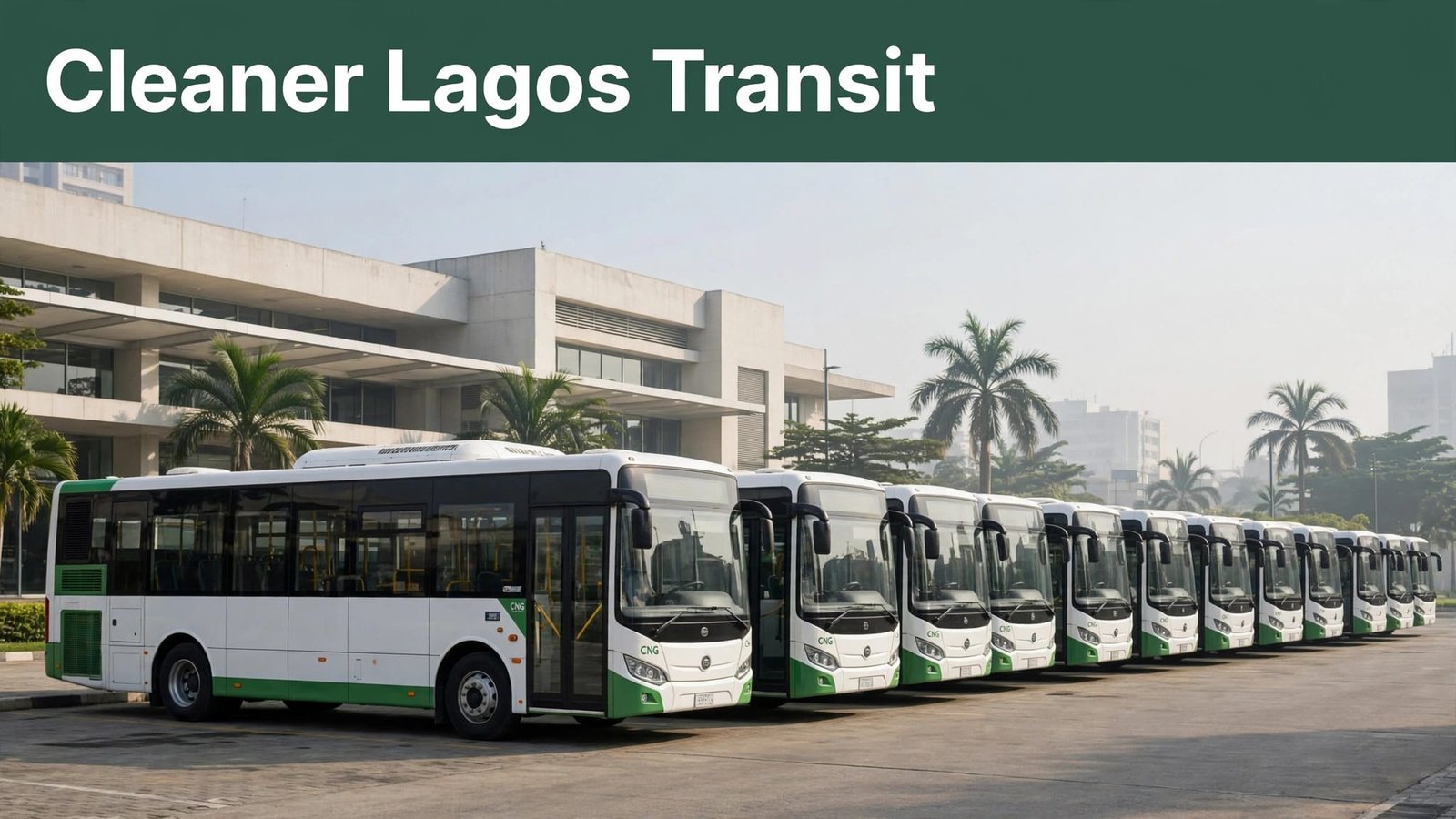
Lagos received 20 additional high-capacity CNG buses at LAMATA’s head office on September 30, 2026. The federal Presidential Initiative on CNG and Electric Vehicles delivered the vehicles to the state.
If you commute or visit Lagos, the delivery could mean more boarding space on busy routes. However, final routes and a service start date have not been announced, so the handover doesn’t yet change your travel plans. The next step is assigning the buses to corridors where passenger demand exceeds available capacity.
The handover involved the Lagos Metropolitan Area Transport Authority, known as LAMATA. Its Managing Director, Abimbola Akinajo, and Lagos Transportation Commissioner Oluwaseun Osiyemi outlined the state’s plans for the additional vehicles.
Premium Times’ handover report confirms the delivery under the federal initiative. CNG means compressed natural gas, the fuel these buses use.
Nairametrics identified IVM and TATA vehicles among the buses at the ceremony. The coverage did not confirm their models, passenger capacities, or how many vehicles came from each manufacturer.
That leaves an important detail open for commuters: the exact number of passengers each bus can carry. The vehicles were described as high-capacity buses, but there is no confirmed seating or standing-space figure for this batch.
You also shouldn’t assume that every vehicle will operate under the same service arrangement. The operators and deployment details have not been disclosed.
The buses are an addition to Lagos’s reported fleet of about 150 CNG buses. That figure provides context, but it isn’t a current audit of how many buses are available for service each day.
This delivery is separate from the 20 CNG buses handed to Iru Land Transport Company on September 5, 2024. The two handovers involved different recipients and dates.
For your trip planning, the distinction matters. Details attached to the earlier Iru delivery shouldn’t be treated as the routes, fares, or operating arrangements for the latest LAMATA batch.
LAMATA plans to assign the vehicles to selected corridors with capacity gaps. The intention is to put additional buses where existing services struggle to accommodate passenger demand.
That approach could help busy stops, but the final allocation will determine which commuters benefit.
Nairametrics’ coverage of the delivery identified Ikorodu to TBS as a high-demand corridor. TBS means Tafawa Balewa Square on Lagos Island.
The corridor was mentioned as an area of demand, not a confirmed final route for the new buses. You shouldn’t assume the vehicles will serve your usual Ikorodu boarding point or begin running there immediately.
A useful route announcement would identify the terminals, intermediate stops, and operating hours. Those details will show whether the service suits your full journey or still requires a connection.
Officials expect high-capacity buses to move more people with fewer vehicles. Where additional buses fill a service gap, they could also reduce the time passengers spend waiting to board.
Those are expected benefits, not results measured after deployment. A shorter queue depends on buses arriving regularly and carrying enough passengers during busy periods.
Your total journey time also includes traffic, terminal delays, rain, and transfers. Extra boarding capacity doesn’t remove those delays, even where part of a journey uses a dedicated BRT corridor.
If your destination is beyond the bus route, you may still need a local connection. The final stop matters as much as the corridor name when you plan your trip.
The delivery addresses a small part of Lagos’s wider bus shortage. LAMATA previously estimated that the city needed roughly 15,000 buses, while its operational fleet was slightly above 1,000 in March 2025.
Those historical figures show the scale of demand. They shouldn’t be treated as an updated count of buses operating across Lagos today.
The federal cheaper-transport push provides the policy context for the delivery. However, no fare cut or fuel-cost figures have been published for this batch.
For comparison, LAMATA’s March 2026 fare table lists ₦960 for Ikorodu to TBS and ₦450 for Ikorodu to Mile 12. These are existing route-based references, not announced prices for the new buses.
Check the current fare for your exact origin and destination before traveling. Cowry is used across regulated Lagos transport services, but the payment and fare arrangements for these vehicles remain undisclosed.
You can’t calculate a cheaper trip simply from the fuel type.
CNG supports Lagos’s cleaner-energy goals. Available coverage, however, gives no measured emissions savings for these 20 buses. There is no evidence yet that this delivery has improved air quality along any route.
The purchase cost, maintenance plan, operators, and fuel-supply arrangements have also not been disclosed. These details matter because buses need regular servicing and dependable refueling to remain in operation.
For you, better service will depend on how often the buses reach your stop and whether they stay available. A handover confirms that vehicles have been delivered. It doesn’t establish a reliable timetable or show how many trips they will complete each day.
The 20 CNG buses are a useful addition to Lagos’s public transport fleet. Their value to your daily journey will become clearer when LAMATA publishes routes and operating details.
The delivery alone doesn’t show that commuters have already gained shorter waits, lower fares, or cleaner air. For residents and visitors, reliable service on the announced routes will be the practical test of what these buses add to everyday travel.

Leave a Reply