Balogun Market is Lagos Island’s largest and busiest market, and it’s famous for fabrics, shoes, and wholesale goods at prices you won’t find in a mall. It sits in the heart of Lagos Island, close to Idumota and the Marina, and on a busy day the crowds, hawking, and narrow walkways can overwhelm you if you arrive without a plan.
That’s where this guide comes in. You’ll learn what Balogun actually sells, how to get there without wasting half your morning in traffic, what prices to expect, and how to keep your money and belongings safe.
One thing to know upfront: prices and market conditions change often, so confirm current details before you set out. Start with what the market sells.
Key Takeaways
- Balogun Market is Lagos Island’s biggest market, best known for fabrics, shoes, and wholesale goods at prices below mall rates.
- Go early on a weekday to beat crowds and catch vendors before stock runs low.
- Bargain firmly; first quoted prices are rarely the final price.
- The market sits near Idumota and Marina, so plan your route around Lagos Island traffic.
- Carry only the cash you need and keep valuables secure in the crowded walkways.
What Makes Balogun Market Lagos Famous
Balogun Market matters because it sits at the center of Nigeria’s wholesale trade. Fabrics, lace, shoes, and household goods flow out of this district to shops across the country, and prices here set the benchmark for what you’ll pay elsewhere. If you’ve ever wondered where market women in your own city buy their stock, this is often the answer. It’s less a single market than a trading engine, and it has run that way for decades.
Where the Market Sits on Lagos Island
Balogun Market spreads across a network of streets on Lagos Island, anchored around Balogun Street and New Market Street. It stretches from Idumota, one of the busiest commercial nodes in the city, down toward the Marina waterfront, with the Eko Bridge close by. You’ll know you’re in the right area when you spot the Eko Idumota pedestrian bridge, a useful landmark for meeting friends or finding your way back.
Don’t expect one building. The market is a maze of connected streets, plazas, and multi-storey buildings packed with small stalls. Walkways narrow, crowds thicken, and the noise rises as you go deeper. Treat it like a small city: pick the section you need, ask vendors to point you there, and hold onto your bag as you move.
The Best Things to Buy at Balogun Market
Balogun Market Lagos is best known for textiles. You’ll find lace, aso oke, and ankara fabrics in endless variety, alongside shoes, bags, household items, and party souvenirs. If you’re planning an event, this is where event planners and aso-ebi buyers come first.
Bulk buyers get better prices than single-item shoppers. Vendors price a dozen yards differently from two yards, so the wholesale advantage is real. A few pointers help:
- Buy fabrics along the fabric streets, where vendors compete side by side and prices drop.
- Head to the shoe sections for footwear in bulk or in pairs; both are available.
- Compare at least three stalls before you settle on a price.
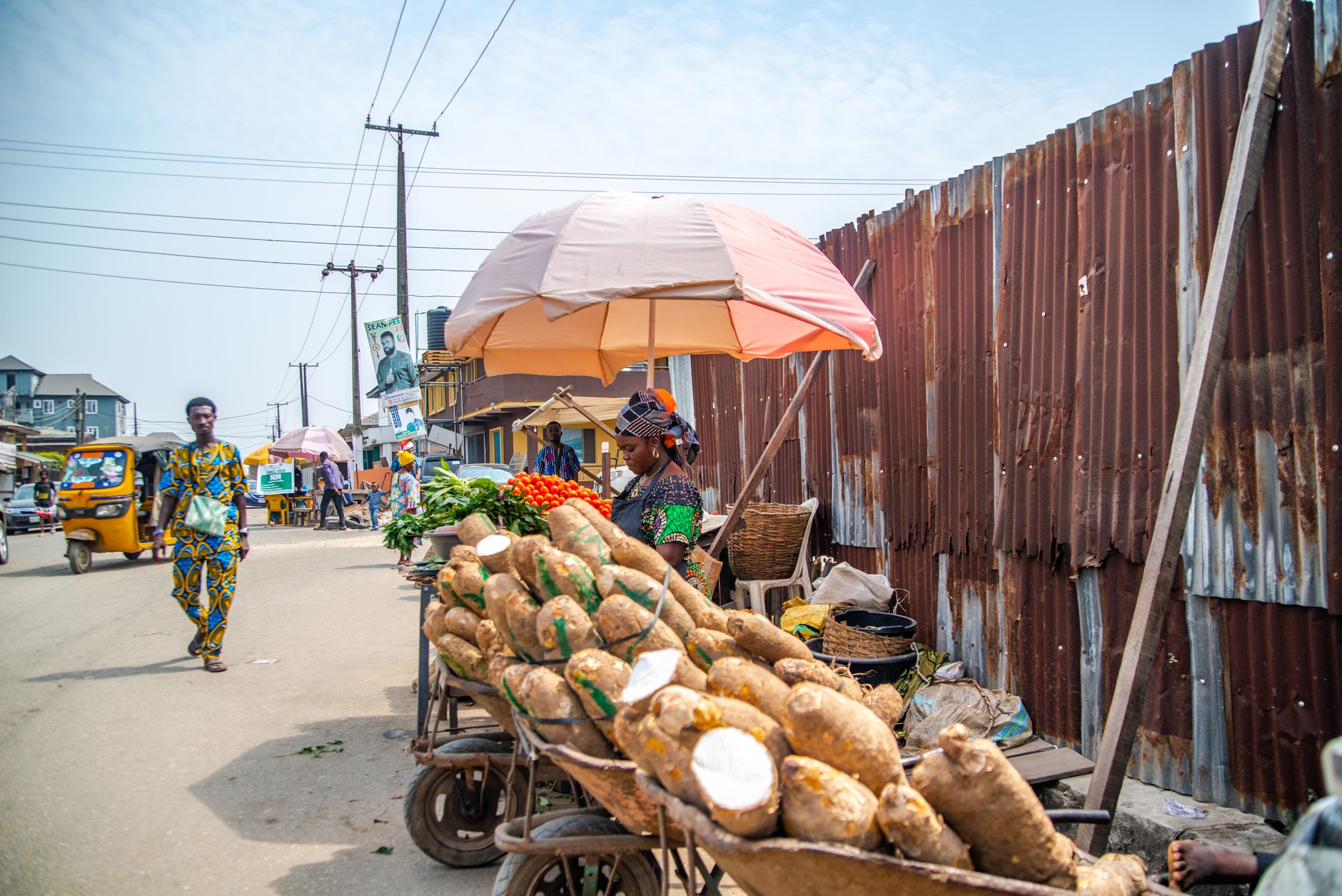
Photo by David Iloba
If you only need one or two items, the price gap matters less. But if you’re buying for a wedding, a shop, or a group, the savings compound quickly.
Getting to Balogun Market: Routes and Transport Options
Balogun Market sits on Lagos Island, so every route ends with a bridge, a lagoon, or a crowded Island street. The good news is you have several ways in. Match the option to your starting point and the time of day, and the trip gets much easier.
Reaching the Market from the Mainland
If you’re coming from Ikeja, Yaba, or Surulere, the BRT is your cheapest bet. Buses along the Ikorodu Road corridor run toward CMS and TBS, and from either stop it’s a short walk or a quick连接 into the Balogun and Idumota streets. You’ll need a funded Cowry Card to board, so sort that out before you join the queue.
Danfo buses work too. Yellow buses heading to Idumota, CMS, or Marina pass through inner streets that fixed routes miss, and they board anywhere along the road. Confirm the destination and fare before you climb in.
Ride-hailing makes sense when you want a direct drop-off near the market entrance. The driver will cross Carter Bridge or Eko Bridge, and that’s where you should watch the clock. Rush hour on both bridges can add an hour or more, so leave before 6:30 a.m. or after 7 p.m. if you can. Traffic is the tax on this route; the market itself doesn’t move.
Arriving from Victoria Island, Ikoyi, and Lekki
From the island side, you’re crossing the lagoon in the opposite direction. A ride from Victoria Island or Ikoyi via Falomo Bridge takes 20 to 40 minutes outside peak hours. From Lekki, the trip runs longer because the Lekki-Epe corridor carries its own traffic before you even reach the bridge.
Here’s the option most visitors skip: the ferry. LagFerry boats run to jetties at Marina and CMS, and the crossing skips road traffic entirely. From the Marina jetty, Balogun Market is a walkable distance. It’s calmer, faster on the right routes, and gives you a view of the skyline for free.
One more thing: parking near the market is difficult. Streets around Balogun fill up fast, and official parking spaces are scarce. If you drive yourself, you may circle for 30 minutes before finding a spot. Ride-hailing works better because the driver drops you at the door and leaves.
Whichever route you pick, check traffic and current timetables on travel day. Roads, fares, and ferry schedules around Lagos Island shift more often than most people expect.
Prices, Bargaining, and Smart Shopping Tips
Almost nothing in Balogun Market Lagos has a fixed price. The number a vendor names first is an opening position, not a bill. Cash is king here, wholesale costs less than retail, and the seller who sees you know your way around will give you a better figure than the one who sees a confused first-timer. Here is how the money side actually works.
How to Bargain Without Offending Anyone
Bargaining in Balogun is a rhythm, not a fight. Start with a question: “How much is this lace?” Whatever answer comes back, counter lower, calmly, and without drama. The vendor will push back. You move up slightly. Somewhere in the middle, you both land.
Three habits make you better at this:
- Ask prices at two or three stalls before you buy anything, so you know the real range.
- Keep your voice level and your face neutral; excitement pushes the price up.
- Be ready to walk away. It is the strongest move you have, and vendors often call you back with a better figure.
Confirm the final amount in naira, out loud, before money changes hands. Carry small denominations because vendors rarely have change for large notes, and waiting for change from a neighbor stall eats your morning. Prices move with fuel costs, exchange rates, and the season, so treat any figure you read online, including here, as a planning number.

Photo by Finalchoice
How to Avoid Common Mistakes First-Time Visitors Make
The first mistake is paying before agreeing. Once cash leaves your hand, the negotiation is over. Agree the price, then pay.
Timing matters more than most people expect. December brings the biggest crowds of the year, as aso-ebi buyers and Christmas shoppers flood Lagos Island, and Monday mornings are thick with restocking traders. If you want room to move and think, visit on a midweek morning. Vendors are fresh, stalls are fully stocked, and walkways are passable.
Watch what you carry. Flashy phones, open bags, and visible cash invite trouble in a crowd that dense. Keep valuables inside a zipped bag held in front of you, and carry only the money you plan to spend that day.
Finally, drop the mall mindset. Nobody at Balogun will hand you a shelf tag. The price you get depends on the time, the buyer, and your bargaining. That is not a flaw; it is where your savings come from.
Staying Safe and Planning Your Visit
Balogun Market is safe if you treat it like the dense trading district it is. Crowds, cash, and narrow walkways are part of the deal, so a few habits protect both your money and your day. The sections below cover what to carry, when to come, and how to plan your exit before you step into the crowd.
Best Time to Visit and What to Bring
Weekday mornings, Tuesday through Thursday, give you the best version of Balogun Market Lagos. Stalls are fully stocked, vendors are patient, and walkways are still passable. Leave weekends and December afternoons to the shoppers who have no choice.
Pack light and pack smart. Here is what belongs in your bag:
- Cash in small denominations, and only what you plan to spend
- A water bottle, because the market gets hot and few stalls sell drinks
- A bag you can hold in front of you, zipped shut
- Comfortable shoes for standing, walking, and dodging cart pushers
On your first visit, consider going with someone who knows the streets. A local contact or trusted guide shortcuts the maze and shields you from overpricing. If you can’t arrange one, ask a vendor in the section you need rather than a stranger offering to “help” unprompted.
Plan your return trip before you enter the market. Decide where you’ll meet your ride, which bus stop you’ll use, or which jetty you’re walking back to. Phone batteries die, signal fades in the crowd, and a planned exit saves you a stressful search.
One weather note: the rainy season changes the market. Heavy rain floods some of the low-lying streets around Balogun and Idumota, turning walkways muddy and shallow. Check the forecast, wear shoes you don’t mind getting wet, and postpone your trip if a downpour is scheduled.
If you have time to spare after shopping, you’re already on Lagos Island. Tinubu Square sits nearby, and the Nigerian Freedom Park Lagos on Broad Street offers a quiet, green contrast to the market noise. Make a morning of it.
Frequently Asked Questions
You’ve read the routes, the bargaining tips, and the safety notes. A few questions still come up before most first visits, and these are the ones readers ask most about Balogun Market Lagos.
Can I pay with a card or transfer at Balogun Market?
Mostly, no. The market runs on cash, and most vendors won’t accept transfers or POS for small purchases. A few larger shops may take a transfer, but don’t count on it. Withdraw what you need before you cross the bridge, and keep it in small notes.
Is Balogun Market open every day?
The market trades every day, including Saturdays, but Sunday activity is lighter and many stalls stay shut. Weekdays are the real trading days because that’s when wholesalers restock. Arrive between 8 a.m. and 11 a.m. for the best selection and the calmest walkways.
How much should I budget for fabric at Balogun?
It depends on the fabric and the quantity. Plain ankara costs far less per yard than French lace or aso oke, and bulk prices beat single-yard prices by a wide margin. Ask at three stalls before you commit, and treat any figure in a guide, including this one, as a starting point rather than a fixed rate.
Is Balogun the same market as Idumota?
They’re next to each other and blend into each other, but they’re not identical. Idumota leans toward bulk goods, provisions, and wholesale distribution, while Balogun is stronger on fabrics, shoes, and party items. Walk from one into the other in minutes, so most shoppers cover both in a single trip.
Can I buy in small quantities as a visitor?
Yes. Wholesale pricing usually starts at a bundle or a dozen, but vendors will sell single yards and pairs of shoes at a higher rate. If you want the bulk discount without buying stock, shop with friends and combine your orders into one purchase.
What happens if I get lost in the market?
Ask for the landmark you remember, like the Eko Idumota pedestrian bridge or Marina, and walk toward it. Vendors know their streets well and will point you in the right direction. Keep your phone charged, drop a pin before you enter the maze, and arrange your exit point before you start shopping.
Conclusion
Balogun Market Lagos rewards preparation. You already know the winning formula: know your route, arrive on a weekday morning, carry small cash, and bargain with a steady voice. Do those four things and the market works for you instead of against you.
For the trip itself, our guides on BRT routes and bus stops and Lagos Island transport help you plan the journey, whether you’re crossing from the mainland by bus or catching a ferry to Marina.
Go early, keep your bag in front of you, and enjoy the hunt. The prices you came for are there; you just have to ask for them the right way.


Leave a Reply