A glass cup can leave your home in perfect condition and arrive cracked if it moves inside its box. Packing fragile items properly starts with preventing movement, then protecting them against knocks, pressure, and moisture.
Whether you’re sending ceramics to Ikeja or electronics across Nigeria, your packaging needs to suit the item and the courier’s rules. Start by confirming what the operator accepts before you buy materials or seal anything.
Key Takeaways
- Confirm acceptance, packaging requirements, and damage-cover terms before booking.
- Wrap items separately, cushion every side, and keep hard surfaces apart.
- Use strong shipping tape and clear labels, with a duplicate address inside.
- Keep packing photos, your receipt, and the waybill until delivery is confirmed.
Step 1: Check the Courier’s Requirements
A courier that accepts documents may have different rules for glassware, liquids, or electronics. Ask about your exact item.
Confirm Acceptance and Vehicle Limits
Contact the company’s official website, published phone line, or staffed office. Describe the contents, quantity, value, and approximate size.
Ask whether the courier requires double-boxing, offers packing, or needs to inspect the contents before sealing. Check restrictions on liquids and battery-powered devices.
If you’re comparing courier companies in Lagos, confirm that your chosen provider accepts fragile goods on your route. For a large mirror or bulky carton, ask whether a van or specialist vehicle is available.
Get Charges and Liability Terms in Writing
Ask for a quote covering pickup, packing, handling, and delivery. Fragile-item charges may apply, but there’s no single fee across Lagos.
Check what happens if the item breaks or goes missing. Ask about insurance, exclusions, claim deadlines, and packaging conditions.
Declared value isn’t automatically full insurance. Get the actual cover explained in writing before paying. If the operator offers wrapping, confirm what materials it uses and whether that service changes the liability terms.
Step 2: Choose Materials That Suit the Item
Use a rigid corrugated carton with enough room for cushioning. Avoid boxes with crushed corners, water stains, torn seams, or a soft base.
Double-wall cartons are a sensible choice for heavier fragile goods. A thin retail box usually needs an outer shipping carton.
Choose materials according to the job they need to do.
| Material | Useful For | Main Caution |
|---|---|---|
| Bubble wrap or foam sheets | Wrapping glass, ceramics, and delicate surfaces | Add protection around handles and edges |
| Firm foam inserts | Supporting heavier items and electronics | Match the support to the item’s shape |
| Corrugated dividers | Separating several wrapped items | Dividers still need cushioning |
| Crumpled packing paper | Filling gaps around lighter items | Paper compresses under heavier loads |
| Packing tape | Closing carton seams | Use tape designed for shipping |
| Sealed plastic bags | Adding a moisture barrier | Bag only dry items |
The aim is firm support without squeezing the contents. Loose filler alone won’t hold a heavy object in place.
The UPS packaging guidelines recommend adequate cushioning, separate wrapping, and strong shipping tape. They also advise against string and paper over-wrap.
Step 3: Wrap Each Fragile Item Separately
Clear a clean, dry work surface. Inspect the item before packing, and photograph its condition.
Remove loose accessories where practical. Pack lids, cables, detachable stands, and similar parts separately so they can’t strike the main item.
Protect Glass, Ceramics, and Protruding Parts
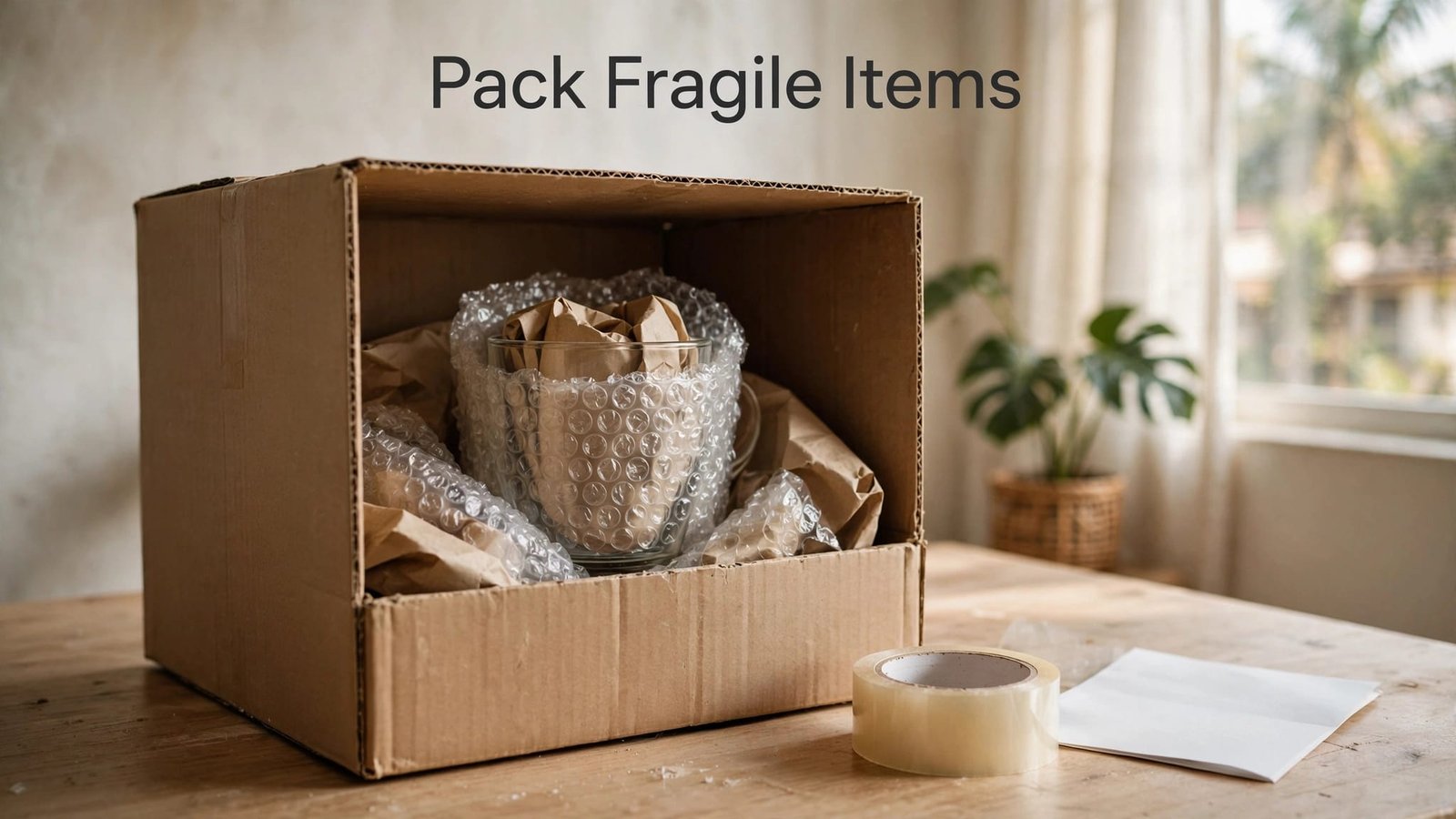
Start with clean packing paper or a suitable surface-protection layer. Add bubble wrap or foam around the whole item.
Give extra attention to mug handles, glass stems, spouts, and thin rims. Support these parts with cushioning rather than pulling tape tightly across them.
Wrap each plate separately. Use padding between plates, then place the wrapped pieces in a firm inner carton. Don’t leave exposed ceramic edges touching each other.
For bottles, confirm that the courier accepts the contents. Check the cap, place each bottle in its own sealed bag, and cushion it individually.
Support Electronics Without Pressing on Screens
Switch off electronics and remove detachable accessories where practical. Use the original fitted inserts if they’re intact and suitable for shipping.
Keep cables, plugs, and chargers away from screens. A plug moving inside the box can scratch or crack a display.
Loose circuit boards need suitable anti-static packaging. Ordinary bubble wrap isn’t a replacement for an anti-static bag.
For unusual shapes or equipment, FedEx’s item-specific packing guides can help you choose a method. Still follow your selected courier’s requirements, especially for devices containing batteries.
Step 4: Cushion Every Side and Separate Multiple Items
Your parcel needs protection underneath, above, and around its contents. Padding only the top leaves the base and corners exposed.
Fill Gaps Without Creating Pressure
Place cushioning across the bottom of the carton. Centre the wrapped item, then fill the spaces around it.
Keep the item away from the carton walls. Add padding above it before closing the flaps.
For several pieces, use separate inner boxes or padded compartments. Put heavier pieces below lighter ones only when each has firm support.
Close the flaps temporarily and gently rock the carton. If you hear movement, reopen it and adjust the packing. Don’t shake delicate goods aggressively.
The flaps should close flat. A bulging box means the contents need more space or less pressure.
Double-Box Particularly Delicate Pieces
Double-boxing adds another cushioned layer around the inner carton. It’s useful for delicate glassware, ceramics, and electronics with vulnerable parts.
Pack and secure the inner box first. Place it in a larger carton, with cushioning beneath it and around every side.
FedEx’s double-boxing guidance recommends 3 inches (8 cm) of cushioning in and around the smaller box for fragile items. That’s FedEx guidance, not a universal Lagos courier rule.
The inner carton also needs padding underneath and above it. Two boxes touching at the base leave that area without a cushioning layer.
Recheck the finished dimensions and weight. Extra packaging can change the delivery quote.
Step 5: Prepare for Lagos Rain, Humidity, and Heat
Your parcel may wait during pickup, loading, or delivery. Ask about storage and transport conditions instead of assuming the journey stays dry or cool.
Add Moisture Protection Without Trapping Dampness
Pack only dry items in dry materials. Let washed glassware dry fully before wrapping it.
For moisture-sensitive contents, use a suitable sealed inner bag before adding cushioning. Don’t seal damp items inside plastic.
Keep the carton indoors and off wet floors until collection. If you want an outer rain cover, ask whether the courier permits it. Attach the address and waybill where they remain visible on the finished parcel.
Plastic provides an extra barrier, but an ordinary carton isn’t waterproof. Once cardboard becomes wet and soft, replace it.
Ask About Heat-Sensitive Contents
Bubble wrap and cardboard aren’t temperature-controlled packaging. Don’t assume they will protect chocolate, cosmetics, adhesives, or other heat-sensitive goods throughout a delay.
Check the product’s storage instructions and tell the courier about any temperature limit. Ask whether a suitable service is available.
Keep the packed parcel out of direct sunlight while awaiting pickup. Don’t leave it in a parked vehicle.
For items requiring controlled temperatures, confirm the packing system with the provider. A cold pack added without a proper plan can create condensation around the contents.
Step 6: Seal and Label the Finished Parcel
Before sealing, place a duplicate address sheet inside. Add the receiver’s name, phone number, delivery address, and your own contact details.
This gives the courier another way to identify the parcel if the outer label becomes unreadable.
Seal the Carton With the H-Taping Method
Use pressure-sensitive packing tape designed for cartons. Apply one strip along the centre seam and strips across both edge seams, forming an H.
Seal the bottom as carefully as the top. Don’t rely on masking tape, string, or a few short strips.
Check that the flaps lie flat and the seams stay closed when you lift the carton. If the base sags, use a stronger box or split the load into smaller parcels.
Tape repairs won’t restore a crushed or water-damaged carton.
Make the Address and Handling Labels Clear
Write the receiver’s full name, reachable phone number, street address, and a useful landmark. Include the area, such as Yaba, Lekki Phase 1, or Surulere.
Add your return details. Remove old addresses and barcodes if you’re reusing a sound carton.
Place the main label on a flat surface, away from seams. Keep barcodes clear and unobstructed.
Mark “FRAGILE” on visible sides. Add “THIS SIDE UP” where orientation matters, but pack for possible changes in position.
Handling labels don’t replace cushioning. They communicate care instructions, not a guarantee that the parcel will remain upright.
Step 7: Record the Handover and Delivery Details
Photograph the wrapped contents, cushioning, sealed carton, and readable label. Keep these alongside the purchase receipt where available.
Hand over only through the operator’s authorised pickup process or staffed counter. Collect a receipt and waybill or tracking reference.
For the booking process, check the guide to courier services in Lagos. Confirm the destination and whether delivery is to an address or collection office.
Send the tracking details to your receiver. Ask them to check for visible damage at delivery and record any issue through the courier’s process.
Keep the carton and packing materials if damage is discovered. They may be needed when reporting the problem.
Frequently Asked Questions
Can You Use Newspaper Instead of Bubble Wrap?
Newspaper can fill small gaps around light, already-protected items. It isn’t a dependable substitute for suitable cushioning around heavy glass or electronics. Ink may also mark delicate surfaces, so use clean packing paper for direct contact.
Does Writing “Fragile” Guarantee Careful Handling?
A label requests careful handling but doesn’t guarantee it. Your item still needs protection against movement, pressure, and knocks. Pack it so a change in position doesn’t leave a hard surface exposed against the carton.
Give Your Fragile Parcel a Proper Start
Good packing keeps each item supported, separates hard surfaces, and protects the contents against moisture. The courier’s acceptance rules and liability terms matter just as much.
Before pickup, check the base, seams, cushioning, and label one final time. Keep your packing photos and waybill until the receiver confirms the item arrived in good condition.

Leave a Reply