Crossing the Seme border from Lagos takes 5 to 9 hours door to door and needs a passport, a yellow fever card, and budgeted cash. That is the short answer. This guide is for Lagos residents and visitors heading to Benin Republic by road, whether you are going for trade, a weekend in Cotonou, or a connection onward to Togo or Ghana. Fees and rules at Seme change often, so treat every figure here as a planning range and confirm current details with the Nigeria Immigration Service and the border post before travel day. LagosMove is an independent information platform, not a transport operator, so we describe options rather than sell tickets.
Key Takeaways
- Budget 5 to 9 hours for the full Lagos to Cotonou journey, and leave before 6 a.m. to beat Badagry Road traffic.
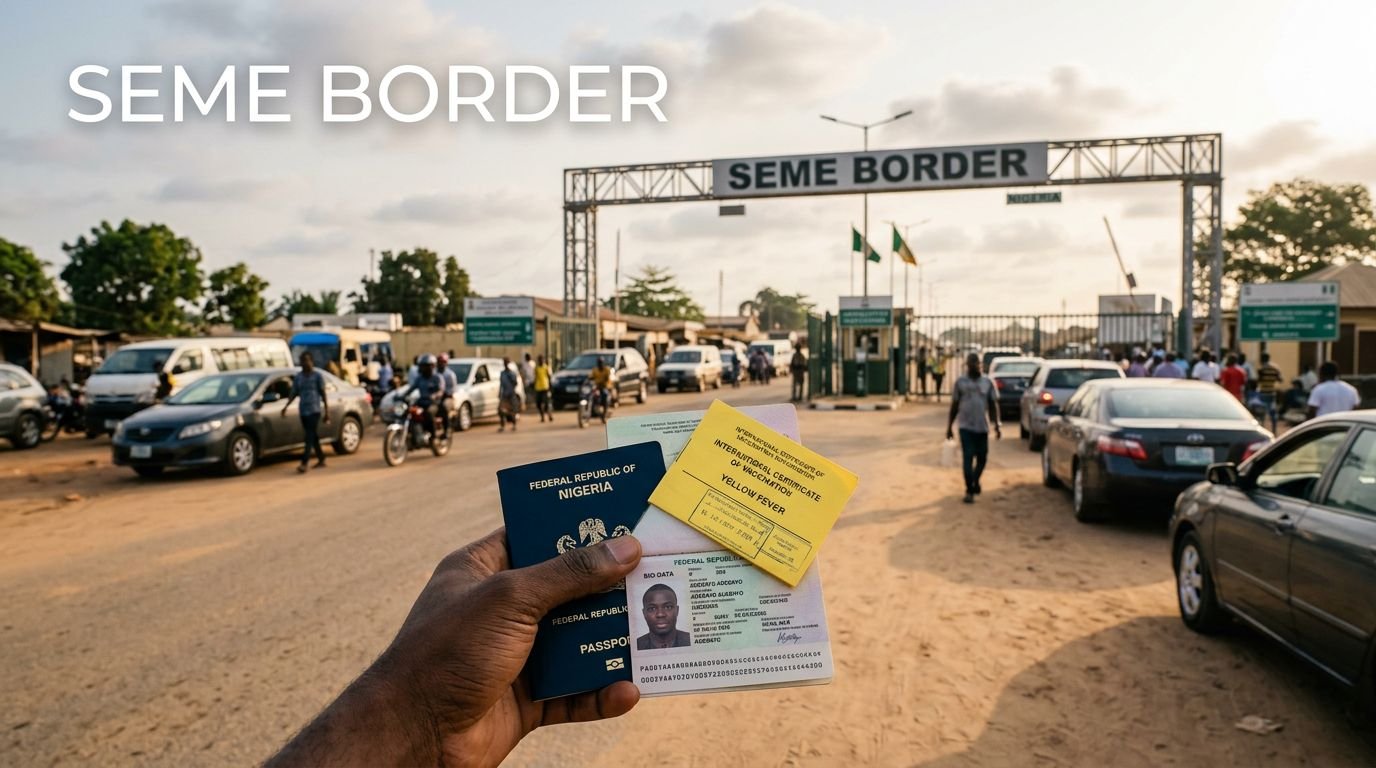
- Carry a valid passport or ECOWAS travel certificate plus a yellow fever card; incomplete papers turn a short crossing into a long day.
- Expect three checkpoints: Nigerian exit immigration, no-man’s land, and Benin entry immigration.
- Plan roughly ₦5,000 to ₦15,000 per person for transport and small charges one way, excluding your main fare.
- Decline anyone who approaches you away from an official checkpoint window.
How Crossing the Seme Border From Lagos Works Step by Step
The crossing follows a fixed sequence. Learn the sequence once and every trip after it becomes routine.
Start from Lagos and ride the Badagry corridor toward Seme, about 80 kilometers from Lagos Island. Nigerian immigration and customs clear you out at the border post. You then cross a short stretch of no-man’s land, usually on foot or by motorcycle, and present your papers again at the Benin entry post. From there, shared taxis and motorcycles carry passengers toward Hillacondji, Cotonou, or onward destinations.
Keep every document in a folder within arm’s reach, not in a bag in the boot. Officers at both posts ask for papers repeatedly, and digging through luggage at each window wastes your queue position. Arrive at the border post before midday. Arriving early matters more than arriving fast, because afternoon queues build and post windows slow down.
A typical timeline looks like this:
| Stage | Typical duration |
|---|---|
| Lagos to Seme border post by road | 2 to 4 hours |
| Nigerian exit immigration and customs | 30 to 90 minutes |
| Crossing no-man’s land | 10 to 30 minutes |
| Benin entry immigration | 20 to 60 minutes |
| Border post to Cotonou | 1.5 to 2.5 hours |
Documents You Need Before You Leave Lagos
Carry a valid international passport with at least six months of validity, or an ECOWAS travel certificate issued by the Nigeria Immigration Service. The ECOWAS protocol allows Nigerians to enter Benin Republic for visits without a visa, so the passport or certificate plus a yellow fever card covers most tourist and short business trips. Check the passport signature page and expiry date before you pack it. An unsigned or near-expiry passport invites delays at the exit window.
Carry your yellow fever vaccination card where you can reach it quickly. Health checks at the border ask for it, and Nigerians without the card can be turned back or charged for on-the-spot vaccination. If you drive yourself, carry the vehicle registration, insurance papers, and your driver’s license; Benin customs may issue a temporary vehicle permit at the entry post.
Incomplete papers produce one of two outcomes. The post turns you back, or an opportunistic middleman offers to “fix” the gap for a fee. Both outcomes cost more than a morning spent sorting the document in Lagos. Students and minors traveling without both parents should also carry a consent letter, since Benin immigration occasionally asks for it.
Getting From Lagos to the Seme Border Post
Choose a transport option based on your start point, luggage, and budget.
A private car or ride-hailing trip to Badagry gives you door-to-door control. From Lagos Island or Victoria Island, allow 2 to 3 hours in traffic and more during rain. From Ikeja or the mainland, add time for the Badagry expressway bottleneck around Iyana Isolo and Okokomaiko. Ride-hailing drivers often refuse cross-border trips, so plan to take a separate vehicle or motorcycle for the final stretch.
Shared transport costs less. Danfo buses and shared cars to Badagry or Seme load from terminals including Mile 2, CMS, and Ojo. The fare typically runs a few thousand naira, and the trip takes 2.5 to 4 hours depending on your start point and queue time at each stop. Direct interstate coaches to Cotonou also load from Lagos parks, and a coach handles both border posts as part of the route, which removes the no-man’s-leg planning from your hands.
Leave before dawn regardless of the option. A 5 a.m. departure from the Island reaches the border post before the traffic and the midday queue. The same trip started at 9 a.m. can eat a full day.
Seme Border Fees and Costs You Should Budget For
Separate the costs into four groups and budget for all of them, not just the headline fare.
Transport forms the largest group. The ride from Lagos to the border runs roughly ₦2,000 to ₦7,000 by shared transport depending on your start point, more by private car or ride-hailing. Crossing no-man’s land by motorcycle costs a few hundred to about ₦1,000 with luggage, or you can walk it in 15 to 20 minutes. On the Benin side, a shared taxi from the entry post toward Cotonou typically costs a few thousand CFA francs.
Official charges form the second group. Immigration clearance under the ECOWAS protocol is free at both posts. Small statutory or local levies can appear at motor parks and border facilities, usually a few hundred naira or CFA. Luggage handlers and park attendants charge small, negotiable amounts; agree on the amount before they lift your bag.
The third group is daily spending: food, water, phone credit, and a data plan that works across the border. Budget at least ₦2,000 to ₦5,000 for the travel day.
The fourth group deserves its own warning. Men who approach travelers away from the official checkpoint windows, promising faster clearance or “help” with immigration, collect unofficial facilitation payments. Decline politely and keep walking toward the marked counters. Officials inside the post process ECOWAS travelers without extra payment. A firm “no, thank you” and a steady walk past the touts is the whole tactic.
Currencies, Exchange, and Paying on Both Sides
Naira stops working shortly after the Benin entry post. Benin uses the West African CFA franc, and small vendors, motorcycle riders, and taxis on the Benin side price in CFA. Exchange a modest amount on the Nigerian side of the border or at established exchange points near the posts, where rates sit closer to the market rate than street rates deep in Cotonou.
Count your cash before you cross and split it between two places on your person. A reasonable travel-day float is enough for transport, food, and small fees, with the bulk of your money left in a Nigerian bank account or kept secure. Cards and mobile money work in Cotonou hotels and larger shops, but not at border kiosks or in shared taxis. Confirm any transfer or exchange figure with the person taking your money before the notes change hands.
Best Times to Cross: Traffic, Hours, and Border Opening Times
The border post operates in daylight, with windows generally open from early morning until early evening. Plan your crossing so you arrive before noon, which leaves room for a slow immigration window without stranding you after closing.
Midweek early mornings beat weekends and Nigerian public holidays. Fridays and Sundays carry heavy market and family traffic, and December brings the year’s biggest crowds as holiday travelers move between Lagos and Benin. On those days, even a 5 a.m. start can meet a queue.
Season and road conditions change the plan as much as the crowd does. The rainy season turns sections of the Badagry corridor slow and flooded, adding an hour or more. Security advisories along the corridor also change, so confirm the border is open and the road is clear on your travel date through the Nigeria Immigration Service and current news sources before you set out. Temporary closures and curfews do happen, and a closed border at Seme redirects traffic to Idiroko, a different route entirely.
Common Mistakes at Seme and How to Avoid Them
Each mistake below has cost travelers money, hours, or both. Avoid them by preparation rather than negotiation on the day.
- Trusting a tout who promises fast clearance. The offer leads to an unofficial payment, and clearance speed depends on the queue, not the tout.
- Carrying an expired or unsigned passport. Check both details a week before travel, not in the car.
- Booking a coach that drops on the Nigerian side. Confirm with the operator that the ticket ends in Cotonou, not at the border.
- Missing the Nigerian exit stamp. An unstamped exit creates problems on your return; check the stamp before you walk into no-man’s land.
- Exchanging large sums with street changers. Use established exchange points and count the notes yourself.
- Budgeting only the outbound leg. Fuel, fares, and fees apply on the return too, and the return ride home from the border catches people after dark.
Run this checklist the night before:
- Passport or ECOWAS travel certificate, signed and valid.
- Yellow fever card, plus any other vaccination records you hold.
- Vehicle papers if driving, in a folder within arm’s reach.
- Cash split between two pockets, with some already in CFA.
- Phone charged, with credit and data that works across the border.
- Return transport decided, with the departure time written down.
Frequently Asked Questions
How long does the whole crossing take end to end?
A well-timed trip from Lagos Island to central Cotonou takes 5 to 9 hours. The variables are Lagos traffic on the Badagry corridor, the queue at both immigration posts, and your connection on the Benin side. A 5 a.m. start keeps you at the lower end of that range.
Do children need their own documents at Seme?
Yes. Every traveler, including infants, needs a passport or ECOWAS travel certificate and a yellow fever card. A minor traveling without both parents should also carry a consent letter from the absent parent or guardian, since Benin immigration sometimes requests it.
Is the Seme route safe for a solo traveler?
Daytime crossings with early starts are the standard pattern for solo travelers. The main risks are touts, overcharging, and street exchange scams rather than violence at the posts. Stay inside the marked checkpoint areas, avoid displaying cash, and finish the crossing before dark.
Can I cross with goods for trade?
Yes, but customs rules apply on both sides. Small personal quantities clear with little ceremony, while commercial quantities require declaration and may attract duties at the Benin customs post. Carry an inventory of what you are carrying so the declaration is quick and accurate.
Is it better to cross myself or take a direct coach to Cotonou?
A direct coach suits travelers with luggage or no border experience, because the operator handles both posts and waits through the process. Crossing yourself costs less and gives you schedule control, but it requires you to manage two posts, the no-man’s-land leg, and the Cotonou connection on your own.
Conclusion
Three things decide your trip to Benin Republic: documents ready, fees budgeted, and timing planned. Get the passport and yellow fever card sorted days in advance, carry cash in two currencies, and leave Lagos before dawn so the Badagry road and the border queue work in your favor. On travel day, confirm current fees, hours, and the security status of the corridor through the Nigeria Immigration Service and official channels, then book your transport to the border and your return leg with the same care. A crossing handled this way stays routine, and routine is exactly what you want at a border post.

Leave a Reply