Lagos fleet drivers deal with heavy traffic, sudden stops, roadworks, rain, and long hours behind the wheel. A safety program needs to account for those daily conditions, not just teach drivers general road rules.
Here, “programs” means seven practical safety controls supported by Federal Road Safety Corps (FRSC) standards and Lagos vehicle inspection guidance. They are not seven separately verified Lagos-branded schemes, and the sources cited here don’t establish that they have reduced crash rates. They give your fleet a clear structure for training drivers, checking vehicles, managing fatigue, and responding to safety problems. For more on travel risks across the city, see the Lagos transport safety guide.
1. Daily Vehicle Inspections and Defect Reporting
A driver should check the vehicle before each trip, not wait for a breakdown to reveal a problem. The check should cover tires, brakes, lights, mirrors, wipers, seat belts, steering, fluid leaks, and any warning lights. For buses and trucks, include safety equipment such as a first-aid kit and reflective warning markings.
Give drivers a simple way to record faults and report them before departure. A supervisor should review the report and decide whether the vehicle can travel, needs a repair, or must be taken off the road. Keep inspection records tied to the vehicle and date, so repeated problems are easy to spot.

A written check helps prevent a rushed departure from turning into a roadside emergency. It also makes accountability clear: the driver reports what they find, and the fleet manager acts on it.
2. Defensive Driving and Route-Specific Coaching
A one-time driving lesson isn’t enough for a driver who works Lagos roads every day. Train drivers to manage following distance, speed, blind spots, lane changes, safe braking, and hazards around buses, motorcycles, pedestrians, and parked vehicles. Then reinforce those skills with periodic practical assessments.
Make the coaching relevant to the routes your fleet actually uses. A delivery van navigating busy city streets needs different practice from a bus making a long-distance trip or a truck approaching a loading area. Include difficult situations such as heavy rain, reduced visibility, road diversions, and congestion near major junctions.
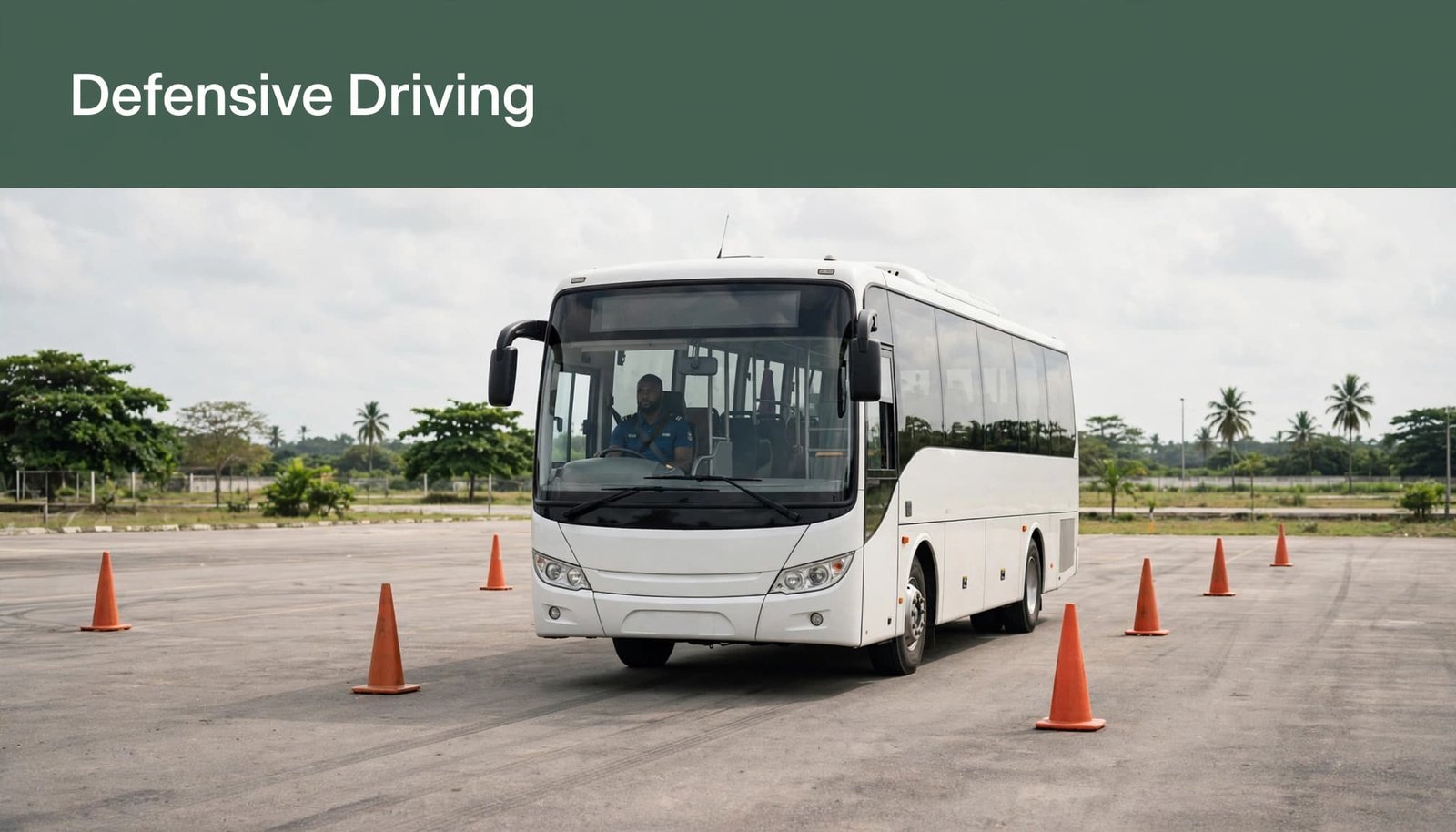
FRSC’s Road Transport Safety Standardisation Scheme (RTSSS) includes driver recruitment, certification, safety rules, and vehicle standards in its guidance for fleet operators. You can use those requirements as a foundation for an internal training plan, then check whether a training provider offers instruction suited to your vehicle type and routes.
Lagos has driving schools and training organizations, but a listing alone doesn’t confirm that a provider runs commercial fleet courses. For example, you can contact the Defensive Driving Training Academy and ask about fleet-specific lessons, instructor credentials, practical assessments, and refresher training before you book.
3. Fatigue Management and Protected Rest
Fatigue can slow a driver’s response and make it harder to judge distance, speed, and risk. Your program should set clear limits on driving hours, provide realistic schedules, and give drivers a safe way to report tiredness without pressure to continue.
FRSC’s RTSSS says fleet operators should enforce rest periods and states that a driver should not drive more than nine hours in any 24-hour period. Separate FRSC guidance for tanker and trailer drivers recommends at least 30 minutes of rest after every four hours of a journey and says drivers shouldn’t drive while fatigued. Those limits support a broader rule for your fleet: schedules must include real rest time, not just assume a driver can push through.
For night journeys, RTSSS specifies two drivers. This is especially important for long-distance operations, where traffic delays can stretch a planned trip and leave a driver on duty longer than expected. Your dispatch team should track duty hours and avoid pressuring drivers to recover lost time by speeding or skipping rest.
4. Speed Management and Safe Driving Rules
Set a clear speed policy for every vehicle category and route. Drivers should follow the applicable speed limit and adjust their speed for traffic, weather, visibility, road conditions, and the vehicle’s load. A posted limit is a maximum, not a target when the road is wet or crowded.
FRSC’s RTSSS calls for functional speed-limiting devices on commercial vehicles. Make speed checks part of regular fleet reviews, and respond to repeated speeding with coaching and documented follow-up. A speed alert should lead to a discussion about what happened, not just a warning message that drivers learn to ignore.
Keep passenger safety in the same program. FRSC lists driving without a seat belt, or failing to ensure passengers use seat belts, as an offence. Drivers should check that seat belts are available and used before setting off, especially on buses and staff transport vehicles. Don’t let departure pressure override that check.
5. Roadworthiness, Maintenance, and Inspection Records
A safe driver can’t compensate for a vehicle with faulty brakes, worn tires, broken lights, or poor steering. Build preventive maintenance into the fleet schedule, and track repairs by vehicle. If a driver reports a safety fault, the vehicle should return to service only after the fault has been assessed and resolved.
Lagos State Vehicle Inspection Service (VIS) says commercially designed vehicles, including pickups and buses, have a Road Worthiness Certificate validity period of six months. Check the current requirements and dates with Lagos VIS roadworthiness FAQs, and keep each vehicle’s certificate and maintenance records easy to retrieve.
Don’t rely on the certificate alone. It doesn’t replace daily inspections or routine maintenance. Use all three: driver checks before trips, scheduled servicing, and current roadworthiness documentation.
If you operate trucks, match the vehicle and maintenance plan to the work it does. A truck carrying heavy cargo faces different demands from a light commercial van. Lagos fleet operators can compare haulage companies in Lagos when they need to understand service types and vehicle categories used for freight.
6. Telematics, Coaching, and Near-Miss Review
Telematics can help your team identify patterns that are hard to see from a depot. Depending on the system, fleet managers may review speed, harsh braking, route deviations, idle time, or trip duration. Use the data to find risks and coach drivers, not to punish someone for a single alert without checking the facts.
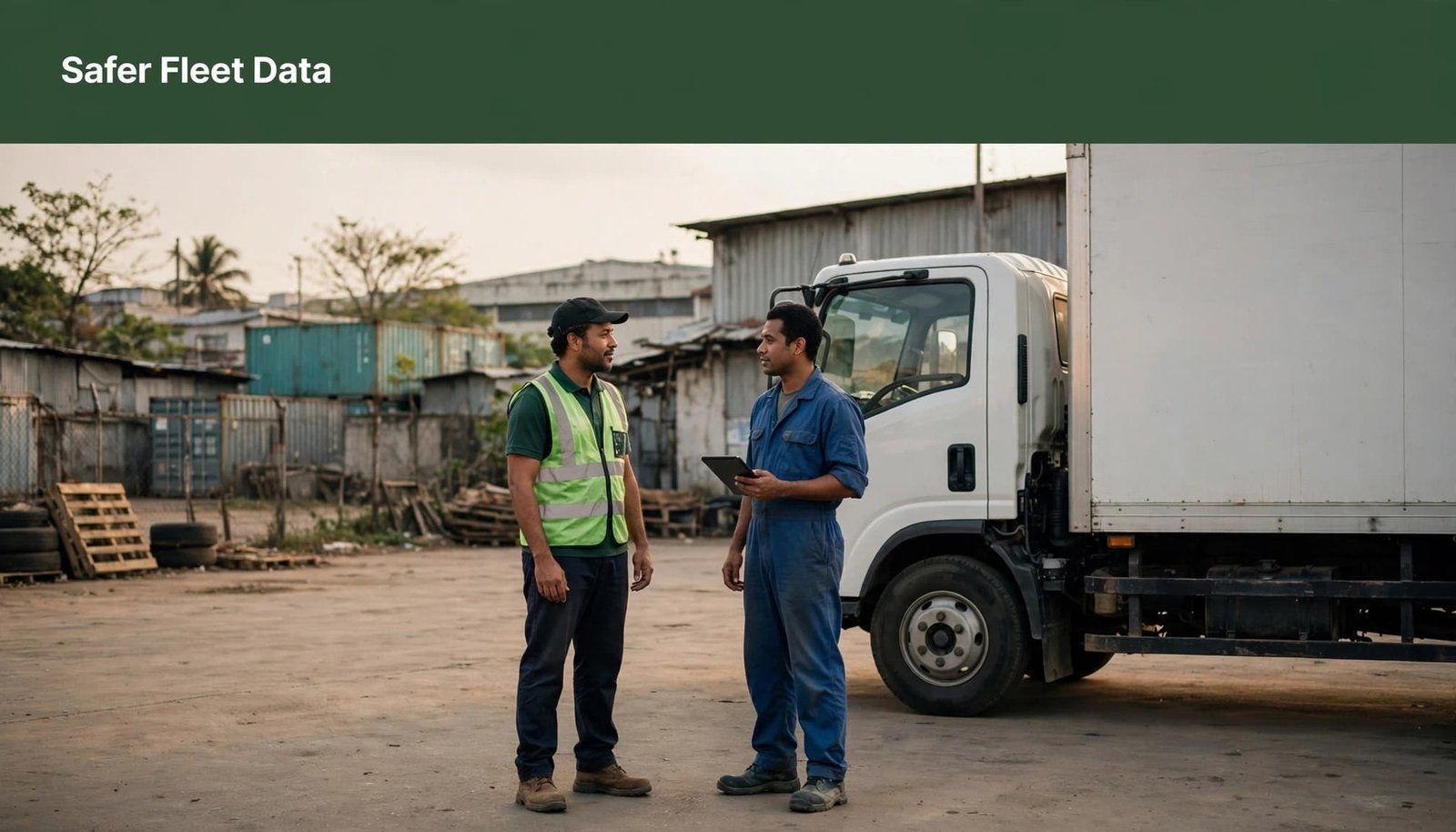
Ask drivers to report near misses, unsafe loading, vehicle faults, and dangerous route conditions. A near miss can reveal a recurring hazard before it becomes a crash. Review reports regularly and record what action followed, such as route changes, vehicle repairs, schedule updates, or coaching.
A 2026 report on Dangote Cement Transport described the company’s use of driver training, journey-management protocols, recertification, GPS and telematics monitoring, and fatigue-focused wellness efforts. Those are reported company practices, not rules that apply to every fleet. Still, they show how training, monitoring, and driver well-being can sit within one safety system.
7. Incident Response and Emergency Readiness
Every fleet should have a written plan for a crash, breakdown, fire, or medical emergency. Drivers need to know whom to call, what information to provide, where to wait safely, and how to protect passengers or cargo without putting themselves in further danger. Keep emergency contact details and basic response steps available in each vehicle.
Train drivers on first aid, fire response, warning devices, and incident reporting. FRSC’s tanker and trailer guidance covers emergency response, basic firefighting, pre-trip checks, defensive driving, and reporting incidents. The details may differ by vehicle and cargo, so tailor drills to the risks your drivers face.
After an incident, record what happened while details are fresh. Include the time, location, vehicle, route, road conditions, people involved, and any witness or response information available. Review the event to identify what your fleet can change, such as a repair process, driver briefing, route plan, or rest schedule.
Put the Seven Programs Into Practice
Start with a written fleet safety policy that names who checks vehicles, who approves repairs, how driving hours are tracked, and who handles incident reports. Give each driver a clear copy and explain the rules in practical terms. Use short, regular briefings rather than relying on a policy document nobody revisits.
Track a small set of useful measures: completed inspections, open vehicle defects, training and refresher dates, driving-hour records, speeding alerts, seat-belt compliance, and reported near misses. Review the records each month. A pattern of repeat faults or fatigue reports calls for a change in maintenance or scheduling, not just another reminder to drivers.
If you’re setting up a transport operation, include driver duties, safety procedures, and reporting steps in the way you manage staff. This guide to managing drivers in a Nigerian transport business covers related operating decisions.
Conclusion
A safer fleet depends on routines your team follows on every trip. Check vehicles before departure, train drivers for the routes they use, protect rest time, monitor speed, keep certificates current, review near misses, and prepare for emergencies. When each step has a clear owner and a written record, you can spot problems earlier and make safer trips the normal way your fleet works.


Leave a Reply