For the best Lagos road trip times, leave home between 4:30 a.m. and 5:15 a.m. This means leaving your neighbourhood, not simply reaching Berger or the expressway. An early start helps you get ahead of Lagos traffic. A Lagos to Ibadan drive may take about 1.5 to 2 hours in lighter conditions instead of nearing three, but weather, road works, traffic, and your starting area can change the result. An early exit can reduce idling, wasted fuel, and your fuel cost.
If that window is too early, use 10:00 a.m. to 1:00 p.m. instead. Avoid leaving between 7:00 a.m. and 9:00 a.m., when heavy traffic can delay your exit. During major travel periods, including public holidays, the best departure time may change. These travel estimates aren’t guarantees, so your trip starts with planning enough time to leave Lagos.
Key Takeaways
- Leave Lagos between 4:30 a.m. and 5:15 a.m. to get ahead of weekday traffic and reach the expressway before 6:00 a.m.
- If an early start isn’t practical, use the 10:00 a.m. to 1:00 p.m. off-peak window and avoid the busiest morning and evening periods.
- Plan for your starting neighbourhood and exit corridor, not just the interstate distance. Lekki, Ikeja, Mile 2, Berger, and other areas may add significant time before the long drive begins.
- Use realistic travel ranges, add extra time for rain, road works, holidays, traffic, fuel stops, and rest breaks, and consider splitting very long journeys.
- Check your vehicle, fill the tank the night before, calculate fuel costs, monitor live traffic and weather, and stop when fatigue affects your concentration.
Best Lagos Road Trip Times for an Early Start
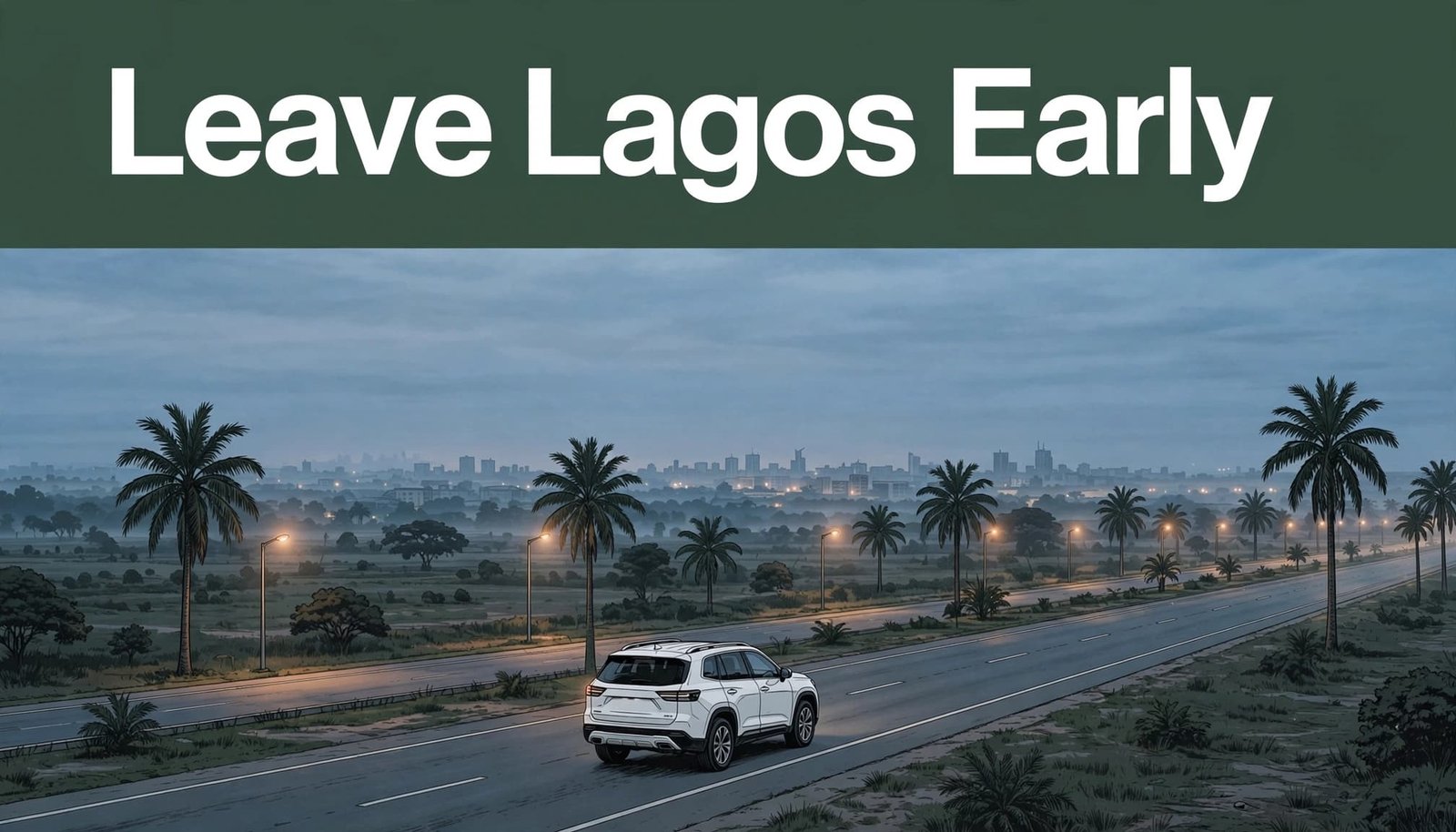
Your departure time matters on a long drive. Leaving between 4:30 a.m. and 5:15 a.m. can help you clear Lagos before the morning rush.
Leave Before the Morning Rush
Early departures offer cooler weather, clearer visibility after sunrise, and more daylight at your destination. They are especially useful for long northern and eastern routes.
A 4:30 a.m. to 5:15 a.m. departure works well for the Lagos-Ibadan Expressway, Ojodu Berger, Ojota, Mile 2, and the Lekki-Epe Expressway. It can also help island drivers cross the Third Mainland Bridge before heavy traffic builds.
Traffic usually starts increasing around 6:30 a.m., particularly on weekdays. Before sunrise, check your headlights, rest properly, and inspect the vehicle.
This timing suits trips to Ibadan, Abeokuta, Benin City, Enugu, Asaba, Abuja, and Port Harcourt. It also leaves room for fuel stops, breakfast, and a proper rest break.
- Aim to be on the expressway before 6:00 a.m.
- Fill your tank the evening before, not at dawn.
- Set your first rest stop before leaving home.
An overnight departure isn’t automatically better for private drivers. Visibility, fatigue, security, and roadside assistance can all be less favorable.
Use Midday as Your Second Option
The 10:00 a.m. to 1:00 p.m. window can work for drivers leaving Victoria Island, Ikoyi, Lekki Phase 1, Yaba, Surulere, or Ikeja. This off-peak hours option is better than weekday peak hours when you can still complete the first major leg in daylight.
For example, a driver leaving Victoria Island may find the first rush has eased. The road still won’t be empty, however. Construction, broken-down trucks, fuel queues, and rain can cause delays.
Midday is simply more predictable than 7:30 a.m. or 5:30 p.m. Plan around conditions rather than assuming the route will be clear.
Lagos Road Trip Times Depend on Your Exit Corridor
Your location in Lagos can add one or two hours before your interstate journey begins. Lagos traffic may delay you before you reach the long-distance route.
Check live traffic conditions before choosing an exit corridor. A travel time index can provide a useful comparison signal, but it isn’t a guaranteed arrival time.
Lekki-Epe Expressway, Victoria Island, and Ikoyi
The corridor gets busy between 7:00 a.m. and 9:30 a.m. as commuters head toward Victoria Island, Ikoyi, and Lagos Island. The return flow is often heavier from 5:00 p.m. to 8:00 p.m.
If you’re leaving Lekki Phase 1, Ajah, Sangotedo, or Victoria Island, aim to depart before first light. Plan to reach the mainland connection before the morning peak begins.
- Allow at least 45 extra minutes for estate gates, island crossings, and road works.
- Compare alternative routes through the Third Mainland Bridge, Ikorodu Road, and other viable connections.
- Check your fuel level before joining the Lekki-Epe Expressway.
- Allow more time for toll points and rain, especially near Ajah Under Bridge.
Ikeja, Yaba, Ojota, and Berger
Drivers leaving Ikeja, Maryland, Yaba, Ketu, Ojota, and Ojodu Berger have practical access to the Lagos-Ibadan Expressway. That doesn’t mean the route will always be clear.
The mainland approaches see heavy traffic from about 7:00 a.m. to 9:30 a.m. The evening peak usually runs from 5:00 p.m. to 8:00 p.m. If you’re heading north or east, compare current conditions before treating Berger as your gateway out.
Leaving Lagos at 5:00 a.m. isn’t the same as leaving your estate at 5:00 a.m. Build in the time it takes to reach the expressway.
Choose the Right Departure Point for Your Destination
Match your Lagos exit route to where you are going. Taking a difficult cross-city route before a 10-hour highway journey wastes fuel and patience. Use this practical travel guide as a starting point, not a fixed timetable. Exact routes depend on your destination, starting neighborhood, vehicle type, and live traffic conditions.
For Ibadan, Abuja, Ilorin, and other northern routes, the Lagos-Ibadan Expressway through Berger is the usual choice. For Benin City, Asaba, Warri, Enugu, Port Harcourt, Calabar, and Yenagoa, check the route beyond the Lagos exit. Don’t assume Lekki or Ajah is best for every South-South journey. Compare alternative routes through the mainland, island, and Sagamu-bound approaches based on your destination and current conditions.
- From Festac, Amuwo Odofin, and Mile 2, leave before heavy traffic from the ports, markets, and city-bound roads builds around Mile 2, Festac, and Oshodi.
- From Agege, Iyana Ipaja, and Alimosho, avoid the early rush toward Berger.
- From Victoria Island, Lekki, and Ajah, don’t plan a tight appointment in Ikeja before an interstate trip.
If you use car rental instead of your own vehicle, follow the same vehicle inspection and driver-rest advice. If you would rather leave the driving to an operator, compare Chisco Transport fares and terminals before choosing a park. Jibowu, Ajah, Mile 2, Oshodi, and Berger are common interstate departure areas.
Realistic Driving Times From Lagos
A map shows road distance, but it can’t predict your actual travel time. Use the ranges below for planning, not as fixed schedules.
| Route From Lagos | Approximate Distance | Approximate Planning Time | Suggested Departure Window |
|---|---|---|---|
| Ibadan | 128 to 130 km | 1.5 to 3 hours | Before 6:00 a.m. |
| Benin City | 308 to 323 km | 4 to 5.5 hours | 4:30 to 5:30 a.m. |
| Enugu | 500 to 600 km | 8 to 12 hours | Before 5:00 a.m. |
| Abuja | About 791 km | 10 to 13 hours | Before 5:00 a.m. |
| Port Harcourt | 669 to 700 km | 9 to 12 hours | Before 5:00 a.m. |
| Yenagoa | 650 to 720 km | 9 to 11 hours by private car | Before 5:00 a.m. |
Road distance alone doesn’t determine when you’ll arrive. Road works, checkpoints, urban congestion, weather, stops, and road conditions can expand these ranges. Heavy traffic during the Lagos exit or around Benin can add several hours.
Use a travel time index from an app as a guide, not a replacement for local route checks. For budgeting, compare the travel distance with your vehicle’s consumption to estimate your fuel cost more accurately.
The main lesson is simple: the farther your trip, the less room you have for a late Lagos departure.
Lagos to Enugu Needs a Full-Day Plan
Lagos to Enugu by road is often described as a seven to nine-hour travel time. That can happen under good conditions, with a clear exit from Lagos and short stops. A safer planning range is 8 to 12 hours.
Leave before 5:00 a.m. if you want to arrive while there is daylight. Add time for food, fuel, toilet breaks, traffic around Benin, and changing conditions. If the route feels too long, consider splitting the journey instead of driving while tired.
- Tell someone your route and expected arrival time.
- Keep enough cash for fuel, food, and an unexpected repair.
- Stop or book overnight accommodation when fatigue affects your focus.
- Consider a reputable bus operator if completing the drive safely isn’t realistic.
Longer South-South Trips Need Bigger Buffers
Trips to Port Harcourt, Calabar, and Yenagoa are not quick weekend drives. A Lagos to Calabar trip can take 10 to 14 hours in a private vehicle and longer in a bus. Lagos to Yenagoa often takes 9 to 11 hours by car.
Build in buffer time for long South-South routes, especially when rain, road repairs, or fatigue could slow you down. Travellers should consider splitting very long journeys or using a reputable bus operator rather than forcing a 10 to 14-hour private drive.
If you are traveling by bus, ticket costs also rise during busy periods. For context, current Lagos to Calabar transport fares range from about ₦40,000 to ₦95,000, depending on the operator and seat class.
Rainy Season Can Change Your Departure Plan
Rainy weather in Lagos requires more time and caution. The rainy season usually runs from May to October, and Nigeria rainy-season travel advice warns that flash flooding can damage road conditions and make driving dangerous.
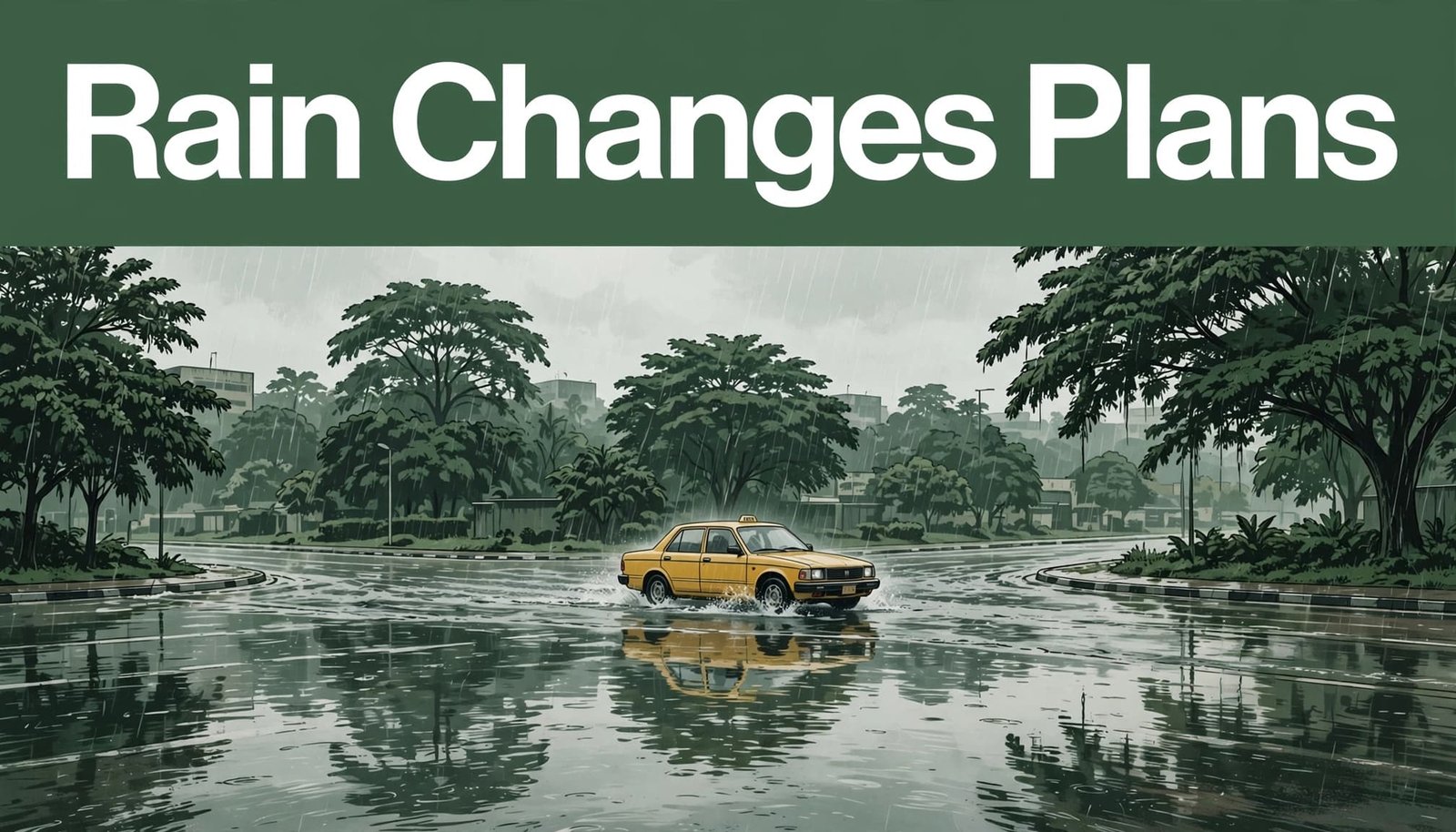
Lagos State projected above-normal rainfall for 2026 in its seasonal rainfall prediction. Check this dated forecast before relying on it for your travel plans. It matters if you’re leaving through the Lekki-Epe Expressway, Ajah, Victoria Island, Ikeja, Ojota, or Mile 2.
Rain, flooding, and peak commuter movement can create heavy traffic along key routes.
- Add at least one extra hour when heavy rain starts before departure.
- Don’t drive into water when you can’t see the road surface.
- Reduce speed and increase the space between you and the next vehicle. Rain can also reduce visibility and hide lane markings.
A dry road at 5:00 a.m. can face different traffic conditions by 7:00 a.m. after rainfall begins. Check the weather during the rainy season before loading your car.
Calculate Your Fuel Cost Before You Leave
Fuel cost depends on more than road distance. Luggage weight, air conditioning, traffic, diversions, and the pump price can change the final amount.
Use this simple calculation:
Distance ÷ fuel economy × price per litre = estimated fuel cost
For example, a 555 km Lagos to Enugu route in a car that averages 10 km per litre needs about 55.5 litres. Using ₦1,000 per litre as an illustration, not a current national price, the fuel cost alone is about ₦55,500. Check the current pump price before using the formula.
Your Car Changes the Number
A Toyota Corolla and Toyota Camry can cover the same route but have different fuel economy. A vehicle with lower kilometres per litre needs more fuel, even when the route stays the same.
Heavy traffic can increase idling, while air conditioning and extra luggage can reduce fuel economy.
Based on its stated assumptions, the road trip fuel calculator estimates about ₦58,455 for a Corolla and ₦65,880 for a Camry on a Lagos to Enugu trip. Treat these as planning figures, not current pump-price quotes.
- Calculate the full travel distance for a return trip, including likely diversions.
- Add 10% to 15% for diversions and city movement.
- Keep tolls, food, and emergency cash separate from your fuel cost budget.
Buy Fuel Before the Journey Day
Don’t leave home with a quarter tank and hope to find a quick station on your way out. Queues can form without warning, and buying fuel in a rush puts your whole schedule at risk.
Top up the night before. Confirm that your payment card or transfer option works. If you are carrying goods for a business, separate the travel budget from the cost of goods-in-transit insurance and delivery expenses.
Check Your Vehicle Before a Long Drive
A long highway trip can expose weak tyres, old batteries, worn brakes, and cooling problems. Arrange vehicle maintenance with a trusted mechanic or tyre shop before a major interstate journey. A quick check at home is useful, but it may miss developing faults.

Inspect the Safety Basics
Check tyre pressure, tread, brake response, engine oil, coolant, cooling hoses, wiper fluid, lights, and battery terminals. Confirm the spare tyre is usable, and make sure the jack and wheel spanner are in the vehicle.
Tyre pressure, vehicle load, and air-conditioning use can affect fuel economy and fuel planning. Before accepting a car rental vehicle, inspect the tyres, brakes, documents, spare tyre, and roadside-assistance terms.
Carry your driver’s licence, vehicle papers, a first-aid kit, a warning triangle, a torch, phone charger, water, and basic snacks. Keep a charged phone available for emergency communication.
- Test your headlights before dawn, not when you need them.
- Replace a weak battery before a 10-hour route.
- Keep valuables out of sight when you stop.
Plan Your Stops Before the Ignition Comes On
Decide where you will stop for fuel, food, and rest. Stop before fatigue affects your concentration, rather than trying to save every minute. Share the route with a family member or colleague, and add more breaks when travelling with children.
For corporate travel, fleet managers should also confirm driver rest, emergency contacts, maintenance records, and insurance status before releasing a vehicle.
Weekends and Holidays Need Their Own Plan
Weekday mornings often have the worst congestion during peak hours. Saturday mornings can be easier when it isn’t a holiday weekend, but events, weddings, markets, beach traffic, and intercity travel can still delay you around Victoria Island, Lekki, Ajah, and the Third Mainland Bridge.
Sunday may have less commuter movement inside Lagos, yet fewer open repair shops and fuel stations can make a breakdown harder to handle. Public holidays bring heavier demand, with more people leaving town at the same time and heavy traffic building along major corridors.
Overnight travel may avoid some congestion, but it’s a separate safety decision, not an automatic traffic solution. Check live traffic conditions before leaving, especially during the rainy season, when road conditions can change quickly.
- Choose an early departure time on Saturday if you’re travelling outside Lagos.
- Avoid leaving Lagos on the afternoon before a major holiday.
- Start earlier if you expect to pass through Berger, Mile 2, Oshodi, or Ajah.
- Book bus tickets several days before Christmas, Easter, Sallah, and New Year, especially around public holidays.
Bus operators often add trips during peak periods, but seats also fill quickly. Check GIGM transport fares and terminals before paying, because bus departure times and fares can change during Christmas, Easter, Sallah, and New Year periods.
Plan Lekki to MMIA Airport Transfers Carefully
A Lekki airport transfer to Murtala Muhammed International Airport in Ikeja usually takes 45 to 75 minutes during off-peak hours. That travel time can stretch to 90 to 150 minutes or more in heavy traffic, especially if you cross Victoria Island, Third Mainland Bridge, Maryland, or Oshodi. If you’re starting farther east, the Lekki-Epe Expressway may also affect your route.
For a domestic flight, leave Lekki at least three hours before departure. For an international flight, allow four hours. These are planning buffers, not official airport check-in rules. Use this buffer time for Lagos traffic, airport security, check-in, and possible rain.
- Avoid departures between 7:00 a.m. and 9:30 a.m.
- Treat Friday evening and holiday periods as high-risk travel times.
- When booking your airport transfer, ask the driver to confirm the route before pickup.
If your flight is early, stay closer to Ikeja the night before. A shortlet near the airport can cost less than missing a ticket.
Quick Departure Checklist for Lagos Drivers
Use this simple order before every long road trip. It helps you plan for weekday, weekend, holiday, and overnight travel.
- Check traffic, weather, road conditions, and current route updates the night before and shortly before leaving, especially during the rainy season.
- Choose a realistic departure time based on your exit corridor. Weekday, weekend, and holiday traffic may require different plans, including an overnight departure.
- Fill your tank and check tyre pressure before sleeping. Estimate your fuel cost separately from tolls, food, and emergency cash. Your vehicle type, load, and fuel economy can change the estimate.
- Don’t set your schedule by road distance alone. Leave home early enough to reach your exit corridor before 6:00 a.m., where practical.
- Pack water, snacks, chargers, cash, documents, and medication. Share your route and expected arrival time with someone at home. Stop when you’re tired, not after you start making mistakes.
Your best schedule is the one that leaves room for real Lagos conditions. Rushing to recover lost time often creates a bigger problem.
Frequently Asked Questions
What Is the Best Time to Leave Lagos for a Road Trip?
Leave between 4:30 a.m. and 5:15 a.m. This helps you avoid the busiest weekday traffic and gives you more daylight on the highway.
How Long Does Lagos to Enugu Take by Road?
Plan for 8 to 12 hours of travel time. Traffic, checkpoints, weather, fuel stops, and road repairs can add several hours.
What Are Lagos Peak Hours?
Weekday peak hours are usually from about 6:30 a.m. to 9:30 a.m. Morning heavy traffic can return from 4:30 p.m. to 8:00 p.m.
How Much Fuel Do I Need for Lagos to Enugu?
Estimate the fuel cost using your vehicle’s fuel economy. A car averaging 10 km per litre needs roughly 55.5 litres for a 555 km trip, before detours or extra stops.
Does Rain Affect Lagos Road Trip Times?
Yes. During the rainy season, flooding, poor road conditions, reduced visibility, and slower traffic can extend the journey. Consider adding at least one extra hour when heavy rain is expected.
How Early Should I Leave Lekki for MMIA?
For a Lekki to MMIA airport transfer, leave at least three hours before a domestic flight and four hours before an international flight. Add buffer time because rush-hour journeys can take 90 to 150 minutes or more.
Is Saturday a Good Day to Leave Lagos?
Saturday morning can be a good option if you leave early. Avoid late-morning departures, busy corridors, and public holidays when possible.
Should I Drive at Night on a Long Nigerian Road Trip?
Daytime travel is generally preferable for visibility, fatigue management, fuel access, repairs, and personal safety. A night journey may still be practical when you know the route and have planned carefully.
Make Your Lagos Departure Work for You
The best Lagos road trip times come down to one decision: leave before the city gets busy. A 5:00 a.m. start gives you the best chance of a smooth exit, lower fuel use, and a daylight arrival.
Check your car and budget for delays. During the rainy season, holidays, traffic, and changing road conditions can alter your plan, so leave enough buffer time.
Before choosing a bus instead of driving, compare current Lagos to Warri transport fares and confirm your terminal, departure time, and luggage rules.



Leave a Reply