A Lagos to Abuja or Lagos to Onitsha bus trip can feel much longer when nausea starts before the bus leaves Jibowu. The quickest motion sickness prevention plan is simple: book early, sit near the middle or front, eat lightly, face forward, and carry water.
You don’t need to suffer through every bend, bad patch, and stop-start stretch of road. A little planning can save you stress, lost sleep, and the temptation to abandon a trip after paying for your ticket.
Use these practical tips before you board at Oshodi, Ajah, Mile 2, Berger, or any major interstate terminal.
Motion Sickness Prevention Starts Before You Book
Motion sickness happens when your eyes and inner ear receive mixed movement signals. You may feel dizzy, sweaty, nauseated, tired, or close to vomiting.
Your seat, meal, bus condition, and departure time can affect how you feel. Start making good choices before you reach the park.
| Trip Decision | Better Choice | What to Avoid |
|---|---|---|
| Seat location | Front or middle section | Last row over the rear wheels |
| Departure time | Morning or daytime trip | A rushed late-night departure |
| Meal before travel | Light food and water | Heavy, oily meals |
| Entertainment | Looking ahead or resting | Reading or staring at your phone |
| Booking method | Early reservation | Last-minute seat selection |
The goal is not luxury. It is a steady, calm journey that gives your body fewer reasons to react.
- Book early so you can request a better seat.
- Choose a reputable operator instead of saving a small amount on an unsafe bus.
- Confirm the exact terminal before travel day.
- Keep your ticket, ID, and phone charged.
Why Nigerian Bus Trips Can Trigger Nausea
Long road trips in Nigeria can involve traffic, potholes, sharp turns, sudden braking, and repeated stops. A bus leaving Lagos may spend an hour clearing traffic around Ojota, Berger, or the Lagos-Ibadan Expressway before the highway journey even begins.
That constant change in speed can unsettle you, especially if you already get carsick.
Your Body Gets Mixed Signals
Your eyes may see a bus seat, phone screen, or book. Your inner ear feels the bus moving, turning, and bouncing. That mismatch can trigger nausea.
Looking through the front windscreen or side window gives your eyes a better sense of direction. Reading small text on your phone does the opposite.
Heat, Hunger, and Strong Smells Make It Worse
A hot bus, petrol smell, perfume, fried food, and poor airflow can make nausea rise fast. So can traveling hungry or eating a heavy plate of rice, beans, fried plantain, and meat minutes before departure.
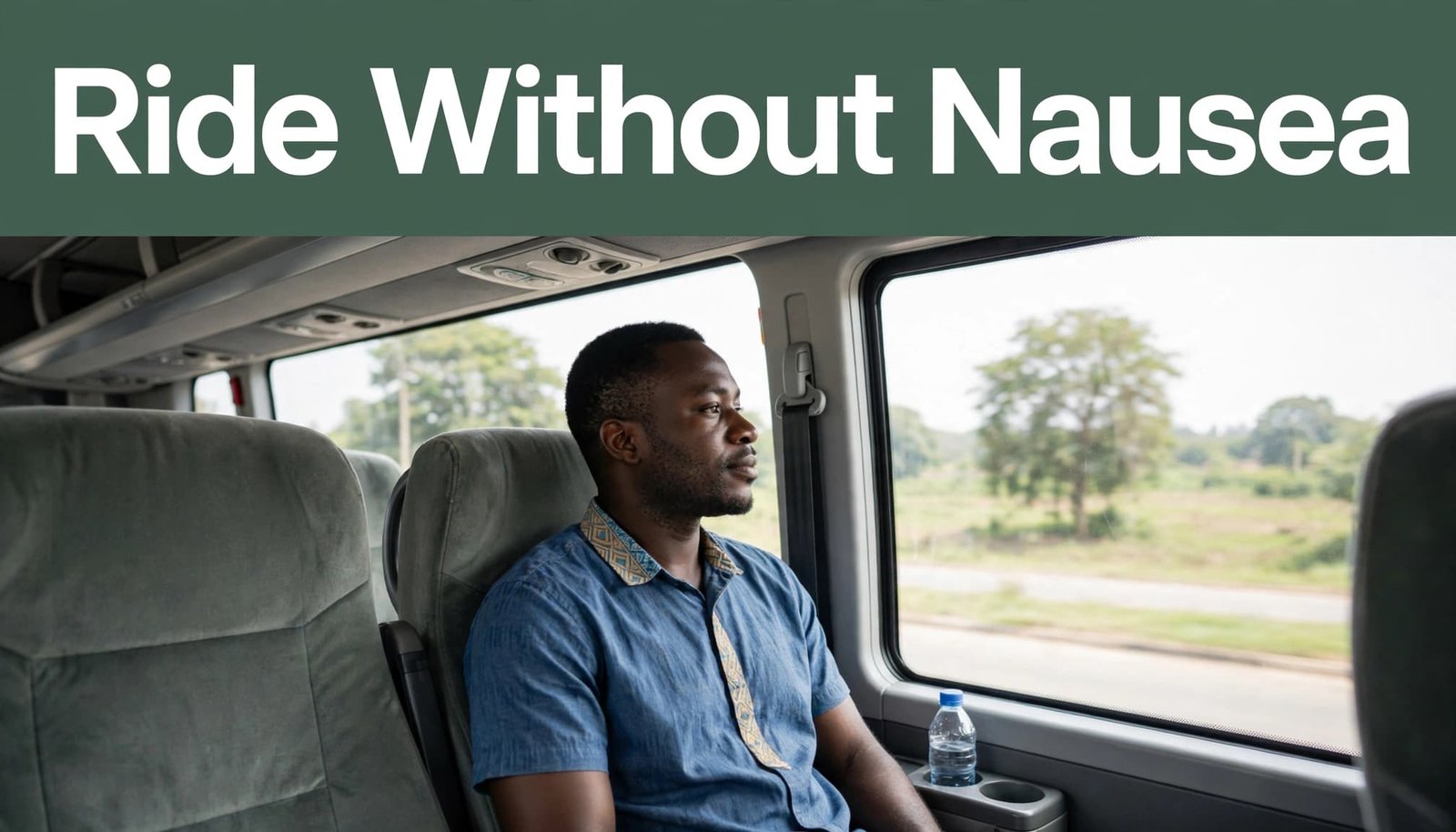
- Eat enough to avoid an empty stomach.
- Skip alcohol before travel.
- Wear light clothes if you easily feel hot.
- Keep a window or air vent open when possible.
Book Early and Choose a Better Seat
Last-minute travel can leave you with the only available place, often the back row. That is where you may feel more bouncing and engine vibration.
If you travel often for work, school, family visits, or business, online booking gives you more control. Use this guide on how to book a bus ticket online in Nigeria to compare options before you enter a crowded park.
Pick the Middle or Front Section
The middle section often feels steadier than the rear. A front-side window seat can also help because you can look outside and keep your eyes on the road ahead.
Avoid sitting backward if that makes you uncomfortable. If you cannot choose a seat online, arrive 30 to 60 minutes before departure and ask the booking staff politely.
Confirm the Correct Terminal
Lagos operators may use different terminals for different routes. ABC operates across cities including Abuja, Enugu, Onitsha, Owerri, Port Harcourt, Ibadan, Uyo, and Kaduna, but routes can change with demand and season.
Check ABC Motors terminals and price information before leaving Lekki, Victoria Island, Ikeja, Surulere, or Yaba for the park.
- Confirm your route and boarding terminal the day before.
- Ask if the coach has working air conditioning and seat belts.
- Don’t board from an unofficial roadside loading point.
- Keep your valuables in a small bag with you.
Saving N2,000 is not worth boarding a poorly maintained or overcrowded bus.
Eat Lightly Before the Journey
You don’t need to travel hungry. You also don’t need a heavy meal that sits badly once the bus begins to move.
Eat two to three hours before departure if you can. Choose food that feels familiar and light for you.
Better Pre-Trip Food Choices
Plain bread, crackers, oats, boiled egg, fruit, or a small portion of rice can work well. Sip water instead of drinking too much at once.
If you leave Lagos before 6:00 am, pack something small. A long queue at Jibowu or Oshodi can delay your departure.
Foods and Drinks to Skip
Very spicy food, oily food, large portions, alcohol, and fizzy drinks can leave you bloated or unsettled. Strong coffee may also make some people shaky.
- Eat a small meal, not a feast.
- Drink water in small amounts.
- Carry a light snack for rest stops.
- Avoid trying unfamiliar food on travel day.
Motion Sickness Prevention During the Ride
Once the bus moves, focus on what helps your body settle. You may not control the road or the driver’s route, but you can control your posture, screen time, and airflow.
Don’t wait until you feel terrible. Start these habits early.
Keep Your Eyes on a Fixed Point
Look forward through the windscreen when you can. If you sit by the window, watch distant objects rather than nearby passing cars.
Put away your phone during rough stretches. Avoid reading, scrolling social media, or watching fast-moving videos when the bus is swaying.
Stay Cool and Breathe Slowly
Sit upright and loosen tight clothing around your waist. Point the air vent toward your face if the bus has one. Fresh air can help during a stuffy trip.
If the driver stops at a safe official point, step out briefly, stretch, and take slow breaths before boarding again.
- Keep your head supported against the seat.
- Face forward instead of twisting around.
- Avoid strong perfume and food smells.
- Tell a travel companion early if you feel unwell.
Pack a Small Comfort Kit
Your hand luggage should hold the items you may need before the bus reaches a rest stop. Don’t bury them inside the large bag under the coach.
Keep the kit simple. You need useful items, not a heavy backpack.

Carry these items in a zip bag:
- A sealed bottle of drinking water.
- Plain crackers or another light snack you tolerate well.
- Tissues and a disposable sickness bag.
- A light scarf or sweater for an over-cold coach.
- A power bank, travel document, and essential medication.
Label your larger luggage with your name and phone number. Keep cash, bank cards, passport, and medication on your body or in hand luggage, never in an overhead rack.
Ask a Pharmacist or Doctor About Medicine
Medicine can help some people, but don’t guess with tablets because another passenger says they worked for them. Your age, health condition, pregnancy status, and other medicines all matter.
The CDC’s motion-sickness guidance explains that medicines can prevent and manage symptoms, but treatment should fit the traveler.
Take Advice Before Travel Day
Ask a pharmacist or doctor what is suitable for you, especially if you have glaucoma, asthma, heart problems, prostate problems, or take regular medication. Some medicines can make you sleepy.
Don’t wait until the bus pulls out of Mile 2 before asking what to take. Get advice early enough to understand how the medicine may affect you.
Be Extra Careful With Children
Children can get carsick easily, but adult medicine is not automatically safe for them. Mayo Clinic advises speaking with a child’s healthcare professional before using an over-the-counter antihistamine for car sickness.
Read Mayo Clinic’s child car-sickness advice before giving any medicine to a child.
- Follow the label and professional advice.
- Don’t mix medication with alcohol.
- Tell the driver if drowsiness becomes severe.
- Keep any medication in its original pack.
Choose a Bus Company That Takes Safety Seriously
Comfort starts with a roadworthy bus and a professional driver. A cheap ticket is not a good deal if the coach looks poorly maintained, overloaded, or unsafe.
Before you board, look around. Check whether the company uses an official terminal, organized loading process, and clear passenger records.
Red Flags You Should Not Ignore
Walk away if the bus appears badly damaged, overcrowded, or loaded beyond reason. Pay attention if the driver looks tired, aggressive, or unfit to drive.
A company that overspeeds, ignores passenger concerns, or accepts roadside loading without records is not worth the risk.
Smart Safety Habits for Every Passenger
Wear your seat belt when one is available. Share your route, departure time, and expected arrival time with someone you trust.
Daytime travel is often easier for first-time visitors and people prone to nausea. If you must travel overnight, book only with a recognized operator and board inside the official terminal.

- Keep emergency contacts saved offline.
- Don’t sleep too deeply during unexpected stops.
- Carry a valid ID.
- Report reckless driving to terminal staff when you arrive.
What to Do When Nausea Starts
Act at the first sign of discomfort. Waiting until you are sweating, dizzy, and vomiting makes the trip harder.
Turn your attention away from your phone. Sit up, look forward, and take small sips of water.
- Tell the person beside you or the conductor that you feel unwell.
- Open the air vent or window if it is safe to do so.
- Keep your head still and focus on the horizon.
- Use your tissues or sickness bag if needed.
- Step outside briefly at a safe official stop.
If you have severe headache, fainting, chest pain, trouble breathing, repeated vomiting, or symptoms that continue after the trip, seek medical care. It may be more than ordinary motion sickness.
Frequently Asked Questions
Which Seat Is Best for Motion Sickness on a Bus?
Choose a forward-facing seat near the front or middle of the bus. Avoid the last row if you can because it may feel bumpier.
Should I Eat Before a Lagos Bus Trip?
Yes. Eat a light meal before you travel. Avoid a large, oily, spicy meal immediately before boarding.
Can Ginger Stop Motion Sickness?
Some travelers like ginger sweets or tea, but don’t treat them as a guaranteed medical cure. Carry them only if they suit you and ask a health professional about persistent symptoms.
Can I Take Motion Sickness Medicine Before Travel?
Ask a pharmacist or doctor first. Some medicines can cause drowsiness and may not suit your health needs or other medication.
Is It Safe for a Child to Take Bus-Sickness Medicine?
Only give a child medicine after speaking with a healthcare professional. Use age-appropriate advice, not an adult’s leftover tablets.
Why Do I Feel Sick More on Lagos Roads?
Traffic, sudden braking, heat, bad road sections, phone use, strong smells, and sitting at the back can all make you feel worse.
What Should I Carry for a Long Bus Journey?
Carry water, light snacks, tissues, a sickness bag, phone charger, ID, essential medication, and a light layer for cold air conditioning.
Final Thoughts
The best motion sickness prevention plan starts before you leave home. Book early, choose a steady seat, eat lightly, limit screen time, and speak up as soon as nausea begins.
A calm trip from Lagos to Abuja, Enugu, Benin City, or Port Harcourt often comes down to small decisions you make before the coach moves. Use LagosMove’s transport guides to compare operators, terminals, and booking options before your next journey.



Leave a Reply