Freight companies in Lagos move bulk goods such as cement, flour, sugar, agro products, and industrial cargo by road, sea, and air. The right one for you depends on three things: your load size, your destination, and the route it needs to follow.
Lagos makes this decision complicated. It’s Nigeria’s commercial hub, with the Apapa and Tin Can Island ports, cargo terminals at Murtala Muhammed Airport, and busy interstate highways running out of the city in every direction. Pick the wrong channel and you risk damage, delays, or charges you never budgeted for.
This guide breaks down the main freight and haulage services in Lagos, what each one handles well, typical costs, how to book safely, and the mistakes that cost people money. Let’s start with the basics.
Key Takeaways
- Match the provider to your load: haulage firms for bulk freight like cement and agro products, couriers for parcels, and bus parcel services for budget interstate goods.
- Get a written quote before you pay, since pricing depends on weight, size, fragility, route, and season.
- Confirm liability terms, insurance, packaging rules, and ID requirements for pickup before handing anything over.
- Book only through official channels; never pay into a personal bank account or trust a forwarded screenshot.
- Keep your waybill and receipt until the receiver confirms collection at the destination terminal.
What Freight Companies in Lagos Actually Do
Freight companies move goods in bulk. That’s the simplest way to put it. While a courier handles your envelope or single carton, a freight company takes pallets of goods, truckloads of cement, containers of imported items, or tankers of fuel from one point to another.
In Lagos, these companies run trucks, flatbeds, box trucks, and tankers along the interstate highways, coordinate cargo through the Apapa and Tin Can Island ports, and book air freight through the cargo terminals at Murtala Muhammed Airport. Pricing follows the load, not the parcel. You’ll usually get quoted per trip, per container, or per ton of weight.
If you’re a business owner moving stock to Onitsha or an importer clearing goods at the port, this is your lane. For most individuals, freight only matters once in a while, but when your load outgrows a van or a bus parcel desk, it’s the only realistic option.
Freight vs Courier: Which One Fits Your Shipment
Think of a courier like a taxi and a freight company like a chartered bus. One moves a person, the other moves a crowd. Same roads, completely different pricing and handling.
Here’s a quick way to match your item to the right service:
- Documents, gifts, small e-commerce parcels -> courier company or dispatch rider
- One or two cartons on an active interstate route -> bus terminal parcel service
- Pallets, dozens of cartons, or machinery -> freight and haulage company
- Containers, fuel, or industrial liquids -> freight company with port or tanker capability
- Bulk agro products like flour, sugar, or cement -> haulage provider with tipper or box trucks
The size test is simple. If it fits in a box or an envelope, use a courier. If it needs a forklift or a full vehicle, you need freight.
The Main Types of Freight Services in Lagos
Lagos freight falls into four broad categories, and each one exists for a different kind of load. Knowing which is which saves you from paying for capacity you don’t need.
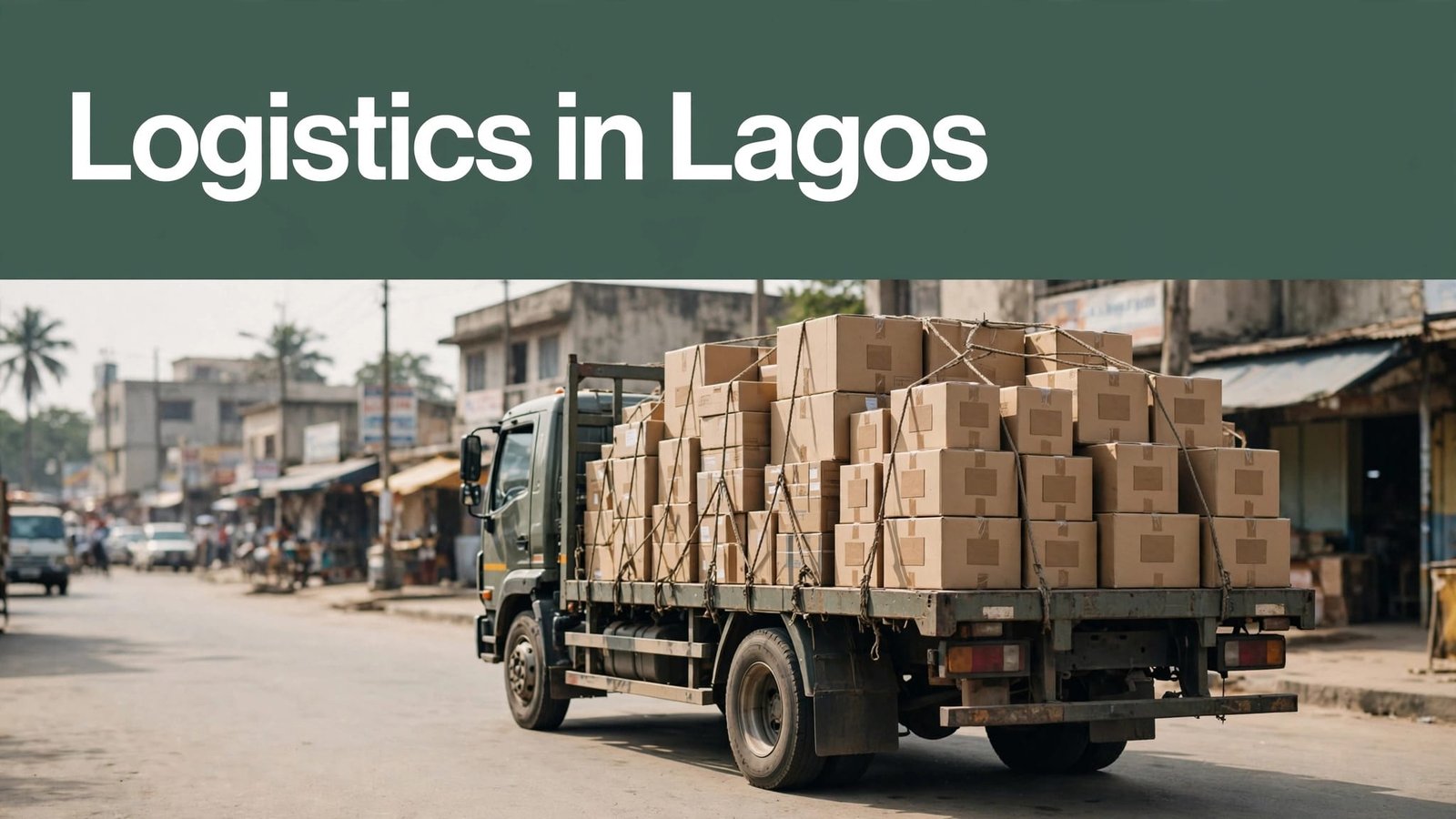
Road haulage is the workhorse. Flatbeds carry machinery and building materials, box trucks move cartons and packaged goods, and tankers handle fuel, oil, and chemicals. These operators run long-distance routes from Lagos to cities like Abuja, Kano, Port Harcourt, and Enugu. Pricing is usually quoted per trip based on cargo size, vehicle type, and route.
Sea and port freight serves importers and exporters moving goods through Apapa and Tin Can Island. These companies handle container clearing, port charges, and inland delivery after your goods leave the terminal.
Air cargo through Murtala Muhammed Airport suits urgent or high-value shipments. It’s the fastest and the most expensive option, so most businesses reserve it for items where delay costs more than the fare.
Warehousing and distribution covers the storage side. Some providers hold your goods in a Lagos warehouse and deliver to retailers or distributors in batches, which helps if you import in bulk but sell in small quantities.
One thing to hold onto: freight pricing is negotiable and route-based. Always get the quote in writing before your goods leave the loading point.
Leading Freight and Haulage Companies Serving Lagos
Lagos has no shortage of freight operators, but they don’t all do the same job. Some move truckloads of cement up north. Others clear containers at the ports or push urgent parcels onto a plane. Knowing the main names in each lane, and what they actually handle, helps you shortlist faster before you start asking for quotes.
Cargo and Haulage Providers for Bulk Freight
When your load is measured in tons, you need a haulage company with its own trucks. This is where names like FMN Golden Transport Company come in. It’s the logistics arm connected to Flour Mills of Nigeria, and it runs nationwide haulage for food products, agro commodities, industrial cargo, and building materials across cities like Abuja, Kano, Port Harcourt, and Enugu. They use box trucks, flatbeds, and tankers depending on the cargo.
Established interstate passenger operators also run parcel and logistics arms. GUO Transport, ABC Transport, and Peace Mass Transit all move goods alongside passengers, which works well for smaller commercial loads on active routes.
For full truckloads, pricing is quoted per trip, not per parcel. The quote depends on cargo size, vehicle type, and route. A Lagos to Kano haul costs more than a shorter run to Benin City, and tankers or specialized vehicles price differently from flatbeds. Bulk haulage can run from hundreds of thousands of naira upward per trip. Treat any figure you see online as a starting point only. Fuel prices and season shift these numbers, so get a current written quote from the operator before you commit.
Port and Air Cargo Options for Importers and Exporters
If your goods arrive by sea, you’ll deal with the ports at Apapa or Tin Can Island. Freight forwarders and clearing agents handle this side of the business. They process customs documentation, pay port charges on your behalf, and arrange inland delivery once your container leaves the terminal. A good agent turns a weeks-long clearing headache into a routine transaction.
Here’s the catch: not every agent is properly licensed. Before you hand over documents or money, confirm the agent’s registration and visit their physical office. An agent who only exists on WhatsApp is a risk you don’t need.
Air cargo through the cargo terminals at Murtala Muhammed Airport makes sense in three situations: the shipment is urgent, it’s fragile, or it’s high-value. It costs far more than road or sea, so most businesses reserve it for goods where delay costs more than the fare. Spare parts, medical supplies, and electronics are typical examples.
Whichever channel you choose, verify the company on its official page or office before paying anything. Routes, terminals, and service availability change without notice, and a quick confirmation call saves you from an expensive mistake.
How Much Freight Services in Lagos Cost
Nobody can hand you one fixed price for freight in Lagos, because one doesn’t exist. Haulage gets quoted per trip, based on cargo size, vehicle type, and route. Air cargo runs per kilogram. Port services add clearing and terminal charges on top. A Lagos to Ibadan truckload costs far less than the same truck heading to Kano, and tankers price differently from flatbeds. Bulk haulage typically starts in the hundreds of thousands of naira per trip, but treat any figure you see, including ours, as a planning range only. Fuel prices and season move these numbers constantly. The quote that matters is the one written for your load, on your day, from your pickup point.
What Pushes Your Final Freight Bill Up
The headline quote is rarely the whole bill. Several add-ons can creep in after your goods are already on the truck, when you have no room to argue.
- Fuel levies, which rise whenever pump prices move
- Loading and offloading fees, sometimes charged at both ends
- Waiting time, billed when drivers queue at ports or terminals for hours
- Packaging charges if the operator wraps or palletizes your goods
- Insurance or declared-value cover for fragile or expensive items
- Holiday surcharges around Christmas, Easter, and Sallah, when demand spikes and cargo space sells out fast
Urgency changes the fare more than almost anything else on this list. A same-day or express run carries a heavy premium over a flexible booking, because the operator may dispatch a dedicated vehicle just for you. If your deadline has breathing room, say so. Flexible delivery is often the cheapest discount available.
How to Get an Accurate Quote Before You Pay
A quote that lives on someone’s word of mouth isn’t a quote. It’s a starting bid. Work through this script, in order:
- Describe the item, its weight, and rough size.
- State the pickup area plus a landmark the driver will recognize.
- Give the destination, down to the terminal or address, not just the city.
- State your deadline. Same-day, next-day, or flexible.
- Mention your packaging, since some operators refuse poorly packed loads.
Then ask one final question: is this the total? Get it confirmed in writing, by message or receipt, that the quote covers pickup, loading, handling, and delivery. If fees only appear after your goods are loaded, you’ve lost all negotiating power.
How to Choose a Reliable Freight Company in Lagos
A familiar name is not the same as a reliable one. Plenty of companies have big signage and zero follow-through. A dependable freight operator shows its standards in small, checkable ways: a named office you can visit, a phone line that actually gets answered, clear pricing, and a proper waybill or consignment note for every load. Think of it as a chain. One weak link, a vague address or a number nobody picks up, breaks the whole delivery. Before you commit, line up two or three operators and compare them on those details, not on who sounds more confident on the phone.
Questions to Ask Before You Commit
Most freight disputes come down to something nobody clarified at booking. Ask these before any money moves:
- Where exactly is pickup, and where exactly is delivery? Insist on addresses or terminal names, not just “Lagos” and “Kano”.
- What items do you accept, and what are the packaging rules? Some operators refuse poorly packed loads or charge for wrapping.
- What happens if goods are damaged or lost? Get the insurance and liability terms stated plainly.
- Will I get tracking or proof of delivery? A waybill number both parties can follow is the minimum.
- What ID does the receiver need at pickup? Missing this causes delays at the destination.
- How do I pay? It should be the company’s official channel, always.
Then keep the receipt and waybill number until the receiver confirms collection. That slip of paper is your only proof if a dispute comes up later.
Red Flags That Should Stop a Payment
Pause before you pay if you notice any of these: the message names only “Lagos” with no pickup point, the account number is personal instead of the company’s name, a forwarded screenshot is offered as proof of booking, someone pressures you to pay before a “slot vanishes”, or fees appear only after your goods are collected.
That last one matters most. Once your load is on the truck, you have no leverage left. Confirm the total in writing while you still have the option to walk away.
Booking Freight from Lagos: Step-by-Step from Pickup to Drop-Off
Every freight booking follows the same chain: booking, packaging, pickup, transit, and collection. The details change by operator, but the questions stay the same. Lagos adds its own twists, mostly traffic and location confusion, so it pays to know the sequence before your goods move.
Choosing the Right Depot or Terminal for Your Load
Pickup and drop-off points vary by operator and by neighborhood. Some haulage firms load from industrial hubs like Apapa, Ikeja, or Oshodi. Others operate from depot areas spread across the mainland and island. The closest depot to your home is not automatically the right one; the depot that serves your operator and route is.
Before dispatch day, confirm three things in writing:
- The exact address, including the gate or loading bay, not just the area name
- The reporting time for your driver or loading crew
- The verified phone number of someone at that office
Matching the depot to your location cuts real cost. If your goods sit in Surulere and you load from Apapa, you pay for the transfer, and Apapa traffic can swallow hours. Ask early whether the operator serves a depot nearer your warehouse or store.
Treat the journey to the depot as its own trip. Build buffer time for congestion around the ports and the Oshodi axis, especially during rain or rush hour. A driver who misses the loading window can lose the day, and some operators charge waiting time for it.
One more habit worth keeping: send the receiver the depot name, address, and contact number before the truck leaves. Your delivery is only half done when the goods arrive; the collection leg matters just as much.
Freight for Small Businesses: Getting the Best Value from Lagos Logistics
If you run a small business in Lagos, your freight bill can quietly eat your margin. The cheapest headline rate is rarely the cheapest delivery. Fuel levies, waiting time, and handling charges stack up after your goods are already loaded, and by then you have no room to negotiate. What you actually need is predictability: a provider whose quoted price is the price you pay.
Before you sign with any operator, check four things:
- Coverage corridors. Some dispatchers only serve certain routes, like Ejigbo to Surulere or the Lagos Island corridor. Confirm your customers’ addresses fall inside them.
- Weight and size limits. Large market goods may need parcel or cargo service instead of passenger luggage or a bike.
- Tracking and proof of delivery. Ask for a waybill or tracking reference so both you and your buyer can follow the parcel.
- Liability terms. Know who pays if the load arrives damaged or doesn’t arrive at all.
It also pays to mix services. Use haulage for bulk stock, then lean on courier or bus parcel services for smaller weekly shipments. Matching the channel to the load keeps costs down without stretching your deadlines.
When a Bus Parcel Service Beats a Truck
Hiring a full truck for two cartons is like chartering a bus for one passenger. If your load is small and your destination sits on an active interstate route, operators like ABC Transport, GUO, and GIGM often move it cheaper and faster than a dedicated haulage firm, because the parcel rides a coach that leaves anyway.
Compare both options on three points before you decide: total price, arrival time, and how the operator handles damage claims. For heavier or fragile loads, a proper cargo provider still makes more sense. Match the vehicle to the load, then get the quote in writing.
Frequently Asked Questions
You’ve compared providers, costs, and booking steps. Here are the questions readers still ask before their goods leave Lagos, answered short and straight.
Can I book freight without visiting the company’s office?
Yes, but only through the operator’s official website or verified phone line. Book over the phone or online, then ask for a written quote and waybill number before payment. If a “staff member” insists on a personal bank account, walk away.
How far in advance should I book a truck?
For regular interstate routes, two to three days is usually enough. During festive periods like Christmas and Sallah, book a week or more ahead because cargo space sells out fast. Urgent loads cost more, so flexibility is your cheapest discount.
Who is responsible if my goods arrive damaged?
That depends on the liability terms you agreed to at booking, which is why you must get them in writing. Some operators carry insurance; others limit or refuse claims for poorly packed items. Ask the question before the truck loads, never after.
Do freight companies deliver to the receiver’s doorstep?
Many haulage firms deliver to a depot or terminal, not a street address. Doorstep delivery is often available for an extra fee, especially in city centers. Confirm the exact drop-off point and any final-mile charge before you pay.
Can I track my shipment while it’s on the road?
Formal freight operators issue a waybill or consignment note, and some offer tracking references. For smaller haulage firms, tracking may just mean a call to the driver or depot. Agree on how you’ll get updates before dispatch day.
What documents does the receiver need to collect the goods?
A valid ID and the waybill number are the standard requirements at most terminals. Share those details with your receiver before the truck leaves Lagos, so collection doesn’t stall at the other end.
Conclusion
Freight booking in Lagos comes down to one habit: confirm first, pay second. Match the provider to your load, get a written quote that covers every fee, and verify the company through its official office or phone line before money moves. Then keep your waybill and receipt until the receiver confirms collection.
Remember that prices and routes shift with fuel costs and season, so treat any figure, even a recent one, as a starting point. Call the operator and confirm current details for your exact load and route.
Compare two or three providers on the same questions, book through official channels, and the cheapest option with proper paperwork wins. That’s how you move goods out of Lagos without getting burned.
Leave a Reply