Food delivery logistics in Lagos means moving prepared meals, groceries, and restaurant orders from kitchens and markets to homes, offices, and events. Most of it happens through bike riders, van dispatch, and delivery apps.
Speed is the hard part. Lagos traffic, bridge crossings, and rain can turn a 30-minute run into a two-hour wait, and cold food doesn’t wait for anyone.
This guide is for restaurants, small food businesses, event planners, residents, and visitors who need meals delivered without stress. We’ll break down how it works, what it costs, and the checks that keep every order on time.
Key Takeaways
- Match the delivery method to the food: bike riders for single meals and small orders, vans for bulk or fragile items, apps for booked and tracked trips.
- Confirm the total fee in writing before dispatch; prices shift with distance, traffic, rain, and time of day.
- Build extra time into any promise, especially for Mainland-to-Island crossings during rush hour.
- Insist on packaging that holds heat and protects food in transit; a weak container ruins an on-time order.
- Book only through a provider’s official channel, and skip anyone asking for payment to a personal bank account.
How Food Delivery Logistics in Lagos Actually Works
Food delivery in Lagos looks simple from the outside. You order, food arrives. But behind every hot meal is a chain that either holds together or falls apart at one weak link. Understanding that chain helps you see why orders arrive late, cold, or not at all, and what you can do to prevent it.
The Delivery Chain: Kitchen to Doorstep
Every food delivery follows the same five steps, whether you order through an app or a phone call.
- Order receipt. The kitchen or vendor gets your order with the address, phone number, and any special instructions.
- Preparation and packaging. The food is cooked and packed. Good vendors use sealed containers that hold heat and prevent spills.
- Rider assignment. The platform, restaurant, or vendor assigns a rider and shares your address and landmark.
- Transit. The rider moves through Lagos traffic. This is where most delays happen, especially on Mainland-to-Island crossings.
- Handover. The rider calls you at arrival, hands over the food, and confirms delivery.
Proof of delivery matters here. Apps usually log the drop-off time automatically. Independent riders won’t unless you ask, so request a photo or confirmation message before you release the balance. Keep your own record until the meal is in your hands.
Delivery Apps vs Restaurant Riders vs Independent Dispatch
You have three ways to get food moved, and each trades something for something.
Apps give you the most structure. You book in the app, see the fare upfront, and follow the rider live on the map. That tracking costs more, and surge pricing bites hardest at lunch and dinner peaks.
In-house restaurant riders suit busy kitchens. They know the routes, handle multiple drops per trip, and cost the restaurant less per order. The trade-off is thinner tracking; you often get a phone call instead of a live map.
Independent dispatch riders, booked by phone or WhatsApp, offer flexibility and sometimes better rates. But nobody monitors them for you, so set your own checks. Confirm the fee before pickup, and insist on a photo or confirmation at drop-off before you pay the balance.
If a provider can’t offer any proof of delivery, treat that as a red flag.
Match the model to the stakes. A tracked app order is worth it for expensive or time-critical meals. For a regular lunch run within the same corridor, a trusted rider on WhatsApp does the job well.
Choosing the Right Food Delivery Service for Your Needs
Every food job is not the same job. A single jollof plate, a weekly grocery box, and a catering tray for 50 guests need different vehicles, different timing, and sometimes different providers. Get the match right and your delivery works. Get it wrong and you pay for speed you don’t get, or capacity the rider never had.
Use this rule of thumb: match the size of the load and the urgency of the food before you look at price.
Same-Day Meal Runs and Hot Food Handling
For hot meals, a dispatch bike is king. A motorcycle weaves through gridlock that traps a van for an hour, which is why nearly every restaurant and food app in Lagos runs on bikes. A single meal, a family pack, or two drinks and dessert all ride comfortably on a bike’s delivery box.
Timing is realistic if you plan around traffic. A run within the same corridor, say Yaba to Surulere, usually finishes within one to two hours. Cross from the Mainland to the Island and everything changes. Third Mainland Bridge and Eko Bridge traffic can stretch a 40-minute trip past two hours at peak windows, roughly 6:30 a.m. to 9:30 a.m. and 4:30 p.m. to 8 p.m.
So don’t promise a client a 12:30 p.m. lunch drop booked at noon from Ikeja. Ask the rider for their current window, then add a buffer. Same-day in Lagos means before the day ends; anything earlier is a bonus.
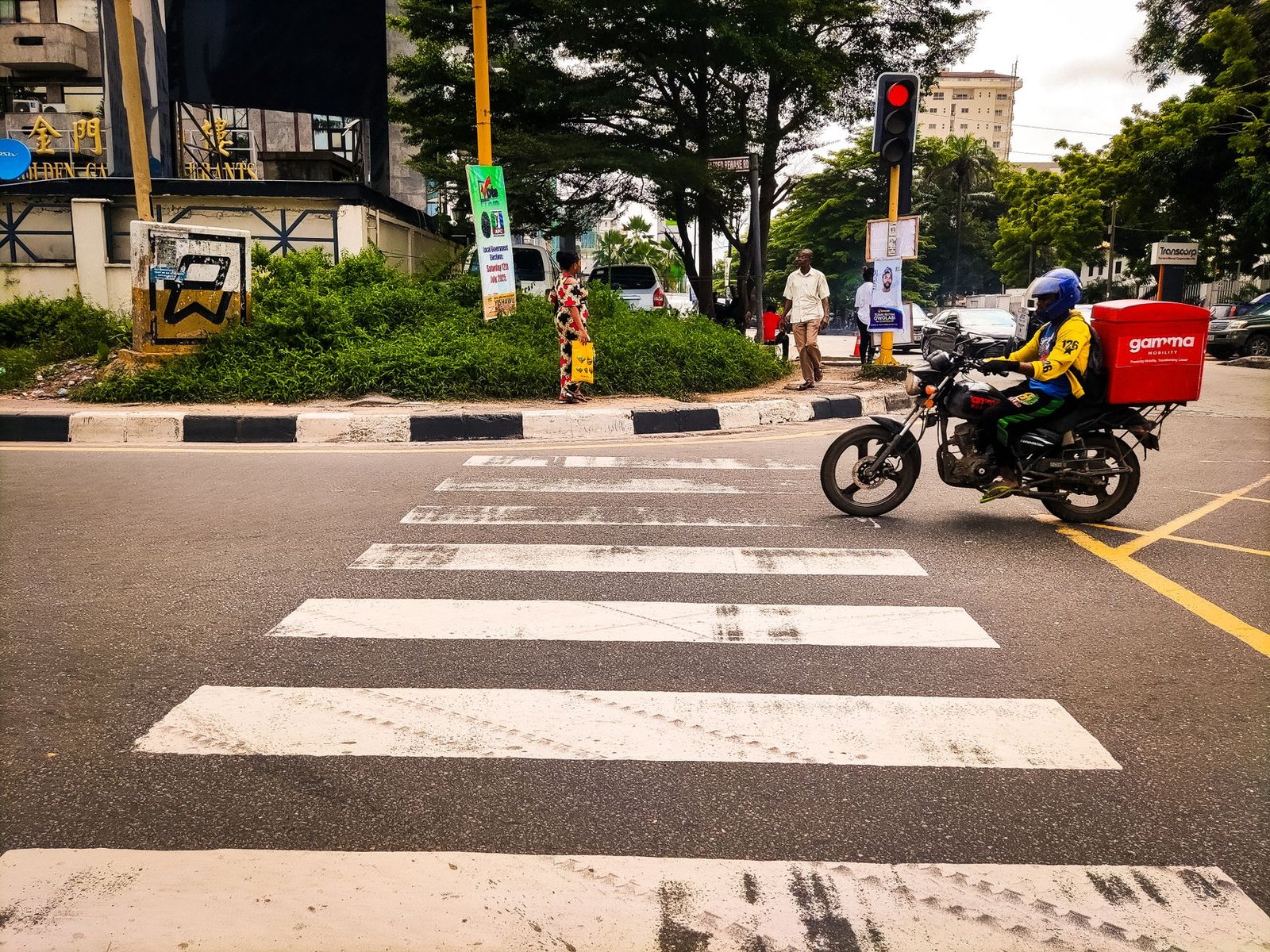
Photo by Olarotimi Awolaja
Groceries, Bulk Orders, and Event Catering Logistics
A bike has limits. Grocery boxes from the market, multiple orders to different addresses, and catering trays for events all exceed what a motorcycle box can carry. This is where vans and scheduled runs earn their keep.
- Grocery hauls. A weekly or monthly market order needs a van or a car dispatch, not a bike balancing bags on a tank.
- Multiple drops. If one trip covers several addresses, a van on a planned route beats three separate bike bookings on cost.
- Event catering. Chafing dishes, coolers, and drink crates need a vehicle with real capacity and a scheduled departure time, not an on-demand rider.
Before you book anything bulky, confirm one thing in writing: the vehicle type and its capacity. Some dispatchers send a bike for a van job, then cancel or add charges when the load doesn’t fit. Ask what vehicle arrives, how many items it takes, and whether the driver helps with loading.
For catering, book a day ahead when you can. Event loads need packing time, and a scheduled run gives the provider room to plan the route instead of improvising it in traffic.
If your load needs a van and the provider only offers bikes, that’s your answer. Keep looking.
Match the vehicle to the load and the clock to the traffic, and most food delivery problems in Lagos disappear before they start.
What Food Delivery in Lagos Costs (and Why Prices Change)
Here’s the honest answer first: there is no single fixed price for food delivery in Lagos. The same plate of food can cost ₦1,500 to deliver in one booking and double that an hour later. Every quote depends on your specific trip, and any figure you read online is a planning estimate, not a promise.
Treat it like negotiating a taxi fare at the curb. The number only becomes real when the provider confirms it for your order, your route, and your timing.
What Pushes Your Delivery Fee Up or Down
Five inputs drive almost every food delivery quote you’ll get.
- Distance. This leads the pricing almost everywhere. A Yaba to Surulere run sits at the low end; Ikeja to Lekki costs more.
- Weight and size. A single meal rides cheap. A family pack or grocery bag changes the vehicle, and the fee follows.
- Urgency. A “drop everything now” request costs more than a delivery scheduled for midday.
- Vehicle type. Bikes are cheapest. Vans and cars for bulk or fragile loads cost noticeably more.
- Time and weather. Riders quote higher during rush hour and rain, the same way ride-hailing fares spike at 5 p.m. on a Friday.
Watch the corridor too. Island to Mainland crossings cost more than runs within the same zone, because the rider eats the bridge traffic. An Ejigbo to Ikeja drop will usually undercut a Victoria Island to Ajah delivery every time.
Getting an Accurate Quote Before You Book
Ignore forwarded WhatsApp price lists and old blog figures. They expire fast, because rates move with fuel prices and demand.
Message the provider directly instead. State your pickup point, drop-off, and timing, then ask for the final quote in writing, even if it’s just a WhatsApp message. Ask whether tolls and waiting time are included, so nothing changes mid-trip.
One more timing note: festive periods break the rules. Around Christmas, Easter, and Sallah, demand spikes, riders get booked out, and fares climb. Book earlier than usual, get the total confirmed, and build extra time into any deadline you promise. A two-minute check beats a surprise charge at pickup every single time.
Common Mistakes That Delay or Ruin a Food Delivery
Most food deliveries that fail in Lagos fail for reasons you can fix before the rider moves. Not bad luck. Not bad riders. Skipped checks.
A soup that arrives spilled, an address that sends a rider cirring Ajah for an hour, a payment made on trust alone. Each one costs you a meal, a client, or money you won’t see again. Here’s what to sidestep.
Packaging, Addresses, and Timing Errors to Avoid
Start with the box. A thin carton or loose lid gives the rider an excuse the moment something spills, and hot food spills easily on a bike. Use sealed, leak-proof containers with lids that lock, and cushion anything fragile. Ask the vendor to double-bag soups and stews. If the provider offers wrapping, confirm the cost first.
Label every bag clearly. Write the receiver’s full name and phone number on the outside, because a rider who can’t reach anyone either waits (and charges waiting time) or leaves with the food.
Next, the address. “Lekki” is not an address, and neither is “Ikeja.” Similar street names repeat all over Lagos, so name the street, the landmark, and a time window before dispatch. If the drop-off is a gated estate or an office that closes at 5 p.m., say so early.
Then timing. Rain and rush hour stretch every trip, especially between May and October when flash flooding closes lanes around Ojota and Mile 2. Ask for the rider’s current window, add a buffer of an hour or more, and never promise an arrival you haven’t confirmed with the provider.
Safety Checks Before You Hand Over a Food Order
Most food delivery losses come from one skipped step: confirming who you’re paying before your money moves. Treat every booking offer as unverified until the provider itself confirms it.
Pause if you notice any of these:
- The message names only “Lagos” with no pickup point or drop-off street attached.
- Someone asks you to pay into a personal bank account instead of the business name.
- A forwarded screenshot is offered as proof of a confirmed booking.
- Pressure to pay immediately because a discount will “expire.”
Book only through the company’s website, verified app, or staffed office. Then keep your receipt or booking reference until the receiver confirms the food arrived, because that record is your only proof if a dispute comes up later.
One check saves both money and lunch. Do it before every handover.
Questions Readers Ask About Food Delivery Logistics in Lagos
You still have questions, and that’s fair. Food delivery in Lagos has quirks that don’t show up in the app screenshots. Here are the ones readers ask most, answered straight.
Do food delivery apps work in heavy Lagos traffic?
Yes, but expect slower arrival times than the app promises. Apps like Chowdeck and Glovo adjust estimates during peak hours, though a 45-minute quote can stretch past 90 minutes on bridge crossings or in rain. Book earlier than your hunger demands, and don’t chase a rider mid-trip; the map shows where they are, not how fast they’ll move.
Can I send food to someone else as a surprise?
You can, and apps make it easy since you pay upfront and the receiver gets a call. The risk is silence on the other end. If the receiver doesn’t pick up calls, the rider either waits or leaves, and you still pay. Share the receiver’s number, tell them to expect the call, and name a clear landmark.
What happens if my food arrives cold or damaged?
If you ordered through an app, report it immediately in the app or through support. Most platforms review complaints within a day and may refund or issue credit. With an independent rider or the restaurant’s own dispatch, your recourse is thinner, which is why sealed packaging and a photo at drop-off matter so much.
Is it cheaper to use the restaurant’s own rider?
Often, yes. Restaurant riders usually charge a flat fee per zone, while apps add platform charges and surge pricing at busy hours. The trade-off is tracking; you get a phone call instead of a live map. For a regular lunch run, the restaurant’s rider wins on price. For an expensive or time-critical order, the app’s structure is worth the extra naira.
Can riders deliver food to gated estates and offices?
They can, but access rules slow things down. Some estates require the rider to register at the gate or the receiver to come down and collect. Offices often close reception at 5 p.m. Tell the provider about the estate or office before dispatch, and give the receiver’s direct number so the rider isn’t stuck negotiating with security.
Should I tip my food delivery rider in Lagos?
There’s no fixed tipping culture, but riders appreciate it, especially in rain or heavy traffic. Cash on arrival is the norm. A small tip on a tough run also builds goodwill with a rider you’ll likely use again.
Conclusion
Food delivery in Lagos works when you confirm first, book second. Match the service to the load: bikes for single meals, vans for bulk orders and catering. Get the total fee in writing, seal the packaging properly, and share a full address with a reachable phone number.
Skip any provider who can’t offer proof of delivery, and never pay into a personal account. Keep your receipt until the food reaches the receiver.
Do those checks and food delivery becomes a dependable tool, whether you’re feeding a family in Surulere, serving customers across the city, or catering an event in Victoria Island. Lagos moves fast; your meals can keep up.
Leave a Reply