Lagos food tours are guided or self-guided tasting experiences that take you through dishes like jollof rice, suya, amala, pepper soup, and small chops across markets, street stalls, and upscale spots on the Island and Mainland.
This city is Nigeria’s food capital for a reason. You can eat smoky party jollof at a roadside joint in Yaba in the afternoon and sit down to a plated tasting menu in Victoria Island the same evening. The problem is knowing where to go, what a fair price looks like, and how to move between stops without losing half your day to traffic.
That’s exactly what this guide covers. Whether you’re a visitor, an expat, a business traveler with one free evening, or a resident looking to see your own city differently, you’ll find the tour types available, the dishes worth your appetite, what food tours in Lagos cost, how to pick a good operator, and how to handle transport and safety between stops.
Let’s start with what a food tour actually looks like on the ground.
Key Takeaways
- Lagos food tours cost anywhere from budget-friendly market walks on the Mainland to premium plated experiences on Victoria Island, so match the tour to your budget first.
- Must-try dishes include jollof rice, suya, amala, pepper soup, and small chops, spread across street stalls, markets, and upscale spots.
- Traffic can eat your tour time, so plan your route between stops with BRT, ride-hailing, or ferry options before you leave.
- Book only through verified operators, confirm the pickup point and total price, and keep your payment receipt until the tour ends.
- Carry light, use cash and card backups, and confirm whether your route covers the Island, Mainland, or both.
What Lagos Food Tours Are and Why They’re Worth Your Time
A Lagos food tour is a guided tasting experience where a local host walks you through several food stops in one session. Instead of guessing which stall serves safe, delicious suya, you follow someone who already knows. Tours typically run two to four hours and cover three to six stops, from street grills to markets to sit-down tastings.
You can also run a self-guided version, but a good guide changes the math. They know which kitchens are open, what a fair price looks like, and which dishes to order at each stop. That local access is the whole point.

Photo by Omotayo Kofoworola
What Makes a Guided Tour Worth It
Think of it like hiring a driver in an unfamiliar city. You could find your way alone, but you’d waste hours and take wrong turns. Food tours work the same way.
Here’s what a good host gives you:
- Safe street food choices. Guides know which stalls handle food properly and which ones to skip, which matters when your stomach is adjusting to new spices.
- Spots you won’t find alone. The best amala joint in Yaba doesn’t advertise. It survives on regulars and word of mouth.
- Cultural context. You learn why party jollof tastes smoky, how suya spice is blended, and what a dish means to the people who eat it daily.
- Bargaining help. In markets like Balogun or Mile 12, a local guide keeps pricing fair and conversation smooth.
The Common Tour Formats
Not every Lagos food tour looks the same, and knowing the formats helps you pick one that fits your schedule and appetite.
- Walking tours on Lagos Island. These cover the Brazilian quarter and its Afro-Brazilian food heritage, plus nearby street stalls. Expect lots of walking and short tasting stops.
- Market-to-table experiences. You shop for ingredients in a busy market first, then watch or taste dishes made from what you bought. It’s the most immersive format.
- Home dining and supper clubs. A host welcomes a small group into their home for a plated, multi-course Nigerian meal. More relaxed, more expensive, and great for travelers who want depth over distance.
If you only have one free evening, a supper club or a compact Island walk beats a full market crawl. If you want the full sensory overload, go market-to-table and come hungry.
Types of Lagos Food Tours: Which Experience Fits You
There is no single Lagos food tour. The format you choose shapes what you eat, how much you spend, and how your stomach feels by evening. Some tours put you elbow to elbow with suya grills on a busy street. Others seat you at a proper table with a plated menu. Here’s how the three main types break down, so you can match the experience to your appetite, budget, and comfort level. Operators and itineraries change often, so confirm what’s currently on offer before you book anything.
Street Food and Market Tours
These are the rawest, most Lagos versions of a food tour. You walk through markets like Balogun or Mile 12 and stop at street stalls along the way, tasting as you go. Expect suya off the grill, bole (roasted plantain) with groundnut sauce, akara fresh from the oil, and puff-puff from vendors who sell out by midday.
A guide matters most on this format. First-timers rarely know which stalls handle food well or what a fair price looks like, and a wrong pick shows up later that night. Your host filters that risk for you. Bring cash, small notes, and an appetite.
Local Home Dining and Chef-Led Experiences
If street chaos isn’t your thing, a supper club or private chef experience might be the better fit. A host welcomes a small group into a home, and you eat family-style dishes like egusi with pounded yam, pepper soup, and jollof made the way a family actually makes it, not the restaurant version.
These Lagos food tours are slower, more personal, and usually pricier. You trade volume for depth and a real conversation about the food.
Premium and Fusion Tasting Experiences
Victoria Island and Ikoyi offer the polished end of the spectrum: restaurant crawls and modern Nigerian tasting menus in air-conditioned comfort. Think plated courses, cocktail pairings, and dishes that remix tradition with fine-dining technique.
This format suits business travelers and luxury visitors who want Nigerian food without heat, crowds, or market bargaining. Dress smart, book ahead, and expect the highest price tag of the three.
The Best Dishes You’ll Taste on Lagos Food Tours
Every Lagos food tour is a different menu, but a core set of dishes shows up again and again. Know them before you go and each stop makes more sense. You’ll also know which ones to ask for if your guide gives you a choice.
The Heavy Hitters
Jollof rice is the one you already know, or think you do. Lagos versions lean smoky, cooked over fire until the bottom of the pot catches slightly. And yes, the Lagos versus other cities jollof debate is real, playful, and never settled. Try it at a street joint or a party-style caterer and judge for yourself.
Suya is thin slices of beef dusted with yaji spice, grilled over open coals. It arrives wrapped in paper with raw onion and extra pepper. Street grills in places like Allen Avenue or Mile 12 do it best at night.
Amala and ewedu is pure Lagos Mainland. The dark yam-flour swallow comes with a slimy, savory ewedu soup, usually plus gbegiri (bean soup) and stew. Traditional amala spots in Yaba and Ketu rarely advertise.
Asun is goat meat tossed in fiery pepper with fried onions. It’s a party dish, but street grills sell it daily.
Efo riro, a rich spinach and pepper stew, pairs with rice or swallows. Pepper soup, brothy and sharp, is the go-to when you want something light but intense. Ask about spice levels before you order; “mild” here is still hot.
Small Plates and Drinks
Moi moi (steamed bean pudding) and small chops (puff-puff, samosas, spring rolls, gizdodo) cover the snack end. Puff-puff vendors often sell out by midday, so hit them early.
For drinks, try zobo, a tart hibiscus infusion served chilled, and palm wine, fresh and lightly fizzy when it’s good.
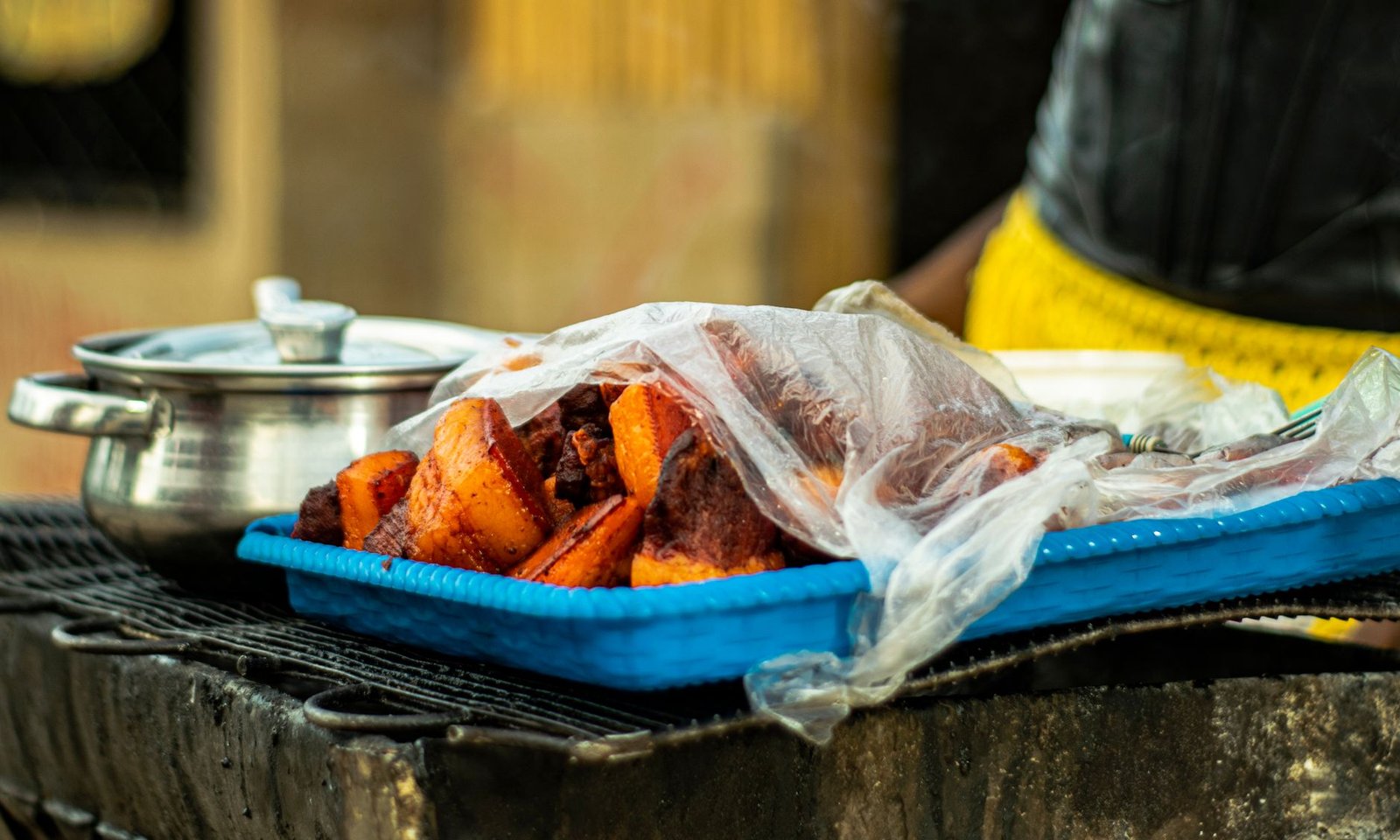
Photo by Nasiru othman
One warning: pace yourself. Tours stop every 30 to 45 minutes, and Lagos portions don’t shrink for tourists. Eat small at each stop so you can finish the circuit.
How Much Lagos Food Tours Cost and What’s Included
There’s no fixed price for a Lagos food tour, because no two tours feed you the same way. A street-and-market crawl costs far less than a plated tasting menu in Ikoyi, and group size, duration, and vehicle support all move the number. Treat any figure you see online as a planning estimate, then confirm the real total with the operator before you pay.
What the Price Usually Covers
Most guided tours bundle several things into one fee. Before comparing prices, ask exactly what’s inside:
- Tastings at every stop, usually three to six dishes or portions across the route.
- A local guide who handles ordering, pricing, and food safety calls.
- Bottled water on some tours, since pepper adds up fast.
- Market entry or vendor fees where they apply.
- Transport between stops on a few premium tours, though most walking tours leave you on foot.
The cheaper end of the market tends to cover food and guidance only. Premium experiences wrap in private vehicles, drinks, and reserved seating.
Extras to Budget For
The tour fee is one line item, not the whole day. Set money aside for drinks beyond what’s provided, tips for your guide and vendors, ride-hailing trips to the meeting point and back, and any extra portions you order because something tasted too good to share. Cash matters here. Many street vendors don’t take cards, so carry small notes even when the tour itself was booked online.
Ask the operator one question before paying: what does the total actually include? A low advertised price that skips drinks, tips, and transport can end up costing more than a higher all-in fee.
Fares and tour prices change often, so plan your route and transport budget alongside the ticket. Our guide to Lagos transportation costs and planning helps you price the full journey, not just the first fare.
How to Choose the Right Tour and Get Around Lagos Safely
A good Lagos food tour starts before you eat anything. It starts with the questions you ask and the way you plan to move through the city. Lagos is big, busy, and split between the Island and Mainland, so a little planning protects both your money and your evening.
Questions to Ask Before You Book
Treat booking like checking a lock before you leave the house. Cheap shortcuts cost more later. Before you pay anyone, confirm these details:
- The exact meeting point. A tour that says “Lagos Island” is not a location. Ask for the street, landmark, and start time.
- Group size. A group of 20 moves slowly and hears less. Six to ten people is a sweet spot for street tours.
- Dietary accommodations. Say plainly if you need halal food, vegetarian options, or low spice. Lagos “mild” is still hot for most visitors, so state your tolerance honestly.
- Cancellation terms. Traffic, rain, and illness happen. Know the refund or reschedule policy before you commit.
- Verification. Book through the operator’s official page, a staffed office, or a platform that screens hosts.
Never send money to a personal bank account or WhatsApp handle you cannot verify. If the booking channel is only a phone number, treat it as a warning, not a bargain.
Keep your receipt and booking reference until the tour ends. Small habit, big protection.
Getting Between Food Stops: Traffic, Timing, and Transport
Lagos traffic will eat your tour if you let it. A Friday evening crossing from the Mainland to Victoria Island can double a trip that takes 20 minutes at noon. So plan movement like part of the menu.
A few ground rules help. Use ride-hailing (Bolt, Uber, inDrive) for door-to-door stops, especially with luggage or at night. On major corridors like Ikorodu Road toward CMS, the BRT moves faster than regular traffic and uses fixed fares with a Cowry Card. If your start and end points sit near a Blue Line station, the rail between Marina and Mile 2 skips road traffic entirely.
Timing matters as much as mode. Tours between 10 a.m. and 3 p.m. dodge the worst rush, and ferry routes can beat a gridlocked bridge crossing. Choose tours that bundle transport when you can; it removes the hardest part of the day.
For route-level detail on any of these options, LagosMove’s full guide to getting around Lagos covers BRT corridors, fares, and terminals. Check it on travel day, because routes and fares change more often than most people expect.
Practical Tips for a Safe, Enjoyable Tasting Day
The tour is booked. Now the day itself needs a plan. Lagos heat, pepper, crowds, and cash-only stalls can turn a fun crawl into a rough afternoon if you walk in unprepared. These habits keep you comfortable, safe, and hungry enough for stop number five.
Come Hungry, Eat Light Before
Don’t fill up before the tour. Eat a small, familiar meal two to three hours before your start time, then stop. Tours pace themselves, but Lagos portions don’t, and the stall you’re most excited about might be stop four. Skip heavy, oily, or unfamiliar food that morning so your stomach can handle spice, oil, and heat throughout the day.
Carry Small Cash and a Backup Card
Most street vendors and market stalls in Lagos take cash only, and they prefer small notes. A 1,000 naira note buys more goodwill than a single large bill nobody can change. Carry a mix of small denominations, keep your backup card at your hotel or in a separate pocket, and avoid counting cash in the open. Confirm with your operator which expenses the tour fee already covers, then budget for drinks, tips, and extra portions on top.
Watch Hygiene Cues at Every Stall
A little observation protects your stomach better than luck. Before eating anywhere, check a few simple things:
- Clean cooking surfaces and fresh oil. A busy stall turning food fast is usually a safer bet than an idle one.
- Where the crowd is. High turnover means ingredients don’t sit around.
- How the vendor handles money and food. Bare hands on both is a signal to walk on.
- Covered drinks and sealed water. Only drink bottled or sealed water; skip ice you can’t vouch for.
Trust your guide’s picks, and trust your own eyes too.
Beat the Heat, Crowds, and Lost Items
Lagos heat is real, and so is the crush at markets like Balogun. Carry water and sip it often, wear light breathable clothing, and bring a hat. Keep your phone and wallet in a zipped front pocket or a small crossbody bag you keep in front of you, not in a back pocket. In packed markets, move with your group and agree on a regroup spot in case anyone gets separated. Secure your receipt and booking reference on your phone, with an offline copy, because mobile data drops at the worst moments.
Confirm Your Meeting Point the Right Way
A tour that starts at “Lagos Island” hasn’t told you anything. Ask the operator for a specific landmark, like a known building, a named street junction, or a recognizable gate, and match it against a map before you leave home. Reconfirm the start time and exact gate on the morning of the tour. A driver or guide waiting at the wrong entrance is the most common and most avoidable way to lose your first two stops.
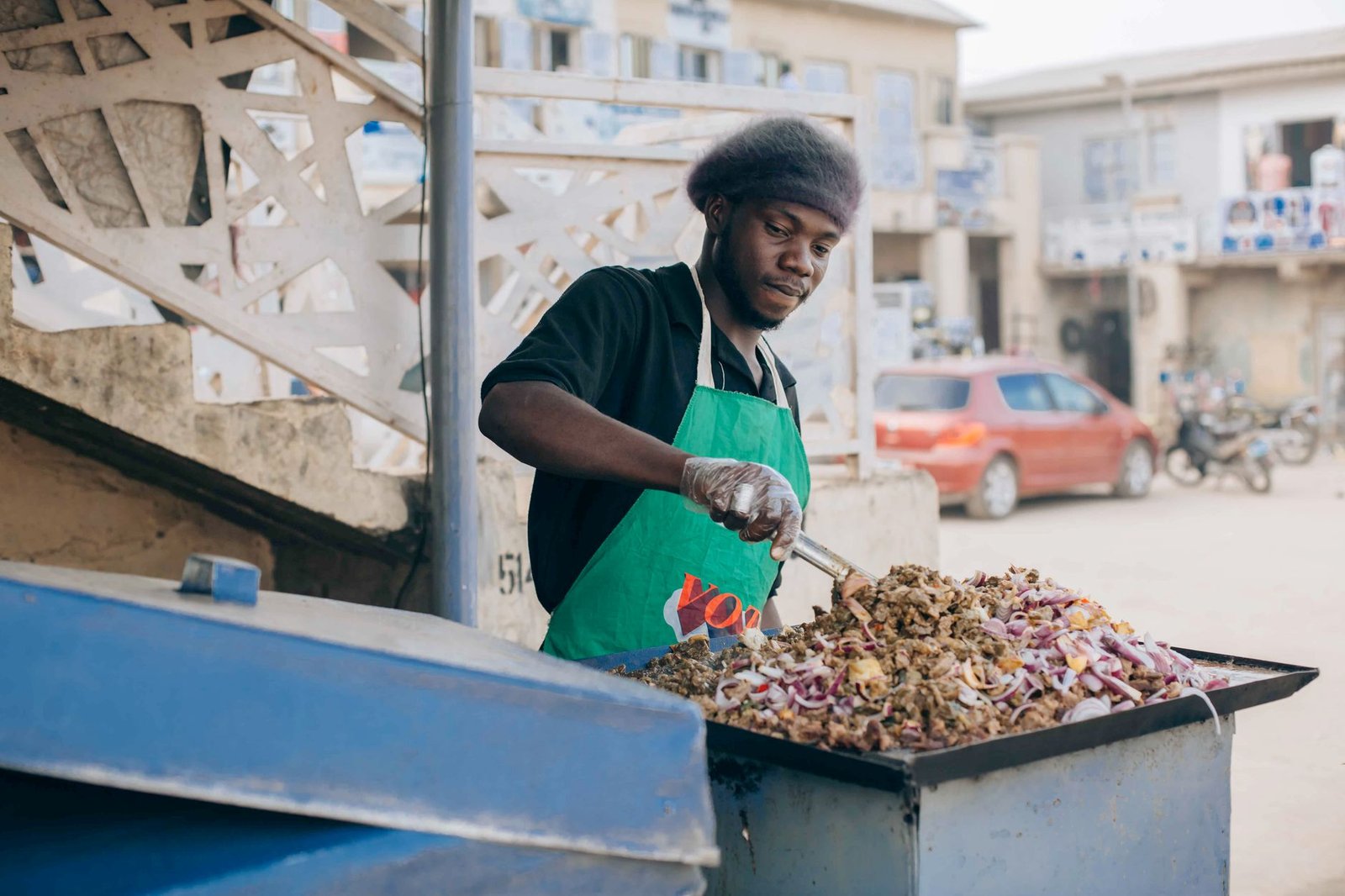
Photo by Jboy Designer
One last habit: share your route and expected return time with someone you trust. It takes seconds, and it covers you if anything shifts during the day.
Frequently Asked Questions
You’ve got the dishes, prices, and planning basics. Here are the questions readers still ask before booking a Lagos food tour, answered straight.
Are Lagos food tours suitable for first-time visitors to Nigeria?
Yes, and they’re often the easiest way to start. A guide handles ordering, pricing, and hygiene calls, so you taste confidently instead of guessing. Just state your spice tolerance plainly when you book.
Can I join a food tour if I have dietary restrictions?
Most operators can adjust for vegetarian, halal, or low-spice needs, but only if you say so in advance. Confirm at booking, not on the day. Bean-based dishes like moi moi and moin-moin spreads give vegetarians solid options across most routes.
Do food tours run every day of the week?
Not always. Many supper clubs and market tours run on selected days, and some stalls close on Sundays or public holidays. Ask the operator for their live schedule before you fix your date.
What should I wear on a Lagos food tour?
Light, breathable clothing and comfortable closed shoes. Markets like Balogun are crowded and uneven underfoot, and you’ll be walking between stops in serious heat. A hat and sunglasses help more than people expect.
Is it safe to eat street food in Lagos?
It is when you pick busy stalls with fast turnover, fresh oil, and clean handling. That’s the main reason a guided tour pays for itself; your guide already knows which grills meet that standard. Drink only sealed bottled water.
How far in advance should I book a food tour?
Book at least a few days ahead for weekend tours and supper clubs, which fill fast and seat small groups. Street tours may allow same-day booking by phone, but always confirm the meeting point through the operator’s official channel. For getting to your start point, check our guide to getting around Lagos and leave buffer time for traffic.
Conclusion
Lagos food tours turn a huge, confusing city into an edible map. The strongest takeaway from this guide: match the tour to your comfort level. Street crawls reward the adventurous, supper clubs reward the curious, and premium tastings reward the time-poor.
Whatever format you pick, confirm the meeting point, total price, and cancellation terms with the operator directly before you pay. Then plan your transport like part of the tour, because traffic decides how much of Lagos you actually taste.
For the roads between stops, our guides to getting around Lagos and Lagos bus booking cover the fares, terminals, and timing details worth checking on travel day.



Leave a Reply