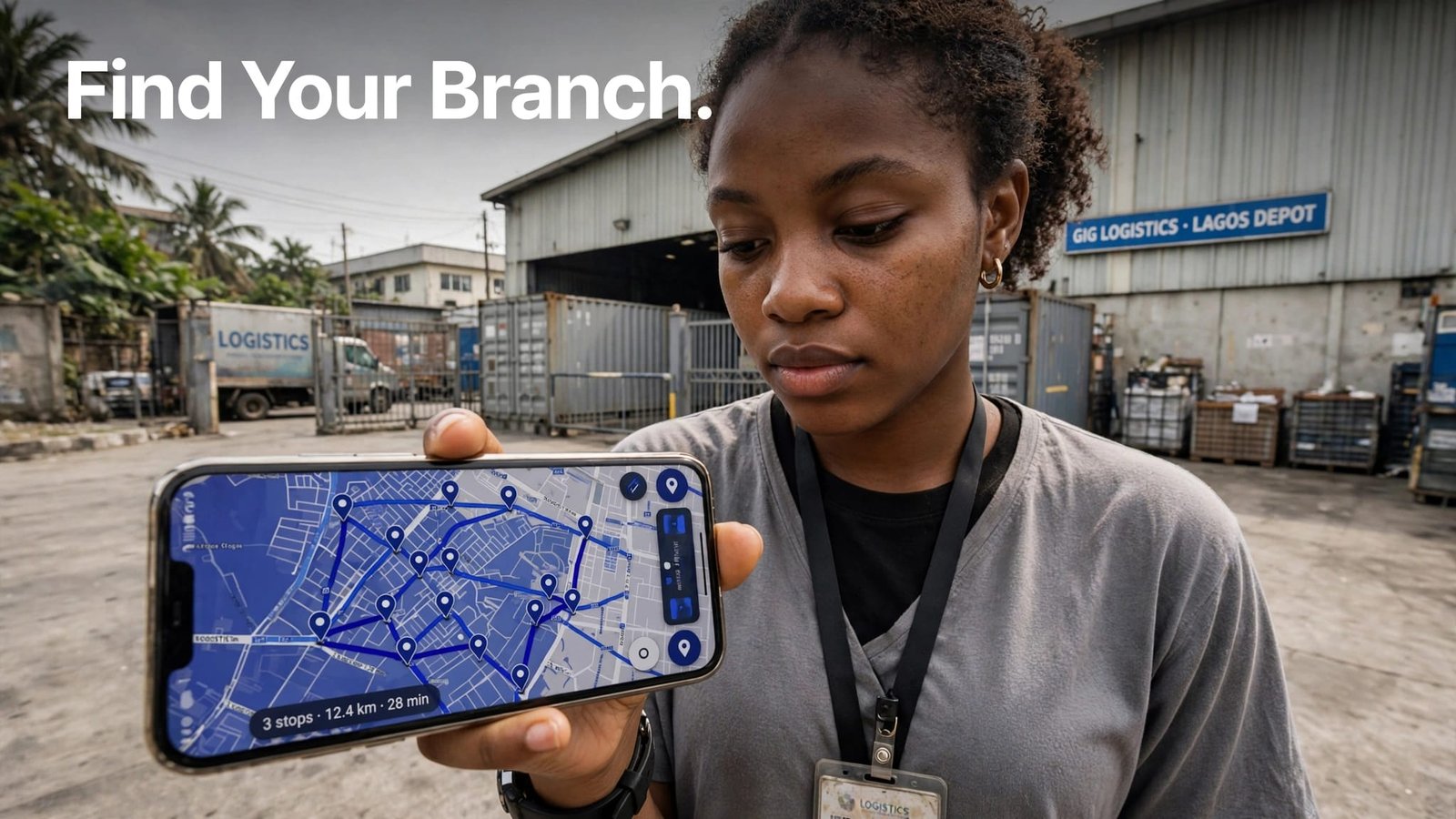
Gig logistics can cut delivery costs for Lagos SMEs in five practical ways: drop your in-house rider overhead by booking couriers only when orders arrive, switch to pay-per-delivery pricing so costs scale with actual volume, use app-based booking to compare rates before committing, deploy last-mile riders into the neighbourhoods that standard couriers struggle to reach, and verify every provider through a trusted directory before your first booking. These are not theoretical adjustments; they are structural changes to how you handle fulfilment.
Delivery is frequently a significant hidden cost for market traders and small business owners across Lagos. A fixed logistics arrangement, whether a salaried rider or a standing courier retainer, bleeds cash whether you ship forty parcels or four. On-demand courier models match your spending directly to your actual order volume, which is a fundamentally different financial position.
That model already operates across Lagos, with providers ranging from established companies like GIG Logistics to app-dispatched crowdshipping networks. The challenge for most SMEs is not that options are scarce; it is that vetting those options takes time. That is where Lagosmove becomes useful: our transport and logistics directory lists verified providers with direct contact details, so you can compare and confirm before the next shipment goes out.
Key takeaways
- On-demand booking saves money:Gig logistics makes financial sense below roughly 100 to 150 deliveries per month, after which a dedicated rider arrangement may become more economical.
- Tier selection protects margins:Routing every order to same-day or express delivery quietly erodes margins; match the tier to the order’s urgency and value.
- Zone pricing is real:Lagos corridors like Apapa, Oshodi, and Third Mainland Bridge crossings carry surcharges that compound costs if ignored at the booking stage.
- Last-mile riders fill the gap:For interstate shipments, a courier network handles the long leg while an independent last-mile rider handles the neighbourhood drop.
- Verify before you book:Unregistered riders and impersonation scams are documented risks; confirm every provider’s contact details and physical address through a reliable source.
- Lagosmove lists verified providers:Our directory and WhatsApp community give you direct access to courier contacts and real-time pricing before market rates shift.
What is gig logistics?
Gig logistics refers to on-demand delivery services built on independent, app-dispatched couriers and riders rather than a managed in-house fleet. Instead of employing full-time delivery staff, a business books couriers per job, paying only for the trips it actually needs. In Lagos, gig logistics spans everything from motorcycle dispatch platforms like GIGGo to crowdshipping networks where verified independent carriers bid on posted jobs. The model suits SMEs precisely because costs move in step with order volume rather than running as a fixed monthly overhead.
1. Drop your fleet overhead by booking gig couriers only when you need them
What on-demand courier booking actually means for a Lagos small business
On-demand logistics, as it operates in Lagos, means booking independent riders and app-dispatched couriers per job rather than employing full-time delivery staff. A business in Balogun Market or a Yaba e-commerce seller that keeps a dedicated rider on salary faces a fixed monthly cost, salary, fuel, phone data, and motorcycle maintenance, regardless of order volume.
Working from published salary guides and typical fuel and maintenance estimates for Lagos, the all-in monthly cost of a dedicated delivery rider runs roughly ₦100,000 to ₦180,000 once those components are combined. At that baseline, the rider needs to be handling enough deliveries consistently to justify the spend. For a business with irregular order patterns or seasonal peaks, that figure represents a structural leak in the budget.
The break-even point every Lagos seller should know
Gig couriers booked per trip through platforms or verified dispatch services offer a direct cost comparison. For intra-city small parcels weighing up to 2 kg, GIGL’s published rates sit at roughly ₦3,000 to ₦5,000 per delivery. At negotiated business rates, some platforms price outsourced dispatch lower than this for regular volumes, making the comparison even more favourable at low order frequencies.
As an illustrative rule of thumb: if you run the arithmetic at those per-delivery rates, gig booking costs begin approaching the all-in monthly cost of a dedicated rider somewhere around 100 to 150 deliveries per month. Below that threshold, on-demand booking is almost always cheaper and carries none of the fixed-cost risk. Above it, a dedicated arrangement often becomes more economical, particularly when you negotiate rates. The key is knowing which side of that line your business currently sits on, and checking the answer again each quarter as your volume changes.
2. How pay-per-delivery pricing actually protects your margins
Understanding what drives the price of each delivery
Pay-per-delivery pricing is not a flat fee. It responds to parcel weight and dimensions, delivery zone, service tier, and whether the recipient collects at a pickup point or needs a doorstep drop. Understanding these variables lets you structure your delivery policy to protect the margins your product pricing already worked hard to build.
GIGL’s published rates illustrate this clearly. Interstate small parcels weighing around 1 to 2 kg run from roughly ₦6,000 to ₦11,000 depending on route, with a Lagos-to-Abuja shipment at 1 kg listed at around ₦6,500 and Lagos-to-Kano running higher at ₦7,000 to ₦11,000. Terminal pickup is consistently cheaper than home delivery; one published example adds roughly ₦700 for doorstep delivery. These are not fixed tariffs, so confirming the rate through the provider’s quote tool before booking is always the right move.
Choosing the right gig logistics service tier for each order type
The three main service tiers each serve a different business purpose. Matching the right tier to each order type is one of the most direct ways to reduce fulfilment spend without changing anything else about your operations.
| Service tier | Best suited for | Typical speed | Indicative cost range |
| Same-day delivery | High-value or urgent Lagos orders | Same day (Lagos, Abuja, Port Harcourt) | Quote-based premium over standard |
| GoFaster express | Time-sensitive interstate B2B shipments | 24 to 48 hours on eligible routes | ₦6,000 to ₦11,000 for small parcels |
| Standard domestic | Bulk or lower-margin goods | 2 to 5 business days | ₦3,000 to ₦5,000 intra-city; ₦6,000+ interstate |
| Terminal pickup | Any order where the customer can collect | Matches the tier booked | Roughly ₦700 cheaper than home delivery per published example |
An SME that defaults every order to the fastest tier is quietly eroding the margins its pricing was built to protect. A simple internal policy, matching tier selection to order value and urgency, costs nothing to implement and consistently reduces fulfilment spend on orders where speed was never the customer’s actual priority.
3. How app-based booking helps you avoid expensive Lagos surprises
Comparing rates before you commit
App-based courier platforms let you enter parcel details, pickup location, and destination, then receive pricing and estimated delivery times before you confirm anything. This is a structural advantage over calling a single provider and accepting whatever rate they quote on the day. Real-time comparison is particularly valuable in Lagos, where route demand, fuel costs, and traffic conditions cause rates to shift across the week.
For same-day Lagos parcels, platforms including Kwik Delivery, Gokada, Peng Logistics, GoChacha, and GIGGo all accept bookings and provide upfront pricing. The practical approach is to enter the job details across two or three platforms, compare the outputs, then book. The whole process takes a few minutes and routinely surfaces price differences worth noting before you commit.
Routing around the corridors that inflate delivery costs
Lagos’s most congested corridors directly affect what you pay per delivery. Deliveries into Apapa and the Tin Can axis can face delays of 60 to 80 minutes in heavy conditions, and providers factor that into minimum fares and waiting-time charges. Based on published route and pricing data for Lagos logistics, Third Mainland Bridge crossings during peak hours carry a pricing premium of 30 to 50 per cent on mainland-to-Island trips, and Oshodi compounds costs further when delivery routes cross it at peak periods.
SMEs that book with this awareness make better decisions at the order-entry stage. Scheduling early-morning pickups, avoiding Friday Island deliveries, and using hub-to-hub drop-off rather than home delivery on congested corridors reduce both the fare and the risk of a failed first-attempt delivery. A failed delivery means a second attempt, which means a second charge.
4. What crowdshipping and last-mile riders add to your gig logistics mix
Why distributed delivery capacity suits Lagos market traders
Crowdshipping uses individuals and independent riders who already have spare transport capacity to carry parcels alongside their existing routes, reducing cost by sharing that capacity rather than booking a dedicated trip. For Lagos market traders, the model has a natural fit. A Computer Village seller shipping components to a buyer in Ikeja, or a Tejuosho fabric trader sending orders to Surulere, is frequently shipping on a route that dozens of riders are already travelling.
Platforms operating this model in Lagos include Carilo, which runs a bidding system where verified carriers compete for jobs posted by senders, and Sprint Africa, which uses a relay network with handover photographs and live tracking. Kwik Delivery and Dellyman apply a broader crowdsourced approach across Lagos and other Nigerian cities. The key distinction between crowdshipping and conventional courier dispatch is that crowdshipping draws on distributed independent capacity rather than a managed fleet, and that is where the cost advantage originates.
Using last-mile riders to complete the delivery properly
Last-mile delivery is the final leg from a hub or sorting point to the customer’s address, and it is consistently where deliveries fail. For Lagos SMEs using providers like GIGL, which covers more than 18 Nigerian states, the courier network handles the long interstate leg while an independent last-mile rider takes the parcel from the nearest experience centre to the recipient’s door.
Coordinating these two legs properly requires matching the waybill handover and notifying the recipient when the parcel reaches the local hub. GIGL’s tracking system, accessible via waybill number through the GIGGo app or the online portal, shows checkpoint updates so both sender and recipient know when to expect the final delivery attempt. Getting this coordination right prevents that handover problem: a recipient who was not expecting the knock and cannot be reached for a rescheduled drop.
5. How to find a gig courier in Lagos that won’t lose your parcel
Red flags that cost Lagos SMEs money and goods
The risks in Lagos’s courier market are specific and avoidable. Providers without a verifiable physical address or published contact number are the first warning sign. Riders operating under borrowed brand names, without insurance or declared-value coverage, represent a second category of risk. GIG Logistics has issued direct public warnings that any service claiming to release or track a shipment for a fee is a scam; tracking a GIGL shipment is free, and suspicious requests should be reported to info@giglogistics.com or +234 813 985 1120.
Even well-known brands get impersonated in Lagos’s courier market, so the verification step applies even when the provider’s name is familiar. Checking that the contact number, office address, and service description match what the provider officially publishes takes a few minutes and protects both your business and the customers waiting on their orders. Skipping that step to save time is a false economy.
Using Lagosmove to compare verified providers before you book
This is where our transport and logistics directory becomes a practical tool. It lists courier and logistics providers working in Lagos, with their contact details and route information, so you can compare options before you book.
Our WhatsApp community carries real-time delivery price updates, so you hear about a rate change before it reaches a standard quote form.
The bottom line: deliberate use is what makes gig logistics work
On-demand courier services do not automatically cut delivery costs for Lagos SMEs. They cut costs when you apply them deliberately: choosing the right service tier for each order type, routing around Lagos’s high-cost corridors, coordinating the last-mile leg properly, and confirming that every provider you book is genuinely verified before a single parcel leaves your hands.
These five moves are generally low-cost to implement, but each does require a change in how you make booking decisions. Matching tier selection to order urgency is an internal policy question. Running app-based comparisons before you confirm is a scheduling habit. Building corridor awareness into your booking process takes a few weeks of conscious practice. Verifying providers through a directory is a single step added to every new supplier check. None of these require you to change your business model, they require you to change how you make a booking decision. Adopt these gig logistics tactics and track whether delivery spend falls as your volume stays steady.
If you sell prepared food rather than parcels, the cost base changes. Our breakdown of food delivery costs and logistics in Lagos covers platform commission, rider pay and the routes that add time to every order.
Browse the Lagosmove transport and logistics directory to compare courier and gig logistics providers active in Lagos, join the WhatsApp community for live pricing updates, and start comparing options before your next shipment goes out.
Frequently Asked Questions
Will using Lagosmove’s directory stop courier impersonation and scams for our shipments?
Using Lagosmove’s directory reduces the risk by giving you verified contact details and route information for providers. You should still confirm numbers and addresses match what a provider officially publishes and report any suspicious fee-for-tracking claims, GIG Logistics warns such requests are scams and provides an email and phone number for reports.
How do we decide which service tier to pick for each order without overcomplicating operations?
Match the tier to the order’s urgency and value so high-value or urgent orders use same-day or express, and bulk or low-margin goods use standard or terminal pickup. A simple internal policy that maps order types to the three main tiers protects margins without needing complex rules.
Will comparing prices across apps take a lot of time for our team?
No; the practical approach takes a few minutes, enter job details into two or three platforms, compare outputs, then book. That short habit routinely surfaces worthwhile price differences and avoids paying inflated fares on congested Lagos corridors.