There is no single best shipping company from china to nigeria for every importer. The right choice depends on three things: your load size, budget, and deadline. A 40-foot container has different needs from a carton of phone accessories, and shipping methods vary in price and transit time.
You have three main routes. Sea freight from China to Nigeria moves through Apapa, Tin Can Island, or Lekki Deep Sea Port, with cargo handled at Lagos port. Air freight from China to Nigeria clears through Murtala Muhammed International Airport. A freight forwarder can consolidate cargo for door to door shipping, a practical option for small businesses and e-commerce sellers.
This guide is for Nigerian importers, small business owners, online retailers, and anyone ordering goods from China. Most shipping losses on this route come from skipped checks, wrong HS codes, and unlicensed agents, not bad luck.
By the end, you’ll know the top companies for each channel, what drives your costs, how the process works, and how to avoid mistakes that trap containers at the port.
Key Takeaways
- Lagos port options include Apapa, Tin Can Island, and Lekki Deep Sea Port; air cargo offers shorter transit time, while consolidated door-to-door shipping can suit smaller budgets.
- Finding the best shipping company from china to nigeria depends on your cargo; no single operator wins every shipment.
- Shipping costs and shipping rates vary with chargeable weight, container size, HS code duty rates, and seasonal demand, so get a written quote before paying anything.
- Wrong HS codes can delay customs clearance, while unlicensed agents may leave containers at the port and add daily demurrage charges.
- Confirm your forwarder holds CRFFN registration and Nigeria Customs licensing, pay through official company accounts only, and keep your bill of lading until goods are released.
How Shipping from China to Nigeria Actually Works
Goods from China reach Nigeria by sea or air. Most routes end in Lagos, either at a terminal serving Lagos port or at Murtala Muhammed International Airport. Once goods land, customs clearance often determines how quickly you receive them, so understand your options before paying a provider.
Understanding the core mechanics of international transport helps prevent costly delays.
Sea Freight: Containers and Consolidated Cargo
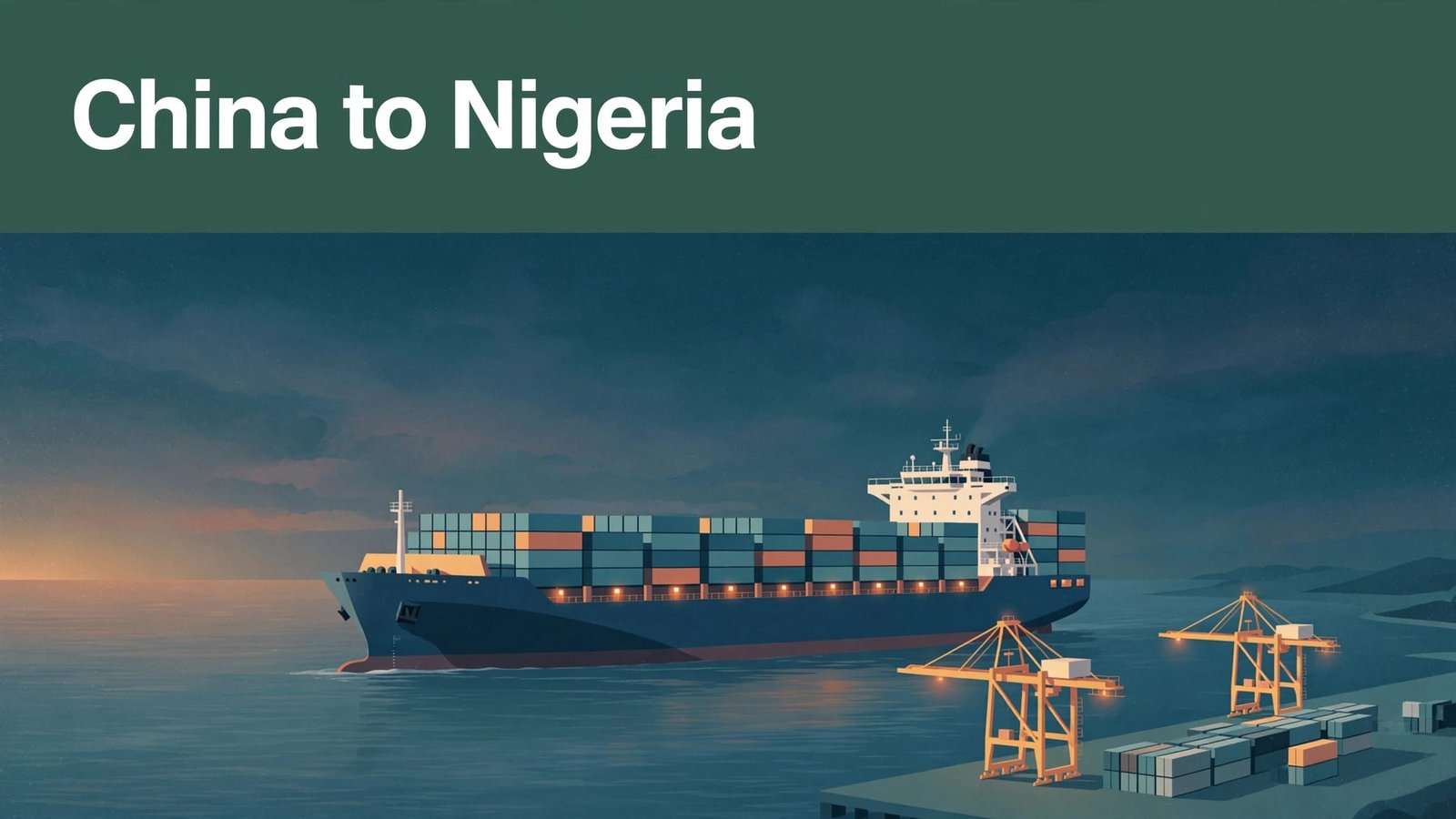
Sea freight from China to Nigeria is often more economical for larger loads and suits bulk goods. You can choose between FCL and LCL. A full container load (FCL) means booking an entire 20ft or 40ft container, which suits large commercial consignments. A less-than-container-load (LCL) shipment shares container space with other importers, and you pay per cubic metre.
LCL is a small trader’s best friend. If your goods fill less than half a container, sharing space usually costs less. Think of it like carpooling for cargo: everyone pays for the space they use.
The transit time can span several weeks, depending on the operator and current schedules. Sea shipments may arrive at Apapa Port, Tin Can Island (also written Tincan Island), or the newer Lekki Deep Sea Port. Arrival arrangements at Lagos port can vary, so ask your freight forwarder about the schedule and plan for possible delays. Demurrage starts once your free storage period ends, so work backwards from the expected arrival date.
Air Freight: When Speed Beats Price
Air freight from China to Nigeria suits goods where delays cost more than the fare. Electronics, medical supplies, spare parts, and documents are common candidates. A shipment that takes weeks by sea can arrive in days by air.
Air cargo is priced by chargeable weight, which is the actual or volumetric weight, whichever is higher. Light but bulky goods can get expensive fast, so measure your cartons before you commit.
Air freight can clear customs faster, sometimes within 48 hours when paperwork is correct. It costs far more per kilogram than sea freight, so most businesses reserve it for urgent, fragile, or high-value items.
Sea Freight: Containers and Consolidated Cargo
Sea freight from China to Nigeria is often more economical for larger loads and suits bulk goods. You can choose between FCL and LCL. A full container load (FCL) means booking an entire 20ft or 40ft container, which suits large commercial consignments. A less-than-container-load (LCL) shipment shares container space with other importers, and you pay per cubic metre.
LCL is a small trader’s best friend. If your goods fill less than half a container, sharing space usually costs less. Think of it like carpooling for cargo: everyone pays for the space they use.
The transit time can span several weeks, depending on the operator and current schedules. Sea shipments may arrive at Apapa Port, Tin Can Island (also written Tincan Island), or the newer Lekki Deep Sea Port. Arrival arrangements at Lagos port can vary, so ask your freight forwarder about the schedule and plan for possible delays. Demurrage starts once your free storage period ends, so work backwards from the expected arrival date.
Air Freight: When Speed Beats Price
Air freight from China to Nigeria suits goods where delays cost more than the fare. Electronics, medical supplies, spare parts, and documents are common candidates. A shipment that takes weeks by sea can arrive in days by air.
Air cargo is priced by chargeable weight, which is the actual or volumetric weight, whichever is higher. Light but bulky goods can get expensive fast, so measure your cartons before you commit.
Air freight can clear customs faster, sometimes within 48 hours when paperwork is correct. It costs far more per kilogram than sea freight, so most businesses reserve it for urgent, fragile, or high-value items.
Sea Freight: Containers and Consolidated Cargo
Sea freight from China to Nigeria is often more economical for larger loads and suits bulk goods. You can choose between FCL and LCL. A full container load (FCL) means booking an entire 20ft or 40ft container, which suits large commercial consignments. A less-than-container-load (LCL) shipment shares container space with other importers, and you pay per cubic metre.
LCL is a small trader’s best friend. If your goods fill less than half a container, sharing space usually costs less. Think of it like carpooling for cargo: everyone pays for the space they use.
The transit time can span several weeks, depending on the operator and current schedules. Sea shipments may arrive at Apapa Port, Tin Can Island (also written Tincan Island), or the newer Lekki Deep Sea Port. Arrival arrangements at Lagos port can vary, so ask your freight forwarder about the schedule and plan for possible delays. Demurrage starts once your free storage period ends, so work backwards from the expected arrival date.
Air Freight: When Speed Beats Price
Air freight from China to Nigeria suits goods where delays cost more than the fare. Electronics, medical supplies, spare parts, and documents are common candidates. A shipment that takes weeks by sea can arrive in days by air.
Air cargo is priced by chargeable weight, which is the actual or volumetric weight, whichever is higher. Light but bulky goods can get expensive fast, so measure your cartons before you commit.
Air freight can clear customs faster, sometimes within 48 hours when paperwork is correct. It costs far more per kilogram than sea freight, so most businesses reserve it for urgent, fragile, or high-value items.
Sea Freight: Containers and Consolidated Cargo
Sea freight from China to Nigeria is often more economical for larger loads and suits bulk goods. You can choose between FCL and LCL. A full container load (FCL) means booking an entire 20ft or 40ft container, which suits large commercial consignments. A less-than-container-load (LCL) shipment shares container space with other importers, and you pay per cubic metre.
LCL is a small trader’s best friend. If your goods fill less than half a container, sharing space usually costs less. Think of it like carpooling for cargo: everyone pays for the space they use.
The transit time can span several weeks, depending on the operator and current schedules. Sea shipments may arrive at Apapa Port, Tin Can Island (also written Tincan Island), or the newer Lekki Deep Sea Port. Arrival arrangements at Lagos port can vary, so ask your freight forwarder about the schedule and plan for possible delays. Demurrage starts once your free storage period ends, so work backwards from the expected arrival date.
Air Freight: When Speed Beats Price
Air freight from China to Nigeria suits goods where delays cost more than the fare. Electronics, medical supplies, spare parts, and documents are common candidates. A shipment that takes weeks by sea can arrive in days by air.
Air cargo is priced by chargeable weight, which is the actual or volumetric weight, whichever is higher. Light but bulky goods can get expensive fast, so measure your cartons before you commit.
Air freight can clear customs faster, sometimes within 48 hours when paperwork is correct. It costs far more per kilogram than sea freight, so most businesses reserve it for urgent, fragile, or high-value items.
Air Freight: When Speed Beats Price
Air freight from China to Nigeria suits goods where delays cost more than the fare. Electronics, medical supplies, spare parts, and documents are common candidates. A shipment that takes weeks by sea can arrive in days by air.
Air cargo is priced by chargeable weight, which is the actual or volumetric weight, whichever is higher. Light but bulky goods can get expensive fast, so measure your cartons before you commit.
Air freight can clear customs faster, sometimes within 48 hours when paperwork is correct. It costs far more per kilogram than sea freight, so most businesses reserve it for urgent, fragile, or high-value items.
Sea Freight: Containers and Consolidated Cargo
Sea freight from China to Nigeria is often more economical for larger loads and suits bulk goods. You can choose between FCL and LCL. A full container load (FCL) means booking an entire 20ft or 40ft container, which suits large commercial consignments. A less-than-container-load (LCL) shipment shares container space with other importers, and you pay per cubic metre.
LCL is a small trader’s best friend. If your goods fill less than half a container, sharing space usually costs less. Think of it like carpooling for cargo: everyone pays for the space they use.
The transit time can span several weeks, depending on the operator and current schedules. Sea shipments may arrive at Apapa Port, Tin Can Island (also written Tincan Island), or the newer Lekki Deep Sea Port. Arrival arrangements at Lagos port can vary, so ask your freight forwarder about the schedule and plan for possible delays. Demurrage starts once your free storage period ends, so work backwards from the expected arrival date.
Air Freight: When Speed Beats Price
Air freight from China to Nigeria suits goods where delays cost more than the fare. Electronics, medical supplies, spare parts, and documents are common candidates. A shipment that takes weeks by sea can arrive in days by air.
Air cargo is priced by chargeable weight, which is the actual or volumetric weight, whichever is higher. Light but bulky goods can get expensive fast, so measure your cartons before you commit.
Air freight can clear customs faster, sometimes within 48 hours when paperwork is correct. It costs far more per kilogram than sea freight, so most businesses reserve it for urgent, fragile, or high-value items.
Best Shipping Companies from China to Nigeria Compared
Shipping providers moving goods from China to Nigeria fall into three camps. Each shipping service suits a different shipment size and level of support. A freight forwarder or consolidator books vessel or aircraft space, then groups shipments from hubs like Guangzhou and Yiwu through cargo consolidation. Global couriers like DHL handle documents and express parcels. Door-to-door consolidators, popular with Nigerian traders, quote one price per kilogram and deliver in Lagos. Here’s how the three compare at a glance.
| Category | Best for | Typical speed | Confirm before booking |
|---|---|---|---|
| Forwarder/consolidator | Pallets, containers, regular imports, bulk goods | Weeks by sea, days by air | CRFFN registration, clearing arrangements |
| Door-to-door consolidator | Cartons for small traders and e-commerce sellers | Weeks by sea, faster by air | Total per-kg rate in writing |
| International courier (DHL, FedEx) | Documents, urgent, high-value parcels | Days | Rates, restricted items |
Keep in mind that most cargo from China clears through licensed Nigerian customs clearing agents after it reaches Lagos port, regardless of which company ships it. Operator names and terms change often. Compare written shipping rates and confirm current routes before you pay.
Forwarders and Consolidators for Bulk Cargo
A freight forwarder coordinates the journey for you. They book space on a vessel or aircraft, handle export paperwork in China, and hand your cargo to a clearing agent in Lagos once it lands. You deal with one logistics provider instead of five.
This channel suits pallets, full and partial containers, and importers who ship regularly. If you’re bringing in a 40-foot container, a forwarder is a sensible choice. Confirm they clear customs end to end, not just handle the paperwork.
Door-to-Door Consolidators for Small Traders
This model is popular with small traders. With door to door shipping, a consolidator collects goods from your Chinese suppliers, ships them by sea or air, clears customs, and delivers to your Lagos address for one quoted price per kilogram or cubic meter. No park visits, no agent hunting.
The catch: terms vary widely. Some quotes exclude delivery to the mainland, some charge warehouse handling fees, and some don’t clearly state their liability if goods go missing. Get the total cost in writing before anything moves.
International Couriers for Documents and Express Parcels
DHL and similar carriers offer the fastest express shipping, but at a higher price. Reserve them for urgent contracts, documents, samples, and small high-value items where tracking and delivery guarantees matter. Ask what tracking system the operator provides.
They handle customs paperwork on cross-border shipments, which can save first-time shippers real headaches. For a carton of clothes, you’d be paying for speed you don’t need.
What It Costs to Ship from China to Nigeria
Let’s talk money, because this is where most importers get burned. There’s no fixed price list for shipping from China to Nigeria. Two cartons on the same route can have completely different prices. Shipping costs depend on your load, deadline, and the week you ask, so treat any figure you see (including ours) as a planning range only.
A few things drive shipping costs up or down:
- Chargeable weight. Air cargo bills actual weight or volumetric weight, whichever is higher. Light but bulky goods get expensive fast, so measure before you call anyone.
- Container space. Sea freight is priced per 20ft or 40ft container, or per cubic meter if you share space through LCL.
- Duty rates. Nigeria Customs calculates import duties from your HS code and declared value. Get this wrong and your bill changes at the port.
- Season. Demand spikes around Christmas and Chinese New Year. Rates and transit time can shift, so a March quote may mislead you by November.
For context on the Nigerian side of the journey, our guide to freight companies in Lagos covers what clearing and delivery typically cost once your goods land.
Hidden Charges That Blow Up Import Budgets
The quote you get upfront is rarely the whole story. A low headline rate can grow quietly before your goods reach your door. These extras show up on final bills more often than people expect:
- Demurrage and storage at Apapa, Tin Can Island, or Lagos port. Every day your container sits uncleared adds charges, and they stack fast.
- Terminal handling and shipping line fees that sit outside the forwarder’s professional fee.
- Exchange rate shifts between the day you agree a price and the day you pay.
- Last-mile delivery from the port to your address, which some quotes exclude entirely.
- Wait time charges for trucks held up at the terminal or in traffic.
Ask for an itemized written quote that separates duties, terminal charges, haulage, and service fees. Compare the total landed cost, and question any vague line items before money moves.
With clean paperwork, customs clearance may take a day or two. Messy files can stretch into weeks, and every idle day costs you twice. Get the full cost in writing, and keep it on file until your goods reach your door.
Customs Clearance in Lagos: The Step Most People Underestimate
Your container docking at Lagos Port is the halfway point, not the finish line. It won’t move as soon as it arrives. A licensed clearing agent handles customs clearance, submits your import paperwork, pays import duties, and secures release from Nigerian Customs and the terminal operator. Only then can a truck collect your goods. At Lagos Port, clean paperwork may mean release within a day or two. Missing documents can leave your container at Apapa Port or Tin Can Island, with demurrage building daily.
This is where many first-time importers lose money. They choose a provider, then overlook the Lagos-side process, which can increase their total landed cost.
Documents You Need Before Your Cargo Leaves China
Clearance starts before your goods ship, not after they land. Get these right in China and customs clearance at the port is more straightforward:
- Commercial invoice, stating what the goods are and what they’re worth. Customs uses this to calculate duty.
- Packing list, itemizing every carton and its contents.
- Bill of lading for sea freight or an air waybill for air cargo. This is your proof of the contract of carriage.
- A valid ID for the receiver, since collection at the terminal or delivery point requires it.
Make sure the commercial invoice, packing list, and transport documents agree on the goods and quantities. Discrepancies can delay release.
For commercial imports, requirements vary by goods and shipment. Some shipments require a Form M through a Nigerian bank before shipping, plus a PAAR (Pre-Arrival Assessment Report) after documents are submitted. Depending on the goods, registration or permits from agencies such as NAFDAC or SON may also apply. Before departure, confirm current requirements with your provider and check that the commercial invoice and packing list are complete. Starting paperwork late can mean storage fees from the day your container docks.
Here’s the practical move: choose a shipping option with a trusted Lagos clearing partner. Ask who handles customs clearance in Nigeria before you pay. A freight forwarder that manages the full journey, from a Chinese warehouse to your Lagos door, is worth more than a cheaper quote that leaves you hunting for an agent at the port.
How to Choose and Vet a Shipping Provider Safely
The habit that protects your cargo is simple: confirm first, book second. Most losses on the China to Nigeria route come from one skipped check, not clever fraud. Before booking a freight forwarder, verify the shipping service through the logistics provider’s official channels. Check its website, staffed office, or published phone line. A ten-minute check removes almost every risk. A forwarded WhatsApp screenshot proves nothing, and a payment into a personal bank account gives you no recourse if things go wrong.
Questions to Ask Before You Pay
Before money moves, put these questions to any provider and expect clear answers:
- What’s the all-in price? Ask for an itemized breakdown covering freight, handling, customs duty, and delivery.
- What’s the transit time? Get a realistic range in writing, not a promise.
- Who pays for loss or damage? Confirm liability terms and whether insurance is available or included.
- What are the packaging rules? Some operators refuse fragile or poorly packed goods outright.
- Who handles customs clearance? Confirm the provider manages it end to end, including Lagos-side arrangements, not just the paperwork.
- Where exactly do my goods land? Confirm the delivery point, whether at Lagos port, a Lagos warehouse, or your door, in writing.
A provider that dodges any of these questions is telling you something. Walk away and verify through the operator’s own channels before considering anyone else.
Common Mistakes That Cost Importers Money
Choosing on price alone is the biggest trap. Compare itemized quotes to understand the total landed cost, as the cheapest often excludes last-mile delivery, insurance, or customs handling, and the final bill grows quietly.
Skipping written quotes ranks close behind. A price that lives on someone’s word of mouth is a starting bid, not a quote. Get everything documented before you pay.
Poor packaging breaks fragile goods, and badly packed items rarely earn compensation. Use sturdy cartons, cushion contents, and label every box with the receiver’s full name, phone number, and Lagos address.
Missing receiver details stall collections at the terminal. Confirm the ID requirements and exact pickup point before dispatch. Ignoring demurrage timelines is the costliest error of all; containers that sit uncleared at the port stack charges daily, so start paperwork early.
For the Lagos side of the journey, our guide to courier and delivery services in Lagos helps you match the final leg with the right provider.
Frequently Asked Questions
You’ve compared companies, costs, and clearance steps. A few questions always come up right before money moves. Here are the straight answers, though shipping rates shift with exchange rates and fuel, so confirm live figures with your operator.
How long does shipping from China to Nigeria take?
The transit time for sea freight from China to Nigeria is usually several weeks on the water, plus clearance at Apapa or Tin Can Island in Lagos port. Air freight from China to Nigeria lands in days, and clearance at MMIA often finishes within 48 hours when the paperwork is clean. Add buffer time around Christmas and Chinese New Year, when space sells out and rates climb.
Can I ship a small quantity without a container?
Yes. With fcl and lcl options, less-than-container-load (LCL) lets you share space and pay per cubic meter, while door to door shipping consolidators quote one price per kilogram for cartons. Both work well if your goods won’t fill a full container load. Get the total per-kg rate in writing before anything moves.
What happens if my goods arrive damaged or go missing?
Report it immediately at collection, before the receiver signs off. Photograph the goods, note their status in the provider’s tracking system, and reference your bill of lading or waybill number when following the claims process in your written agreement. If the operator never gave you liability terms, recovery gets difficult, so settle that question before handover.
Do I need a clearing agent in Lagos?
Almost always, yes. A licensed clearing agent handles customs clearance, processes your import paperwork, pays duties, and secures terminal release from Nigerian customs. Containers that sit uncleared stack demurrage daily, so a slow agent costs you twice. Confirm the agent holds current CRFFN registration and Nigeria Customs licensing before you commit.
How do I know a shipping company is genuine?
Verify the company through its official website or a staffed office, never through a forwarded screenshot. Then pay into a company bank account only. For a shortlist of vetted operators on the Nigerian side, browse haulage and logistics companies in Lagos and confirm service details directly with each one.
Is sea or air freight better for my goods?
Sea freight wins on cost per kilogram for bulk loads but takes weeks. Air suits urgent, light, or high-value items where delay costs more than the fare; express shipping through a courier is another option for urgent parcels. When comparing options, ask each provider for an arrival window in writing, then compare the full landed cost, not just the freight rate.
Conclusion
The best shipping company from China to Nigeria depends on your load: use sea freight with a licensed forwarder for containers, a consolidator for cartons, and an express courier for urgent parcels. Get the all-in price in writing, confirm who clears customs in Lagos, and pay only company accounts.
Keep your bill of lading, receipt, and written quote until your goods arrive. These documents can help resolve disputes quickly.
Protect your shipment by confirming details before booking. Verify the provider through its official channels, then compare quotes from at least two companies before committing.
When you’re ready, browse verified logistics companies in Lagos on LagosMove, and read our guides to freight companies in Lagos and courier and delivery services in Lagos for the last leg of the journey.
Leave a Reply