The Lekki Arts and Crafts Market is one of the best places in Lagos to buy handmade Nigerian art, carvings, textiles, and souvenirs, all in one open-air market. Rows of stalls fill with bronze figures, beadwork, adire fabric, and wood carvings from traders across the country. Tourists come for gifts, expats come for pieces to ship home, and residents come because it’s cheaper than any gallery.
It’s a wonderful place to shop, but it rewards preparation. Prices aren’t fixed, the location confuses first-timers, and the best visits happen at the right hour.
This guide covers what to buy, where the market sits, how to get there, what things should cost, how to bargain well, and how to stay safe while you shop.
Key Takeaways
- The Lekki Arts and Crafts Market sits off the Lekki-Epe Expressway, near the Lagos Epe expressway corridor, and rewards morning visits with cooler weather and better prices.
- Expect hand-carved wood pieces, adire fabric, bronze and brass figures, beadwork, leather goods, and paintings, with bargaining expected at every stall.
- First quoted prices often start high; countering at 30 to 40 percent of the opening figure is a common approach.
- Bring cash in small naira notes, confirm prices before photos, and use a ride-hailing app for a direct trip from Victoria Island, Ikoyi, or the airport area.
What You’ll Find at the Lekki Arts and Crafts Market
Think of this market as Lagos’s creative attic, packed into one open-air space along the Lekki-Epe Expressway. Stalls sit shoulder to shoulder, and each trader specializes in something different. One row leans toward wood carving, the next toward fabric, and somewhere in between you’ll find paintings stacked against walls, some taller than you. It’s loud in a good way. Traders call out greetings, haggling happens everywhere, and finished pieces sit beside raw works still carrying the smell of fresh wood.
The range surprises first-time visitors. This isn’t a souvenir-only spot. You can furnish a whole room here, or pick up a ₦2,000 gift on your way home. Quality varies by stall, so walk the full market before you commit to anything.
Handmade Goods Worth Looking For
Here’s what the stalls typically carry:
- Wood carvings and masks: Yoruba-style masks, stools, animal figures, and wall panels. Sizes run from palm-sized to statement pieces.
- Adire and ankara fabrics: Indigo-dyed adire is the standout, alongside bold ankara prints sold by the yard or ready-made.
- Beadwork: Necklaces, bracelets, crowns, and bags, often in coral and traditional patterns.
- Bronze and brass pieces: Cast figures echoing the Benin Bronzes tradition, from small plaques to large statues.
- Paintings: Landscapes, market scenes, and portraits, mostly acrylic on canvas.
- Leather goods: Bags, sandals, and belts, handmade in small workshops.
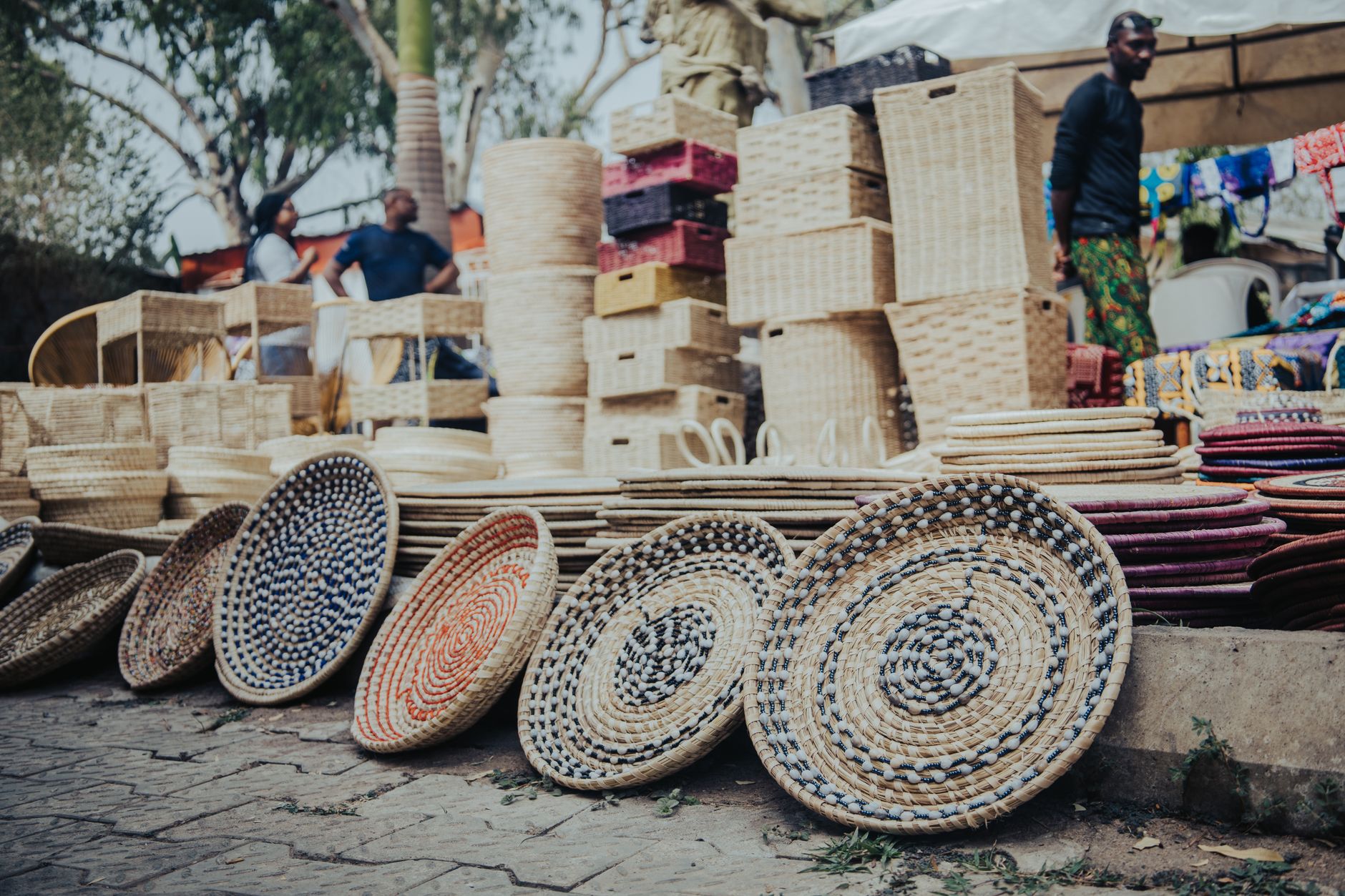
- Woven baskets and raffia items: Storage baskets, trays, and fans in natural dyes.
- Shea butter and natural products: Raw shea butter, black soap, and oils, often the cheapest quality items here.
Check stitching, carving detail, and finishing before you buy. Two stalls can sell the “same” mask at very different standards.
Who Shops Here: Tourists, Expats, and Locals
The market serves three crowds at once. Tourists hunt for souvenirs that fit in a suitcase, usually shopping in the morning before flights home. Expats buy bigger pieces to ship abroad, and many stalls help arrange freight for furniture-sized orders. Locals come for home decor, wedding gifts, and fabrics, since prices beat anything in a mall or gallery.
Some traders also work with bulk buyers and exporters, setting aside large orders or sourcing specific pieces on request. If you need twenty matching baskets or a set of carvings for a hotel lobby, ask. Most stall owners will deal directly and give you a better rate than a middleman would.
Where the Lekki Arts and Crafts Market Is and How to Get There
You’ll find the market along the Lekki-Epe Expressway corridor, in the Lekki Phase 1 axis, a short drive from the Chevron and Jakande stretch that most visitors already know. It sits off the main carriageway, which is exactly why first-timers get lost. Ask your driver for the arts and crafts market by name, and confirm the exact stop before you set out, because roadside landmarks along that expressway change often.
Getting There by Ride-Hailing, Bus, or Car
The easiest door-to-door option is a ride-hailing app. Uber, Bolt, and inDrive all cover Lekki well, and prices from Victoria Island or Ikoyi usually stay reasonable outside peak hours. inDrive sometimes comes in cheaper because you name your fare, but compare all three before you book.
On a budget? Take a danfo or BRT connection toward Lekki from the Island or Mainland, then complete the last stretch by keke or short taxi. It costs less, but you’ll manage more stops and more walking. If you’re planning connections across the city, our Lagos transport guides break down BRT routes, danfo fares, and ride-hailing tips.
Driving yourself? The Lekki-Epe Expressway moves well early and crawls by evening. Parking near the market is informal, so arrive with time to spare.
Whatever mode you choose, agree on the fare or check the app quote before the trip starts.
Best Time to Visit to Beat Traffic and Crowds
Go on a weekday morning. Stalls are open, traders are fresh, and the expressway hasn’t hit its midday squeeze. Weekends bring crowds and thicker traffic, especially Saturday afternoons when the Lekki corridor fills up.
Most stalls operate during daytime hours, so arriving after 5 p.m. leaves you with thinning options. And plan for the ride back. Traffic crossing the Island toward Victoria Island or the airport can double your travel time, so pad your schedule generously.
Prices, Bargaining, and Payment at the Lekki Market
Here’s the thing to understand before you spend a single naira: prices at the Lekki Arts and Crafts Market are not fixed. The first number a trader quotes is an opening move, not a final answer. Bargaining isn’t just tolerated here; it’s part of the experience. Treat it like a friendly conversation and you’ll enjoy it. Treat it like a fight and everyone loses.
How to Haggle Without Offending Anyone
Bargaining well is mostly about attitude, not math. Follow this simple flow at every stall:
- Greet first. Say good morning or good afternoon before you ask about anything. Rushing straight to the price reads as rude, and traders respond better to shoppers who show respect.
- Ask the price. Let the trader name the figure. Don’t interrupt or lowball before they’ve spoken.
- Counter politely. Offer around 30 to 40 percent of the opening price if it feels high. Smile while you do it. A calm “that’s above my budget” works better than a dismissive wave.
- Meet in the middle. Expect a few rounds back and forth. Progress happens gradually.
- Be willing to walk away. Thank the trader and move on if the price won’t move. Often, they’ll call you back with a better offer. Sometimes they won’t, and that’s your answer.
The whole exchange should feel warm. If you’re enjoying it, you’re doing it right.
What Your Budget Actually Buys
Small souvenirs like bead bracelets, keyholders, fans, and raw shea butter sit at the low end and cost little. Mid-range pieces such as adire fabric by the yard, medium wood carvings, leather bags, and woven baskets take a bigger chunk of cash. Larger art, including full-size masks, bronze figures, and paintings, sits at the top, where prices vary the most from stall to stall.
Exact figures shift constantly, so don’t trust any price list you read online, including this one. Confirm with vendors on the day. Carry cash in small naira notes, because most stalls don’t take cards, and compare two or three stalls before you commit. The same mask can sell at very different prices within a few steps.
Smart Shopping Tips for First-Time Visitors
The Lekki Arts and Crafts Market rewards patience. Walk the full stretch of stalls before you spend anything, compare two or three sellers on similar pieces, and buy from the artisan who made the work where you can. A trader who carves or paints themselves can tell you how the piece was made, and that conversation is often your best quality check. Ask about materials, look closely at finishing, and don’t rush.
Shipping and Carrying Your Purchases Home
Large carvings and fragile bronze pieces rarely fit in a suitcase, so plan before you pay. Many stall owners at the Lekki Arts and Crafts Market work with courier and freight agents who can box, wrap, and ship items, both within Nigeria and abroad. Ask the trader to arrange proper wrapping in bubble wrap, foam, and a wooden crate for anything delicate, and get the shipping cost in writing before you commit.
For international shipping, compare a few logistics companies on price and delivery time rather than accepting the first quote. If you’re flying home instead, check your airline’s baggage allowance and oversized-item rules before you buy a big piece, since excess charges at the airport can cost more than the artwork itself. Keep receipts for every purchase; customs officers may ask for proof of value on high-priced pieces.
Photo by Yusuf Kayode
Common Mistakes to Avoid at the Market
First visits go wrong in familiar ways. Watch out for these:
- Paying before inspecting. Check every carving, seam, and finish before money changes hands. Once you pay, refunds don’t happen.
- Skipping the greeting. Walking straight into a price question offends traders and costs you goodwill. A simple good morning changes the whole negotiation.
- Ignoring traffic. The Lekki-Epe Expressway can turn a 20-minute ride into two hours, so pad your schedule and don’t book a flight for the same evening.
- Carrying too much cash at once. Split your money between pockets or bags, count small notes before you arrive, and never flash a thick bundle while haggling.
One skipped step causes most market losses: confirming the price and the item before your money moves. Fix that and you’re already ahead of most visitors.
Making a Day of It: Nearby Spots Around Lekki
You’ve already made the trip across the Lekki-Epe Expressway, so don’t rush back. The market sits in one of the liveliest parts of Lagos, and pairing it with one or two nearby stops turns a shopping hour into a proper day out.
What to Pair with Your Market Visit
If the morning is for shopping, let the afternoon carry the fun. A few options close enough to work into the same trip:
- Beaches along the Lekki peninsula: Elegushi and the private beach clubs along the corridor are a short ride away, ideal for a late lunch by the water.
- Nike Art Gallery on Akin Adesola Street: Five floors of Nigerian paintings, textiles, and sculpture, and entry is free. If you loved the market’s art stalls, this shows you the gallery-priced versions.
- Lekki Phase 1 restaurants: The streets around there hold some of Lagos’s best casual dining, from pepper soup joints to rooftop spots.
- Shopping malls and boutiques: The malls along the Lekki corridor cover everything you forgot to buy, in air conditioning.
Just remember the one honest warning about Lekki: traffic between here and Victoria Island can stretch a 20-minute drive past an hour at rush hour. Pick your evening stop wisely and check live traffic before you move.
If your day ends in a meeting or a flight, shop first and play later, not the other way around.
If your schedule includes Island meetings the next morning, our guide on where to stay in Lagos covers why sleeping in Lekki works for leisure but rarely for early Island commitments.
Frequently Asked Questions
These are the questions readers ask most before their first trip to the Lekki Arts and Crafts Market. If your question isn’t answered here, it’s covered in the sections above.
How much should I budget for shopping at the Lekki Arts and Crafts Market?
Plan for two figures, not one. Small gifts like bead bracelets, shea butter, or woven fans cost very little, while carvings, adire fabric, and paintings can run into tens of thousands of naira depending on size and quality. Since prices aren’t fixed, bring cash in small notes and expect to bargain from around 30 to 40 percent of the first quote.
Is the market open every day?
Most stalls trade on weekdays and weekends alike, but the practical hours run through the daytime. Arrive by late morning for the best range and cooler weather, because options thin out after 5 p.m. Weekday mornings beat Saturdays, when both the market and the Lekki corridor fill up.
Can I trust the quality of the artwork?
Quality varies from stall to stall, so treat every piece as its own inspection. Check carving detail, stitching, and finishing, and compare two or three sellers before you pay. Buying directly from an artisan who made the work is often your safest quality check, because they can explain the materials and process.
Do traders accept cards or bank transfers?
Carry cash. Most stalls work in naira notes, and small denominations make bargaining and change much easier. Some traders may accept a transfer on bigger purchases, but confirm and complete the payment before you leave the stall, and keep your receipt.
What’s the safest way to get there from Victoria Island?
A ride-hailing app like Uber, Bolt, or inDrive is the simplest option, especially if you’re carrying purchases back. Confirm the drop-off point with your driver before you set out, since the market sits off the expressway and landmarks change. Budget extra time for the return trip, because evening traffic on the Lekki-Epe Expressway can double your ride.
Is it a good place to buy items to ship abroad?
Yes, and many traders handle it for you. Stall owners regularly work with freight agents who box and ship large carvings and bronze pieces locally and internationally. Get the shipping cost in writing before you pay for the artwork, and keep every receipt for customs.
Conclusion
The Lekki Arts and Crafts Market rewards visitors who come prepared. Walk the full market before you buy, bargain with a smile, and let cash in small notes do the talking. The traders who greet you warmly usually sell the honest pieces.
Two things make or break the trip: timing and traffic. Go on a weekday morning, confirm the exact drop-off point with your driver, and pad your schedule for the ride back across the Island.
Before you head out, check current transport options and fares through our Lagos transport guides. A little planning turns a good market trip into a great one.



Leave a Reply